Category: Family Caregiving

  • 8 Questions Every Caregiver Should Ask About Their Parents’ CPF and Retirement Funds

    Watching your parents age brings a shift in responsibility that many of us aren’t prepared for. The roles reverse slowly, then all at once. One day you notice unpaid bills on the kitchen table. Or your mum mentions she’s not sure how much CPF she has left. These small moments signal it’s time to have conversations that feel uncomfortable but matter deeply.

    Key Takeaway

    As your parents enter their later years, understanding their financial situation becomes essential for their wellbeing and your peace of mind. This guide covers the critical financial questions to ask aging parents, from CPF balances and retirement income to healthcare coverage and estate planning. Having these conversations early helps prevent future complications and ensures your parents receive the support they deserve during their retirement years.

    Why talking about money with your parents feels so hard

    Money conversations carry emotional weight in Asian families. Many seniors view discussing finances as a loss of independence or dignity. They may feel embarrassed about their savings, protective of their privacy, or worried about burdening their children.

    Your parents likely spent decades supporting you. Accepting that they now need your help represents a fundamental shift in family dynamics. This discomfort is normal on both sides.

    But avoiding these conversations creates bigger problems down the line. Without knowing their financial situation, you can’t help them access benefits they’re entitled to or prevent costly mistakes. You might miss critical deadlines for government healthcare subsidies or discover financial issues only when they’ve become emergencies.

    The key is approaching these discussions with respect and patience. Frame questions as wanting to help them maximise what they’ve worked for, not as checking up on them.

    Setting up the conversation properly

    Choose the right moment. Don’t ambush your parents during a family gathering or when they’re stressed. Instead, suggest a dedicated time to discuss their plans and how you can support them.

    Start by sharing your own financial plans if appropriate. This creates reciprocity and shows you’re not just prying. You might mention your own CPF planning or insurance reviews to normalise the conversation.

    Bring your siblings into the discussion if possible. Having everyone on the same page prevents misunderstandings and distributes caregiving responsibilities more fairly. It also shows your parents that the whole family is invested in their wellbeing.

    Be prepared for resistance. Your first attempt might not go smoothly. That’s fine. Plant the seed and return to it later. Sometimes parents need time to process that this conversation is necessary.

    The essential financial questions every caregiver must ask

    1. What are your monthly expenses and income sources?

    Understanding the basics comes first. Ask your parents to walk you through a typical month. What bills do they pay? What income do they receive?

    Many Merdeka Generation seniors have multiple income streams. CPF LIFE payouts form the foundation for most. Some receive pension income from previous employment. Others have rental income, part-time work, or support from children.

    On the expense side, look for patterns. Are they spending more on healthcare than expected? Do they have subscription services they’ve forgotten about? Are utility bills reasonable for their flat size?

    This baseline picture helps you spot problems early. If expenses consistently exceed income, you’ll need to address it before savings run dry.

    2. How much do they have in their CPF accounts?

    CPF balances determine retirement security for most Singaporeans. Your parents should know their balances across all three accounts and their monthly CPF LIFE payout amount.

    If they’re unsure, help them check via the CPF website or mobile app. Understanding whether they can withdraw their CPF savings at 65 depends on their specific situation and account balances.

    Pay attention to their Medisave balance. This account covers medical expenses and insurance premiums. If it’s running low, you might need to consider topping up their MediSave to ensure adequate healthcare coverage.

    Also check if they’ve maximised their CPF LIFE payouts. Some seniors don’t realise they can stretch their CPF LIFE payouts further through various strategies.

    3. What healthcare coverage do they have?

    Healthcare costs rise dramatically with age. Knowing your parents’ coverage prevents nasty surprises when medical needs arise.

    Start with government schemes. If your parents were born between 1950 and 1959, they likely qualify for Merdeka Generation benefits. Check if they’ve registered and understand how to claim all their benefits properly.

    Ask about their MediShield Life coverage. All Singapore citizens have this basic health insurance, but maximising MediShield Life coverage requires understanding the details.

    Check if they have Integrated Shield Plans for additional private coverage. Review their CHAS card status for subsidised outpatient care. Understanding CHAS card benefits helps them access affordable healthcare.

    Don’t forget dental coverage. Many seniors neglect oral health due to cost, but subsidies exist for those who qualify.

    4. Do they have proper estate planning documents?

    Estate planning sounds morbid but protects everyone. Ask if your parents have made a will, appointed someone with Lasting Power of Attorney, and documented their end-of-life wishes.

    A will ensures their assets go where they want them. Without one, intestacy laws decide, which may not match their intentions. This matters especially if they have property, savings, or specific wishes about distributing their estate.

    Lasting Power of Attorney lets trusted individuals make decisions if your parents lose mental capacity. This covers both property and personal welfare decisions. Setting this up while they’re still mentally sharp prevents complications later.

    CPF nominations deserve special attention. What happens to CPF savings when they pass away depends on whether they’ve made proper nominations. Without nominations, CPF savings may be tied up in lengthy estate proceedings.

    5. Where do they keep important documents?

    In an emergency, you need to access critical information fast. Ask your parents where they store important documents and how you can access them if needed.

    Create a list together of document locations. This includes identity cards, property deeds, insurance policies, bank statements, CPF statements, and medical records. Note where physical documents are kept and login details for online accounts.

    If they’ve lost important documents like their Merdeka Generation card, help them get replacements now rather than during a crisis.

    Consider setting up a shared secure folder or safe deposit box. Make sure at least one trusted family member knows how to access everything.

    6. What are their housing plans?

    Housing represents most Singaporeans’ largest asset. Understanding your parents’ housing situation and plans helps with long-term financial planning.

    Do they own their flat outright or still have mortgage payments? If they’re considering downsizing their HDB flat for extra retirement cash, discuss the pros and cons together.

    Some seniors explore the Lease Buyback Scheme. Understanding whether they should lease back their flat requires careful consideration of their financial needs and housing preferences.

    Also discuss their preferences for aging in place versus moving to senior housing. Choosing between ageing-in-place and sheltered housing involves both financial and lifestyle considerations.

    7. Are they managing their bills and avoiding scams?

    Cognitive decline can happen gradually. Watch for signs your parents are struggling with financial management.

    Ask to review their bank statements together. Look for unusual transactions, duplicate payments, or unfamiliar charges. Seniors are prime targets for scams, from fake government officials to investment frauds.

    Check if bills are being paid on time. Late payments might indicate confusion, forgetfulness, or financial strain. Consider setting up GIRO for regular bills if they’re struggling to keep track.

    If they’re receiving calls about investments or prizes, discuss common scam tactics. Many seniors feel embarrassed admitting they’ve been targeted, so approach this with sensitivity.

    8. How much do they really need for retirement?

    Many seniors worry about outliving their savings. Help your parents calculate how much money they really need for retirement based on their actual lifestyle and expenses.

    Work through their budget together. Factor in regular expenses, healthcare costs, occasional treats, and emergency buffers. This exercise often reveals they’re more secure than they thought, or highlights gaps that need addressing.

    If there’s a shortfall, explore options. Can they reduce expenses? Are there benefits they’re not claiming? Would part-time work or safe side hustles supplement their income comfortably?

    Help them create a monthly budget that works with their fixed income sources. This provides clarity and reduces financial anxiety.

    Common mistakes to avoid during these conversations

    Mistake Why It’s Harmful Better Approach
    Being judgmental about past decisions Damages trust and makes parents defensive Focus on solutions for the future
    Taking over completely Removes their autonomy and dignity Support their decision-making rather than replacing it
    Having the conversation in one sitting Overwhelms everyone involved Break into multiple shorter discussions
    Excluding siblings Creates family conflict later Keep everyone informed and involved
    Waiting for a crisis Limits options and increases stress Start conversations while everyone is healthy
    Forgetting to listen Misses important context and preferences Ask open-ended questions and truly hear responses

    Making the most of available benefits and support

    Singapore offers substantial support for seniors, but many don’t claim everything they’re entitled to. Your role includes helping your parents navigate these systems.

    The Merdeka Generation Package provides significant healthcare subsidies and support. If you’re unsure about eligibility, learn how to check if they qualify and help them avoid common mistakes when claiming benefits.

    Look beyond healthcare subsidies. Managing healthcare costs in retirement involves multiple strategies, from preventive care to smart use of subsidies.

    Don’t overlook everyday savings. Help them maximise grocery shopping with senior discount days and access public transport concessions.

    “The biggest gift you can give aging parents is helping them maintain dignity while ensuring they’re financially secure. It’s not about taking control but about providing support so they can continue making informed decisions about their own lives.” – Financial counsellor specialising in elder care

    When professional help makes sense

    Some situations require expertise beyond family knowledge. Don’t hesitate to bring in professionals when needed.

    Financial advisers who specialise in retirement planning can review your parents’ situation objectively. They might spot opportunities or risks you’ve missed.

    Elder law attorneys help with complex estate planning, especially if there are disputes, overseas assets, or complicated family situations.

    Social workers at Family Service Centres provide practical support and can connect you with community resources. They’re especially helpful if financial stress is affecting family relationships.

    Accountants can help with tax planning, especially if your parents have rental income or are considering whether to top up CPF LIFE after 65.

    Ongoing financial check-ins

    One conversation isn’t enough. Financial situations change, as do needs and capabilities.

    Schedule regular check-ins. Quarterly reviews work well for most families. Use these sessions to review spending, discuss any concerns, and adjust plans as needed.

    Watch for changes in behaviour. Is your mum suddenly anxious about money despite having adequate savings? Is your dad making impulsive purchases? These might signal cognitive changes requiring additional support.

    Keep siblings updated. Regular family meetings, even brief ones, prevent misunderstandings and ensure everyone shares caregiving responsibilities fairly.

    Document important information. Keep a shared file with account numbers, contact information for advisers, and notes from your conversations. This becomes invaluable during emergencies.

    Practical tips for different family situations

    If your parents are still working: Focus on maximising CPF contributions and understanding their retirement timeline. Discuss when they plan to stop working and how that will affect their income.

    If they’re newly retired: Help them adjust to fixed income living. The transition from earning to drawing down savings feels uncomfortable for many. Build confidence in their retirement plan.

    If one parent has passed away: Review everything. Survivor benefits, CPF payouts, housing arrangements, and healthcare coverage all need reassessing. The surviving parent’s financial situation has changed significantly.

    If parents are divorced or separated: Navigate carefully. Each parent’s situation is unique. Don’t assume their financial arrangements mirror typical patterns.

    If they’re planning to move overseas: Understand how this affects their benefits. Moving overseas after retirement has implications for government support and healthcare coverage.

    Building a support network

    You don’t have to manage everything alone. Build a network of support for both your parents and yourself.

    Connect with other caregivers. Many community centres run caregiver support groups. Sharing experiences with others in similar situations provides practical advice and emotional support.

    Explore community resources. Senior activity centres, day rehabilitation programmes, and befriending services provide social engagement and support. Understanding whether senior activity centres or day rehabilitation better suits their needs depends on their health and preferences.

    Look into affordable active ageing programmes that keep your parents engaged and healthy. Social connection matters as much as financial security for quality of life.

    Consider respite care options. Caregiving is demanding. Having backup support prevents burnout and ensures you can provide sustainable help over the long term.

    Planning for long-term care needs

    Healthcare needs typically increase with age. Planning ahead reduces stress when issues arise.

    Discuss preferences for care. Would your parents prefer home care or residential care if they need daily assistance? What level of medical intervention do they want? These conversations are difficult but essential.

    Research care options and costs now. Nursing homes, home care services, and day care centres all have different costs and benefits. Knowing what’s available helps you make informed decisions later.

    Review insurance coverage for long-term care. Some policies include riders for nursing home care or home care. Understand what’s covered and what isn’t.

    Consider the financial impact of different care scenarios. How long could their savings last if they need full-time care? Would you need to supplement their finances? Planning for these possibilities prevents panic later.

    Teaching your parents about digital financial tools

    Many seniors feel intimidated by online banking and digital government services. Patient teaching helps them maintain independence longer.

    Start with basic online account access. Help them set up and practise using internet banking in a safe environment. Write down login steps clearly.

    Show them how to check CPF balances online. The CPF website and mobile app provide real-time information. Being able to check independently reduces anxiety.

    Introduce them to useful apps gradually. PayNow for transfers, government apps for claiming subsidies, and health apps for tracking medical information all improve convenience once they’re comfortable.

    Always prioritise security. Teach them to recognise phishing attempts, never share passwords, and verify requests before making transfers.

    Respecting their autonomy while providing support

    The balance between helping and controlling is delicate. Your goal is supporting your parents’ independence, not replacing it.

    Let them make decisions whenever possible. Offer information and advice, but respect their choices even if you’d decide differently. Their money and their life remain theirs.

    Recognise that their priorities might differ from yours. They might value experiences over savings, or prefer staying in their current home despite financial benefits of moving. That’s their right.

    Watch for signs they truly can’t manage anymore. Unpaid bills, falling for scams repeatedly, or confusion about basic finances signal it’s time for more direct intervention. But reach this conclusion based on evidence, not assumptions.

    Involve them in all decisions that affect them. Don’t make arrangements without their input. Even if their capacity is declining, include them in discussions and honour their preferences wherever possible.

    Supporting your parents without sacrificing your own financial security

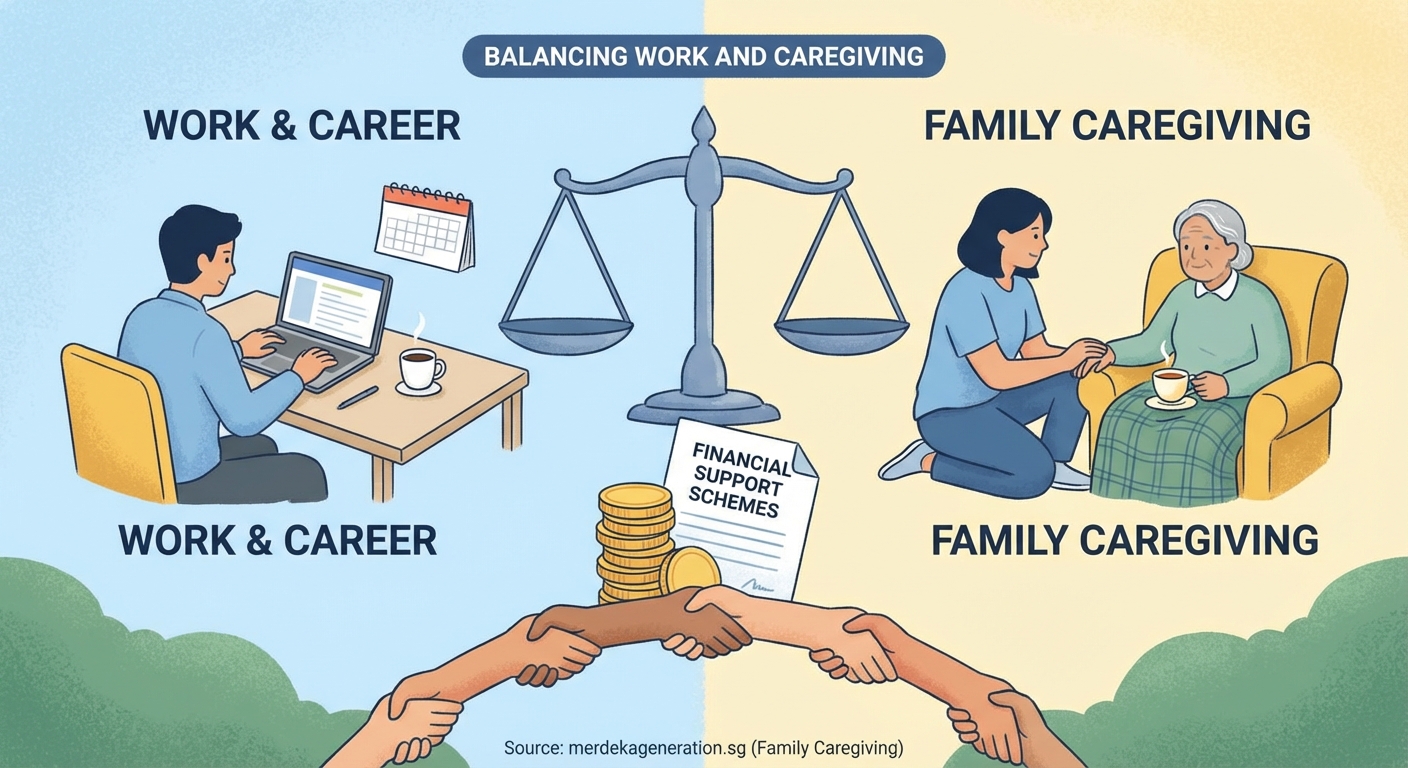
    Helping your parents financially can strain your own resources. Set boundaries that protect your future while supporting theirs.

    Don’t sacrifice your retirement for theirs. You can’t turn back time on CPF contributions or lost investment years. Find sustainable ways to help that don’t jeopardise your own security.

    Be clear about what you can and can’t provide. If you’re contributing financially, decide on an amount you can sustain long-term. Don’t overcommit and then have to pull back.

    Explore all available support before using your own money. Government subsidies, community programmes, and their own resources should be maximised first.

    Consider tax implications of financial support. Some contributions to parents’ accounts offer tax relief. Understand these benefits before making decisions.

    Moving forward with confidence and care

    These conversations about financial questions to ask aging parents mark a significant transition in your family relationships. They’re rarely easy, but they’re always worthwhile.

    Start small if the topic feels overwhelming. Pick one question from this guide and begin there. Build trust and comfort gradually. Each conversation makes the next one easier.

    Remember that you’re not alone in this journey. Thousands of families across Singapore are having similar conversations. Resources exist to help you. Community support is available. Professional guidance is accessible.

    Your parents worked hard to build their retirement security. Your role is helping them maximise what they’ve created, access benefits they’ve earned, and maintain dignity throughout their later years. Approach these conversations with love, patience, and respect. The temporary discomfort of discussing money matters far less than the lasting peace of mind you’ll all gain from proper planning and open communication.


  • Should You Top Up Your Parents’ MediSave? What Caregivers Need to Know

    Your mum just called. She needs to see the specialist again, and she’s worried about the bills piling up. You’ve been thinking about helping out financially, but you’re not sure where to start. Should you just transfer her cash? Or is there a smarter way to support her healthcare needs?

    Topping up your parents’ MediSave account might be that smarter option. But before you log into your CPF account, you need to know the rules, the limits, and whether it actually makes sense for your family’s situation.

    Key Takeaway

    Topping up your parents’ MediSave can help them pay for hospitalisation, outpatient care, and approved medical treatments. You can claim tax relief up to $8,000 per year. But you need to check their current MediSave balance, understand the Basic Healthcare Sum limit, and know which medical expenses they can actually claim before making any top-up.

    Understanding MediSave for your parents

    MediSave is part of the CPF system designed to help Singaporeans pay for healthcare costs. Your parents can use their MediSave balance to cover approved medical expenses, including hospital bills, day surgery, chronic disease management, and MediShield Life premiums.

    For Merdeka Generation seniors born between 1950 and 1959, MediSave becomes even more valuable because they enjoy additional healthcare subsidies and benefits that work alongside their MediSave balances.

    The Basic Healthcare Sum (BHS) sets the maximum amount that can sit in anyone’s MediSave account. For 2024, the BHS is $71,500. Once your parent’s MediSave hits this cap, any excess automatically transfers to their Special Account or Retirement Account.

    This cap matters because it affects how much you can meaningfully top up.

    When topping up makes sense

    Not every family needs to top up their parents’ MediSave. Here are situations where it genuinely helps.

    Your parent has upcoming medical procedures. If your mum needs cataract surgery next month or your dad has a scheduled knee replacement, topping up their MediSave now means they can pay directly from their account instead of using cash or asking you for money later.

    Their MediSave is running low. Some seniors have drained their MediSave paying for years of chronic disease management, regular specialist visits, or previous hospitalisation. A top-up refills this buffer so they can handle future medical needs without financial stress.

    You want to reduce your taxable income. The government allows you to claim tax relief for MediSave top-ups. If you’re in a higher tax bracket, this relief can translate to real savings while helping your parents at the same time.

    They’re part of the Merdeka Generation. If your parents qualify for the Merdeka Generation Package, their MediSave top-up works together with their annual $200 top-up and additional subsidies, creating a stronger healthcare safety net.

    Tax relief you can claim

    The tax relief structure makes MediSave top-ups financially attractive for many working adults.

    You can claim up to $8,000 in tax relief per calendar year when you top up your parents’ MediSave, Special Account, or Retirement Account. This $8,000 cap is shared across all your CPF top-ups for family members, not per parent.

    If both your parents need MediSave top-ups, you can split the $8,000 between them. You could top up $4,000 for your mum and $4,000 for your dad, or $6,000 for one parent and $2,000 for the other.

    The relief applies to cash top-ups only. You cannot claim relief if you transfer from your own CPF accounts to theirs.

    To claim this relief, you need to include the top-up details when you file your income tax. IRAS will automatically reflect eligible top-ups if you made them through the CPF Board system, but you should still verify the amounts during tax filing season.

    “Many adult children don’t realise that topping up their parents’ MediSave can reduce their own tax bill while building a healthcare fund for their family. It’s one of the few ways you can help your parents and benefit financially at the same time.” – Financial Planning Association of Singapore

    How to top up your parent’s MediSave step by step

    The process is straightforward once you know where to go.

    1. Check your parent’s current MediSave balance. Ask them to log into their CPF account or check their CPF statement. You need to know how much room they have before hitting the BHS cap. Topping up beyond the cap won’t help because the excess just moves to another account.

    2. Calculate how much to top up. Consider their upcoming medical needs, their current balance, and your own tax relief limit. Don’t top up more than the BHS minus their current balance.

    3. Log into your own CPF account. Go to the CPF website and navigate to the top-up section. You’ll need your parent’s NRIC number and their CPF account details.

    4. Select MediSave as the destination account. You can choose to top up their Special Account, Retirement Account, or MediSave. Make sure you select MediSave if healthcare is your priority.

    5. Choose your payment method. You can pay by cash through internet banking, GIRO, or PayNow. The CPF Board will confirm your transaction within a few business days.

    6. Keep the receipt for tax filing. Save the confirmation email or transaction record. You’ll need this when you file your taxes to claim the relief.

    What your parents can use MediSave for

    Understanding what MediSave covers helps you decide if a top-up is worthwhile.

    Your parents can use MediSave to pay for:

    • Hospital bills for inpatient care and day surgery
    • Approved outpatient treatments like dialysis, chemotherapy, and radiotherapy
    • MediShield Life and Integrated Shield Plan premiums
    • Chronic Disease Management Programme (CDMP) treatments for conditions like diabetes, high blood pressure, and high cholesterol
    • Vaccinations for seniors, including pneumococcal and influenza jabs
    • Certain dental procedures performed in hospitals
    • Home medical services under the Home Caregiving Grant

    They cannot use MediSave for:

    • Over-the-counter medications
    • Most dental work done at private clinics
    • Traditional Chinese medicine treatments
    • Cosmetic procedures
    • Health supplements and vitamins
    • Overseas medical treatments

    If your parent’s main medical expenses fall outside these approved categories, a MediSave top-up won’t directly help. Cash assistance or other support might make more sense.

    Comparing top-up options

    You have several ways to help your parents financially. Here’s how MediSave top-ups compare to other options.

    Option Tax Relief Flexibility Best For
    MediSave top-up Up to $8,000 relief Can only use for approved medical expenses Parents with regular healthcare needs
    Cash transfer None Can use for anything Immediate general expenses
    Pay bills directly None You control the spending Specific one-time medical costs
    CPF LIFE top-up Up to $8,000 relief (shared cap) Creates monthly income for life Parents needing steady retirement income

    If your parents need help with both healthcare and daily living expenses, you might combine strategies. Top up their MediSave for medical coverage and give cash separately for groceries and utilities.

    Common mistakes to avoid

    Many well-meaning children make these errors when topping up their parents’ MediSave.

    Topping up beyond the BHS. Any amount above the Basic Healthcare Sum automatically transfers out of MediSave. If your dad already has $70,000 in his MediSave and you top up $5,000, only $1,500 stays in MediSave. The rest moves to his Special Account or Retirement Account, where he can’t use it for medical bills.

    Forgetting to check their annual $200 top-up. Merdeka Generation members receive an automatic $200 MediSave top-up every year. Factor this in when calculating how much room they have left.

    Not coordinating with siblings. If you and your brother both top up without discussing it first, you might exceed the BHS or waste your individual tax relief caps. Talk to your siblings and plan together.

    Topping up when they rarely use healthcare services. Some seniors are blessed with good health and rarely need medical care. If your parent’s MediSave balance is already healthy and they don’t have upcoming procedures, the top-up might not add much value right now.

    Missing the tax filing deadline. You need to make the top-up within the calendar year to claim relief for that year’s taxes. A top-up made in January 2025 counts for your 2025 tax filing, not 2024.

    How MediSave works with other schemes

    Your parents likely have multiple healthcare financing options. Understanding how they work together helps you see the full picture.

    MediShield Life is the national health insurance that covers large hospital bills. Your parents pay the premiums from their MediSave. If they have an Integrated Shield Plan (a private upgrade to MediShield Life), those premiums also come from MediSave, subject to withdrawal limits.

    The Community Health Assist Scheme (CHAS) gives subsidies for outpatient care at participating GP clinics and dental clinics. Merdeka Generation seniors automatically get CHAS Orange or Blue cards depending on their income. These CHAS benefits work independently of MediSave but complement it by reducing out-of-pocket costs.

    For chronic conditions, the CDMP lets your parents use MediSave to pay for regular medication and monitoring. The withdrawal limits are set annually, and any unused balance stays in their account.

    If your parent needs help beyond what these schemes cover, you might look into managing healthcare costs in other ways that go beyond just MediSave top-ups.

    Alternatives worth considering

    Before you commit to a MediSave top-up, consider whether these alternatives might work better.

    Top up their CPF LIFE instead. If your parent’s main concern is monthly income rather than medical bills, topping up their Retirement Account to increase their CPF LIFE payouts might help more. They get higher monthly income for life, which they can use for any expense including healthcare.

    Set up a dedicated healthcare fund. Put money in a separate savings account earmarked for their medical expenses. This gives you flexibility to pay for treatments that MediSave doesn’t cover, like TCM or overseas specialist consultations.

    Pay for private health insurance. If your parents don’t have an Integrated Shield Plan, upgrading their coverage might provide better protection than just adding to MediSave. The premiums can be paid from MediSave up to withdrawal limits.

    Help them claim all available subsidies first. Many Merdeka Generation seniors don’t claim all the subsidies they’re entitled to. Before adding money, make sure they’re using their existing benefits fully. Check if they’ve avoided common claiming mistakes that could save them money.

    What happens if they don’t use the top-up

    Some adult children worry about topping up money that their parents might never use. Here’s what actually happens.

    MediSave balances don’t disappear. The money stays in the account earning interest (currently 4% per year). If your parent passes away without using all their MediSave, the balance becomes part of their estate and can be distributed to beneficiaries according to their CPF nomination or will.

    If they need the money for something other than healthcare later, they can’t withdraw it freely. MediSave is locked for approved medical uses only. This is why you shouldn’t top up if you think they might need the money for non-medical purposes.

    For parents who remain healthy and don’t deplete their MediSave, having a full account means they’re financially prepared for any future health crisis. That peace of mind has value even if they never need to use every dollar.

    Planning for multiple years

    Think beyond just this year’s top-up.

    If your parents are in their 60s or early 70s, they likely have 15 to 25 more years ahead. Healthcare needs typically increase with age. A strategic approach might be topping up smaller amounts annually rather than one large sum now.

    Spreading top-ups across multiple years lets you:

    • Maximise tax relief every year instead of hitting the cap once
    • Adjust based on their actual medical usage each year
    • Coordinate better with siblings who might take turns
    • Respond to changes in the BHS cap (which increases annually)

    Some families create a rotation where different children handle the top-up each year. This spreads the financial responsibility and ensures consistent support.

    Talking to your parents about money

    Many Singaporean families find it hard to discuss finances. Your parents might feel uncomfortable accepting help, or they might not want to burden you.

    Start the conversation by asking about their healthcare needs, not their finances. “Mum, how are you managing your medical appointments?” opens the door more gently than “Dad, do you have enough money for your hospital bills?”

    Explain that topping up their MediSave benefits you too through tax relief. This frames it as a mutual arrangement rather than charity, which can ease their discomfort.

    If they’re reluctant, suggest a small trial top-up first. Maybe $1,000 to start. Once they see how it works and that it doesn’t come with strings attached, they might be more comfortable with regular support.

    For families where money conversations remain difficult, consider working with a financial planner who can facilitate the discussion neutrally.

    Making the decision that fits your family

    There’s no universal answer to whether you should top up your parents’ MediSave. The right choice depends on your family’s specific circumstances.

    Run through this mental checklist:

    • Does your parent have upcoming medical procedures or ongoing treatment needs?
    • Is their current MediSave balance below the BHS with room for a meaningful top-up?
    • Can you afford the top-up without straining your own finances?
    • Will the tax relief provide genuine value given your income bracket?
    • Have you coordinated with siblings to avoid duplication?
    • Does your parent actually want this help?

    If most answers are yes, a top-up probably makes sense. If several are no, you might be better off helping in other ways.

    Remember that supporting your parents financially is a long game. What matters most is creating sustainable support that works for your family over many years, not just maximising tax relief or following what other families do.

    Supporting your parents’ healthcare journey

    Topping up your parents’ MediSave is just one tool in a larger toolkit for supporting their wellbeing as they age. The money helps, but so does staying informed about their health needs, accompanying them to important medical appointments, and making sure they’re claiming all the benefits available to them.

    Your willingness to learn about these options and think through what works best shows you’re already doing the most important thing: paying attention and being ready to help when it counts.

  • Managing Your Parents’ Medical Appointments: Making the Most of CHAS and MG Healthcare Subsidies

    Managing Your Parents’ Medical Appointments: Making the Most of CHAS and MG Healthcare Subsidies

    Watching your parent fumble through their wallet for three different subsidy cards at the clinic counter feels all too familiar. You’re juggling work calls, your own family, and now trying to figure out which card covers what, whether MediSave can pay for this visit, and why the receptionist is asking about Healthier SG enrolment.

    Managing elderly parents medical appointments in Singapore doesn’t have to feel like solving a puzzle blindfolded. The subsidies exist to help, but only if you know how to use them properly.

    Key Takeaway

    Adult children managing their parents’ healthcare in Singapore can maximise CHAS, MediSave, and Merdeka Generation subsidies by understanding eligibility requirements, keeping organised medical records, coordinating appointments strategically, and avoiding common claiming mistakes. Proper preparation and documentation ensure your parents receive entitled benefits without unnecessary out-of-pocket expenses or rejected claims.

    Understanding the three main subsidy schemes your parents can access

    Your parents likely qualify for multiple healthcare subsidies, but each serves a different purpose.

    The Community Health Assist Scheme (CHAS) provides subsidies at participating GP clinics and dental practices. All Singaporeans now qualify automatically, with subsidy levels based on household income. Your parents don’t need to apply separately if they’re already citizens.

    MediSave functions as a healthcare savings account under CPF. Your parents can use it to pay for approved outpatient treatments, day surgery, and certain chronic condition medications. The catch? Annual withdrawal limits apply, and not every medical expense qualifies.

    The Merdeka Generation Package offers additional benefits for Singaporeans born in the 1950s. This includes extra subsidies for outpatient care, MediSave top-ups, and enhanced support for long-term care needs. If you’re unsure about how to check if you qualify for the Merdeka Generation package in 2024, verification takes just a few minutes online.

    These schemes stack. Your mother’s GP visit might use CHAS for the consultation subsidy, MediSave for medication, and the Merdeka Generation card for additional discounts.

    Setting up a medical appointment system that actually works

    Managing Your Parents' Medical Appointments: Making the Most of CHAS and MG Healthcare Subsidies — 1

    Coordinating multiple doctor visits requires more than just remembering dates.

    Create a shared calendar that everyone can access. Google Calendar works well because you can set reminders for both you and your parents. Colour-code appointments by type: red for specialist visits, blue for routine check-ups, green for dental or eye care.

    Keep a master document with all relevant information:

    • Doctor names and clinic contact numbers
    • Appointment dates and times
    • Required documents for each visit
    • Questions to ask during consultations
    • Follow-up tasks after appointments

    Store this document in the cloud so you can access it from your phone while at work or during emergencies.

    Schedule appointments strategically. Mornings typically see shorter wait times at polyclinics. Avoid Mondays when clinics get busier with weekend backlog. If your father sees multiple specialists, try clustering appointments on the same day to reduce transport trips.

    Book follow-ups before leaving the clinic. Waiting until you get home often means forgetting, then scrambling weeks later when symptoms worsen.

    Preparing for appointments to maximise subsidy claims

    Walking into a clinic unprepared costs time and money.

    Bring these items to every appointment:

    • NRIC (essential for all subsidy verification)
    • CHAS card or confirmation of automatic enrolment
    • Merdeka Generation card if applicable
    • Current medication list with dosages
    • Recent test results or medical reports
    • Insurance cards if your parents have private coverage

    Many adult children forget the medication list. Clinics waste valuable consultation time trying to identify pills from descriptions like “the small white one for blood pressure.” Take photos of all medication bottles with labels clearly visible. Update these photos monthly.

    “Half of subsidy claim rejections happen because patients can’t produce the right identification at the point of service. Always carry original documents, not photocopies, especially for first visits to new clinics.”

    Verify subsidy eligibility before the appointment. Call the clinic to confirm they accept CHAS and participate in relevant schemes. Not all GP clinics accept MediSave for chronic disease management, even if they display CHAS stickers.

    Ask about bulk billing options. Some clinics can submit MediSave claims directly without requiring upfront cash payment. This prevents situations where your parents pay first, then struggle with reimbursement paperwork later.

    Common mistakes that waste subsidies and how to avoid them

    Managing Your Parents' Medical Appointments: Making the Most of CHAS and MG Healthcare Subsidies — 2

    Even well-meaning caregivers make errors that reduce subsidy benefits.

    Mistake Why It Happens How to Fix It
    Using wrong card for payment Multiple cards cause confusion Label cards clearly with usage notes
    Missing annual MediSave limits Unaware of withdrawal caps Track spending monthly in spreadsheet
    Forgetting to bring subsidy cards Rushed morning departures Keep duplicates in parent’s regular bag
    Not updating household income Life changes affect eligibility Review CHAS tier annually in January
    Paying cash when MediSave applies Clinic doesn’t mention option Always ask “Can we use MediSave?”

    The $200 annual Merdeka Generation top-up disappears if unused. Many seniors don’t realise this credit expires. Learn more about understanding your $200 annual MG card top-up to avoid leaving money on the table.

    Never assume subsidies apply automatically. Clinic staff sometimes forget to apply discounts, especially during busy periods. Check the bill before payment and question any charges that seem higher than expected.

    Navigating specialist referrals and hospital appointments

    Specialist care introduces additional complexity to subsidy management.

    Polyclinic referrals unlock subsidised specialist rates at public hospitals. Private GP referrals don’t provide the same subsidy levels. If your parent needs a cardiologist or orthopaedic surgeon, route through the polyclinic first, even if it means an extra appointment.

    Waiting times for subsidised specialist appointments can stretch to months. Book immediately after receiving the referral letter. Don’t wait to “see if the condition improves.” You can always cancel if unnecessary, but rebooking pushes you to the back of the queue.

    Hospital bills work differently from clinic visits. MediSave withdrawal limits increase for inpatient care and day surgery. MediShield Life, Singapore’s basic health insurance, covers large hospital bills with annual limits and deductibles. Your parents likely have this coverage automatically, but verify the details to understand out-of-pocket costs.

    For planned procedures, request a cost estimate beforehand. Hospitals can provide breakdown of expected charges, subsidy amounts, and what MediSave or MediShield Life will cover. This prevents billing shock after discharge.

    Keeping medical records organised across multiple providers

    Your father sees a GP, cardiologist, endocrinologist, and physiotherapist. Each keeps separate records that rarely communicate.

    Create a medical binder or digital folder with these sections:

    1. Current medications and dosages
    2. Chronic conditions and diagnosis dates
    3. Allergies and adverse reactions
    4. Recent lab results and test reports
    5. Vaccination records
    6. Specialist consultation summaries
    7. Hospital discharge summaries

    Update this record after every appointment. Doctors make better decisions when they see the full picture, not just their specialty’s slice.

    Request copies of all test results and reports. You’re entitled to your parent’s medical records. Some clinics charge small fees for printouts, but the investment pays off when a new doctor needs historical context.

    Photograph or scan important documents. Cloud storage like Google Drive or Dropbox ensures you can access records from anywhere. Tag files with dates and doctor names for easy searching.

    If your parent has multiple chronic conditions requiring regular medication, CPF MediSave for seniors becomes crucial for managing ongoing costs without depleting savings.

    Coordinating care between family members

    Caregiving shouldn’t fall entirely on one child’s shoulders.

    Assign specific responsibilities among siblings:

    • One person handles appointment scheduling
    • Another manages medication refills and organisation
    • Someone tracks subsidy claims and medical expenses
    • A family member attends appointments and takes notes

    Create a shared WhatsApp group for medical updates. After each appointment, post a brief summary: what the doctor said, any medication changes, next appointment date, and action items.

    Rotate appointment attendance if possible. Fresh ears catch details the regular attendee might miss through familiarity. Different children also ask different questions based on their concerns.

    Some families resist sharing medical information, viewing it as the parent’s private matter. This privacy comes at a cost when emergencies happen and siblings don’t know current medications or recent diagnoses. Have an honest conversation with your parents about sharing necessary medical information among trusted family members.

    Handling rejected subsidy claims and appeals

    Claims get rejected. Knowing how to respond saves money.

    Common rejection reasons include:

    • Treatment not covered under the specific scheme
    • Annual MediSave withdrawal limit exceeded
    • Missing or incorrect documentation
    • Service provided by non-participating clinic
    • Claim submitted outside the allowed timeframe

    Read rejection notices carefully. They typically explain the specific reason and whether you can appeal. Don’t ignore these letters or assume the decision is final.

    For CHAS-related issues, contact the clinic first. Sometimes simple administrative errors cause rejections, and clinic staff can resubmit corrected claims. For MediSave rejections, call CPF directly at their hotline. Have your parent’s NRIC and claim details ready.

    Document everything during the appeals process. Keep copies of:

    • Original bills and receipts
    • Rejection notices
    • Medical reports supporting treatment necessity
    • Correspondence with authorities
    • Resubmission confirmations

    Appeals take time, sometimes several weeks. Follow up if you don’t receive responses within the stated timeframe. Persistence often makes the difference between successful appeals and abandoned claims.

    Understanding what to do when your healthcare subsidy claim gets rejected can help you navigate the appeals process more effectively.

    Planning ahead for increased care needs

    Your parents’ healthcare needs will grow, not shrink.

    Start conversations about future care preferences now, while everyone’s thinking clearly. Discuss:

    • Preferred hospitals or healthcare providers
    • Comfort with different types of treatments
    • Home care versus nursing home preferences
    • Financial limits for medical spending
    • End-of-life care wishes

    These conversations feel uncomfortable but become impossible during medical crises when decisions need making under pressure.

    Review insurance coverage gaps. MediShield Life provides basic coverage, but consider whether Integrated Shield Plans or critical illness policies make sense for your family situation. The decision depends on your parents’ health status, existing savings, and your family’s ability to cover potential medical bills.

    Set aside emergency medical funds. Even with full subsidies, co-payments and uncovered expenses add up. A dedicated savings account for parent healthcare costs prevents scrambling when unexpected medical needs arise.

    Consider whether managing healthcare costs in retirement requires additional financial planning beyond government subsidies.

    Making technology work for elderly parents

    Apps and online portals can simplify healthcare management, but only if your parents can actually use them.

    HealthHub consolidates medical records, appointment bookings, and subsidy information in one place. Help your parents set up an account and show them how to:

    • View upcoming appointments
    • Check vaccination records
    • Access lab results
    • Submit MediSave claims
    • Verify CHAS eligibility

    Don’t just set it up and leave. Sit with them through several practice sessions. Write down step-by-step instructions with screenshots. Many seniors can learn digital tools with patience and repetition.

    For parents who resist technology, hybrid systems work better. You manage the digital aspects while they keep physical copies of important information. Create a simple paper checklist they can follow for appointment preparation.

    Medication reminder apps help with adherence. Programs like Medisafe send notifications when it’s time to take pills. Set these up on your parent’s phone with large, clear labels and simple interfaces.

    Some seniors prefer human contact over apps. That’s fine. The goal is reliable healthcare management, not forcing technology adoption. Use whatever system your parents will actually follow consistently.

    When to consider professional care coordination help

    Sometimes family caregiving reaches its limits.

    Signs you might need professional help:

    • Missing appointments frequently despite best efforts
    • Medication errors happening regularly
    • Multiple emergency room visits for preventable issues
    • Family conflicts over care decisions
    • Your own health or work suffering significantly

    Care coordinators or geriatric care managers provide professional appointment scheduling, medication management, and healthcare navigation. They cost money but often save more through better subsidy utilisation and preventing expensive emergency care.

    Some hospitals offer care coordination services for complex cases. Ask your parent’s primary doctor whether such programs exist and how to access them.

    Community resources like senior activity centres sometimes provide healthcare navigation assistance. These services often cost less than private care managers while still offering valuable support.

    Staying informed about subsidy changes and updates

    Healthcare policies change regularly. What worked last year might not apply today.

    Subscribe to official government updates:

    • MOH website announcements
    • CPF Board email notifications
    • CHAS scheme updates
    • Merdeka Generation programme changes

    Check these sources quarterly, not just when problems arise. Policy changes often include expanded benefits or new covered services that could help your parents.

    Join caregiver support groups, either online or in person. Other adult children managing parent healthcare often share valuable tips about navigating subsidies and finding good healthcare providers.

    Attend health screening talks at community centres. These sessions frequently include updates about available subsidies and how to access them. Plus, they’re often free with light refreshments.

    If your parent lost their Merdeka Generation card, knowing the replacement process prevents gaps in subsidy access.

    Your parents deserve care without financial stress

    Managing elderly parents medical appointments in Singapore becomes manageable once you understand the subsidy landscape and build reliable systems.

    The effort you invest now in learning CHAS, MediSave, and Merdeka Generation benefits pays dividends for years. Your parents receive better care, you spend less time firefighting medical crises, and everyone experiences less financial anxiety around healthcare costs.

    Start with one improvement this week. Maybe it’s creating that shared medical calendar, or finally requesting copies of your mother’s recent test results, or verifying your father’s CHAS tier eligibility.

    Small steps compound. Six months from now, you’ll handle medical appointments with confidence instead of confusion, knowing exactly which subsidies apply and how to access them properly.

  • How to Help Your Parents Claim All Their Merdeka Generation Benefits Without the Confusion

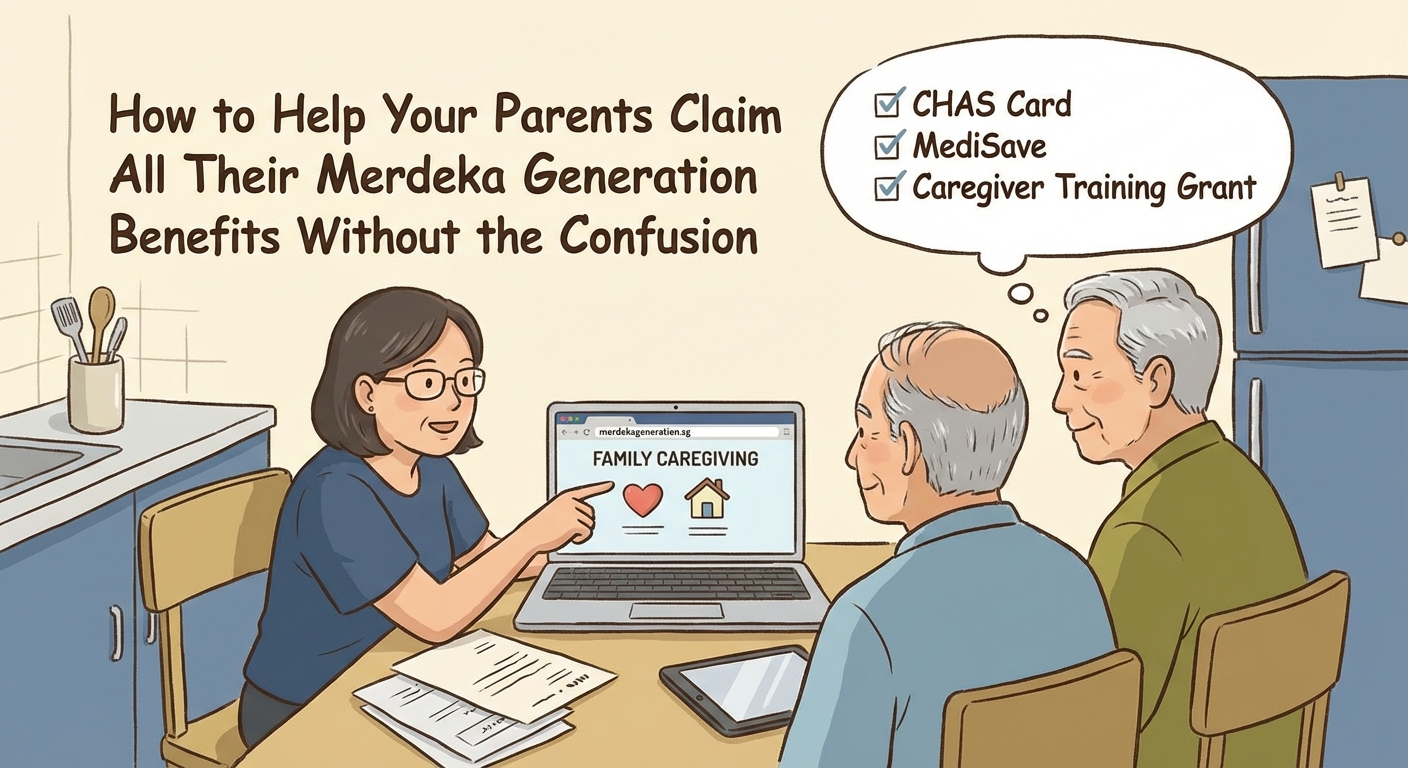
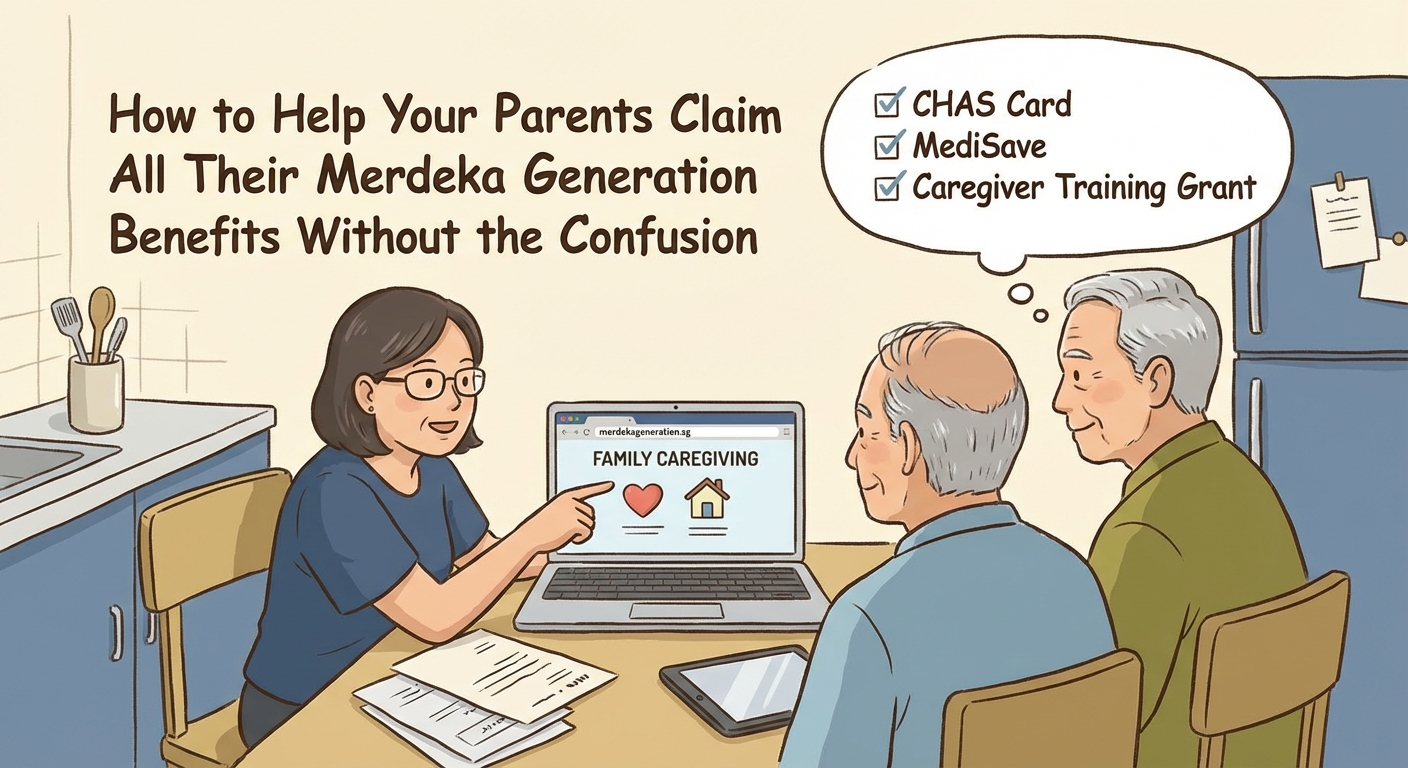
    How to Help Your Parents Claim All Their Merdeka Generation Benefits Without the Confusion

    Your mum just called. She’s worried about her next medical bill. Your dad mentioned something about CPF withdrawals but isn’t sure what he’s entitled to. You want to help, but between government schemes, healthcare subsidies, and retirement planning, the options feel overwhelming.

    You’re not alone. Thousands of Singaporeans in their 30s and 40s are trying to figure out how to support their parents financially without making costly mistakes or missing out on benefits that could save thousands of dollars each year.

    Key Takeaway

    Supporting your elderly parents financially starts with understanding what government benefits they already qualify for, particularly the Merdeka Generation Package, CHAS subsidies, and CPF options. Most families leave thousands of dollars unclaimed simply because they don’t know these schemes exist. This guide walks you through practical steps to assess your parents’ situation, claim all available benefits, and create a sustainable financial support plan without draining your own savings.

    Start with what your parents already have

    Before you transfer money or set up monthly allowances, take stock of what’s already available.

    Many adult children jump straight into giving cash support without realising their parents qualify for substantial government assistance. This leads to unnecessary financial strain on both generations.

    Sit down with your parents and gather these documents:

    • NRIC and birth certificates
    • CPF statements
    • MediShield Life and MediSave records
    • Bank statements from the past three months
    • Any existing subsidy cards (CHAS, PAssion Silver, Merdeka Generation)
    • Property ownership documents

    This exercise alone often reveals forgotten savings accounts, unclaimed CPF monies, or subsidy cards that expired without renewal.

    Your parents might qualify for the Merdeka Generation Package if they were born between 1950 and 1959. The package includes outpatient subsidies, MediSave top-ups, and MediShield Life premium support. Many families miss this because their parents never registered properly or lost their Merdeka Generation card.

    Check eligibility for all government schemes

    How to Help Your Parents Claim All Their Merdeka Generation Benefits Without the Confusion — image 1

    Government support in Singapore is generous but fragmented. Your parents might qualify for multiple schemes simultaneously.

    Here’s a practical checklist:

    1. Verify Merdeka Generation eligibility and ensure all benefits are activated
    2. Check CHAS card tier based on household income and property value
    3. Review CPF LIFE payout options and monthly amounts
    4. Assess MediShield Life coverage and any gaps
    5. Look into Silver Support Scheme eligibility for lower-income seniors
    6. Check public transport concessions and senior citizen discounts

    The CHAS card benefits alone can save your parents hundreds of dollars monthly on GP visits, dental care, and chronic disease management.

    Most seniors qualify for higher subsidy tiers than they realise. A simple income reassessment can upgrade their card and increase savings substantially.

    Understanding CPF options at retirement age

    CPF becomes more complex after 55, and most seniors don’t fully understand their options.

    Your parents can withdraw CPF savings at 65 under specific conditions, but this isn’t always the smartest move. CPF LIFE provides guaranteed monthly payouts for life, which often beats lump sum withdrawals for long-term financial security.

    The three CPF LIFE plans offer different payout structures:

    • Standard Plan: Moderate monthly payouts with some bequest
    • Basic Plan: Higher monthly payouts with minimal bequest
    • Escalating Plan: Lower initial payouts that increase over time

    Many retirees pick the wrong plan because they don’t understand the trade-offs. If your parents need higher income now, the Basic Plan makes sense. If they want to leave more to children, the Standard Plan works better.

    You can also consider topping up your parents’ CPF to increase their monthly payouts while enjoying tax relief for yourself.

    Map out monthly income versus expenses

    Create a simple budget that shows exactly where your parents stand financially.

    List all monthly income sources:

    • CPF LIFE payouts
    • Pension or annuity payments
    • Rental income from property
    • Part-time work earnings
    • Investment dividends
    • Support from children

    Then list all expenses:

    • Housing (property tax, utilities, maintenance)
    • Food and groceries
    • Healthcare and medication
    • Insurance premiums
    • Transport
    • Personal spending and entertainment

    The gap between income and expenses tells you how much support they actually need. Many families discover the gap is smaller than expected once all government subsidies are factored in.

    If your parents struggle with budgeting, help them create a monthly budget that works on fixed income. Fixed income requires different planning than working years.

    Reduce healthcare costs before they spiral

    How to Help Your Parents Claim All Their Merdeka Generation Benefits Without the Confusion — image 2

    Healthcare expenses are the biggest financial worry for most elderly Singaporeans.

    Start by managing your parents’ medical appointments strategically. Book them at CHAS-accredited clinics where subsidies apply. Consolidate specialist visits to avoid duplicate tests and unnecessary procedures.

    Make sure their MediSave is being used properly. Many seniors don’t realise how much MediSave they need and how to use it wisely for approved medical expenses.

    If your parents have chronic conditions like diabetes or high blood pressure, register them for the Chronic Disease Management Programme (CDMP). This provides additional subsidies on top of CHAS.

    “Most families overpay for healthcare simply because they don’t know which subsidies to stack. A senior with both Merdeka Generation benefits and CHAS Orange can pay as little as $5 for a GP visit that would cost $40 without subsidies.” — Community Health Assist Scheme coordinator

    Keep all medical receipts organised. If a healthcare subsidy claim gets rejected, you’ll need documentation to appeal.

    Consider housing options that free up cash

    Your parents’ home might be their biggest untapped financial resource.

    If they own an HDB flat, several schemes can convert property value into retirement income:

    The Lease Buyback Scheme allows seniors to sell part of their lease back to HDB while continuing to live there. This generates a lump sum plus monthly payouts. Should you lease back your flat depends on your parents’ age, flat value, and income needs.

    The Silver Housing Bonus pays up to $30,000 when seniors downsize to a smaller flat. Downsizing from a 4-room to a 3-room flat can also reduce conservancy charges, utilities, and maintenance costs.

    Some families consider applying for a studio apartment if their parents need less space and want to maximise cash from their current flat.

    Before making housing decisions, calculate the full financial impact. Downsizing isn’t always beneficial if the new flat’s location increases transport costs or reduces quality of life.

    Set up sustainable financial support

    How to Help Your Parents Claim All Their Merdeka Generation Benefits Without the Confusion — image 3

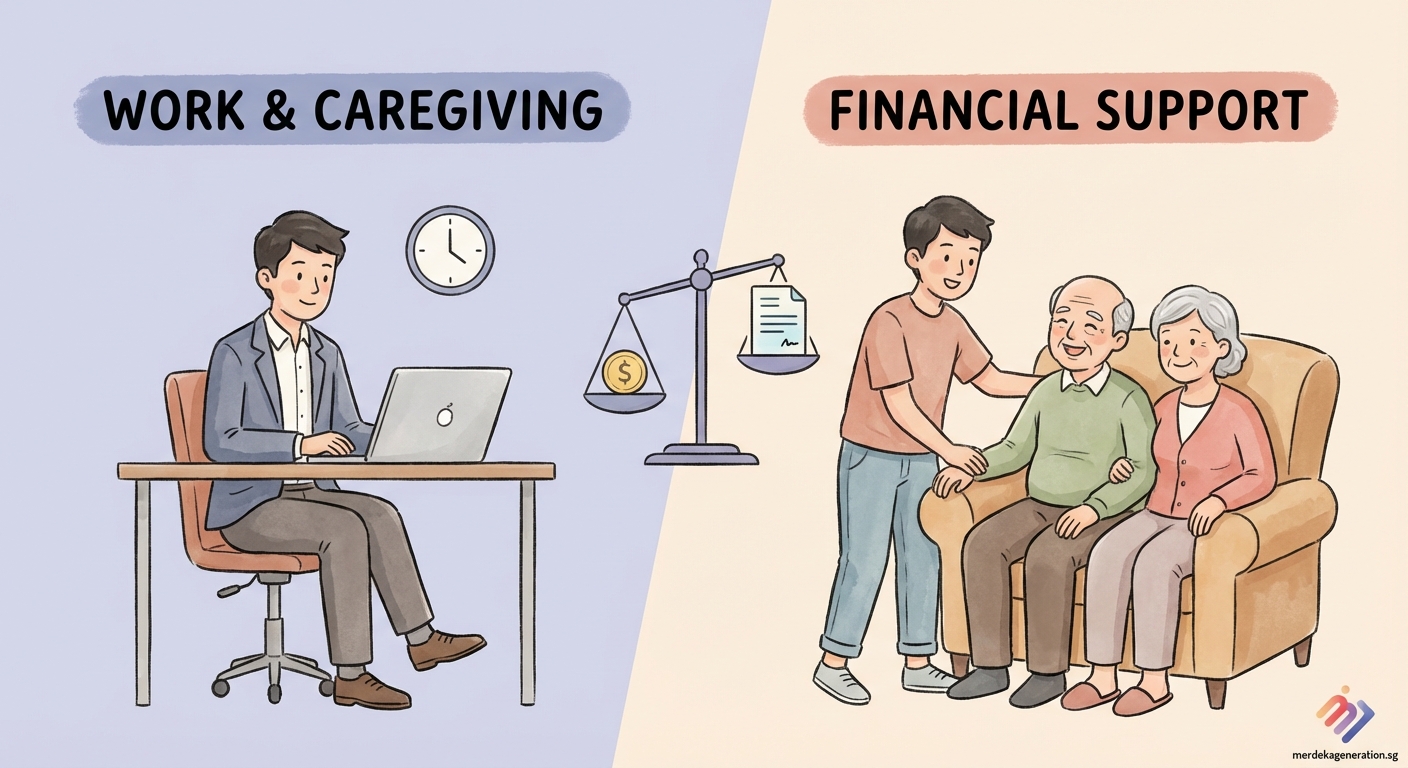
    If your parents need regular financial help, structure it properly from the start.

    Many adult children give irregular amounts whenever parents ask. This creates stress on both sides and makes budgeting impossible.

    Instead, establish a fixed monthly support amount based on the income-expense gap you calculated earlier. Transfer it automatically on the same date each month.

    Consider splitting support among siblings fairly. One common arrangement:

    • Each sibling contributes based on their income capacity
    • One sibling handles administrative tasks (appointments, paperwork)
    • Another manages household maintenance and repairs
    • Everyone contributes to major expenses (hospitalisation, home repairs)

    Document everything. Keep records of transfers, major expenses, and shared contributions. This prevents misunderstandings later, especially when dealing with estate matters.

    If you’re worried about your own finances, set boundaries early. You can’t support your parents if you’re drowning in debt or neglecting your own retirement savings.

    Avoid these common financial mistakes

    Mistake Why it hurts Better approach
    Giving lump sums without a plan Money gets spent randomly, parents ask for more Set up structured monthly support
    Ignoring government schemes Leave thousands unclaimed annually Audit all eligibility yearly
    Paying for private healthcare unnecessarily Waste money on services subsidised elsewhere Use CHAS clinics and polyclinics first
    Withdrawing all CPF at 55 Lose guaranteed lifetime income Keep funds in CPF LIFE for monthly payouts
    Not discussing finances openly Make assumptions that lead to poor decisions Have honest conversations about needs and limits

    The common mistakes Merdeka Generation seniors make when claiming benefits often stem from lack of information rather than poor judgment.

    Plan for increasing care needs

    How to Help Your Parents Claim All Their Merdeka Generation Benefits Without the Confusion — image 4

    Your parents’ financial needs will likely increase as they age.

    Healthcare costs typically rise after 75 as chronic conditions worsen and mobility decreases. Budget for this now rather than scrambling later.

    Research eldercare options before they’re needed:

    • Day rehabilitation centres for therapy and social activities
    • Home care services for meal preparation and cleaning
    • Nursing homes for round-the-clock medical care

    Each option has different costs and subsidy schemes. Choosing between ageing-in-place and sheltered housing depends on your parents’ health, your family’s capacity to help, and financial resources.

    ElderShield and CareShield Life provide some coverage for severe disability, but payouts rarely cover full care costs. Plan for the gap.

    Maximise everyday savings

    Small savings add up when you’re on a fixed income.

    Help your parents take advantage of senior discounts:

    Many seniors don’t use these benefits because they don’t know about them or find the application process confusing. Spend an afternoon helping your parents register for everything they qualify for.

    Community centres offer affordable activities that keep seniors active and social. Affordable active ageing programmes cost far less than private gyms or classes while providing similar benefits.

    Handle the emotional side of financial help

    How to Help Your Parents Claim All Their Merdeka Generation Benefits Without the Confusion — image 5

    Money conversations with parents can be awkward.

    Many seniors feel embarrassed about needing help or defensive about their financial decisions. Approach these discussions with empathy and respect.

    Frame conversations around their wellbeing rather than their mistakes. Instead of “You’re wasting money on expensive clinics,” try “I found a CHAS clinic nearby that might save you money. Want me to help you register?”

    Let your parents maintain control where possible. If they’re mentally sharp, involve them in all decisions. Offer to handle paperwork and research, but let them make final choices.

    Some parents resist help because they don’t want to burden their children. Reassure them that using available government benefits isn’t charity but their rightful entitlement as citizens who contributed to Singapore’s growth.

    Protect yourself while helping them

    Supporting your parents financially shouldn’t destroy your own financial health.

    Set clear limits on what you can afford. If you have young children, a mortgage, or your own retirement to fund, those obligations come first. You can’t pour from an empty cup.

    Don’t raid your own CPF or retirement savings to support your parents. This creates a cycle where you’ll need support from your own children later.

    If your parents have debt, understand that you’re not legally responsible for it unless you’re a guarantor. Their debt doesn’t transfer to you when they pass away, though it will be settled from their estate.

    For estate planning, help your parents understand what happens to CPF savings when they pass away. Proper nomination prevents delays and disputes.

    When professional help makes sense

    How to Help Your Parents Claim All Their Merdeka Generation Benefits Without the Confusion — image 6

    Some situations need expert guidance.

    Consider consulting a financial planner if:

    • Your parents have complex investments or multiple income sources
    • Estate planning involves significant assets or family disputes
    • You’re unsure how to structure support tax-efficiently
    • Healthcare costs are overwhelming and you need to optimise insurance coverage

    Fee-only financial planners (who don’t earn commissions on products they sell) provide unbiased advice. The cost pays for itself if they identify overlooked benefits or optimise your support structure.

    For legal matters like Lasting Power of Attorney or advance medical directives, consult an elder law specialist. These documents protect your parents and simplify decision-making if they become incapacitated.

    Supporting your parents without losing yourself

    Helping elderly parents financially is about more than money transfers and subsidy forms.

    It’s about giving them dignity, security, and peace of mind in their later years. It’s about honouring the sacrifices they made raising you while still protecting your own family’s future.

    Start with the low-hanging fruit. Claim all government benefits your parents qualify for. Optimise their existing income sources. Reduce unnecessary expenses. Only then should you consider direct financial support.

    The goal isn’t to solve every problem immediately. It’s to create a sustainable system that works for everyone involved. Small steps taken consistently beat grand gestures that burn you out.

    Your parents built their lives in an era when retirement planning looked very different. Government support schemes have evolved significantly, creating opportunities they might not recognise. Your role is to bridge that knowledge gap and help them access what they’ve earned.

    Take it one conversation, one form, one benefit at a time. You’ll be surprised how much financial pressure lifts once you’ve claimed everything available and created a clear plan. Your parents will feel more secure, and you’ll feel more confident about supporting them sustainably for years to come.

  • How to Spot If Your Parents Are Missing Out on Healthcare Subsidies They Deserve

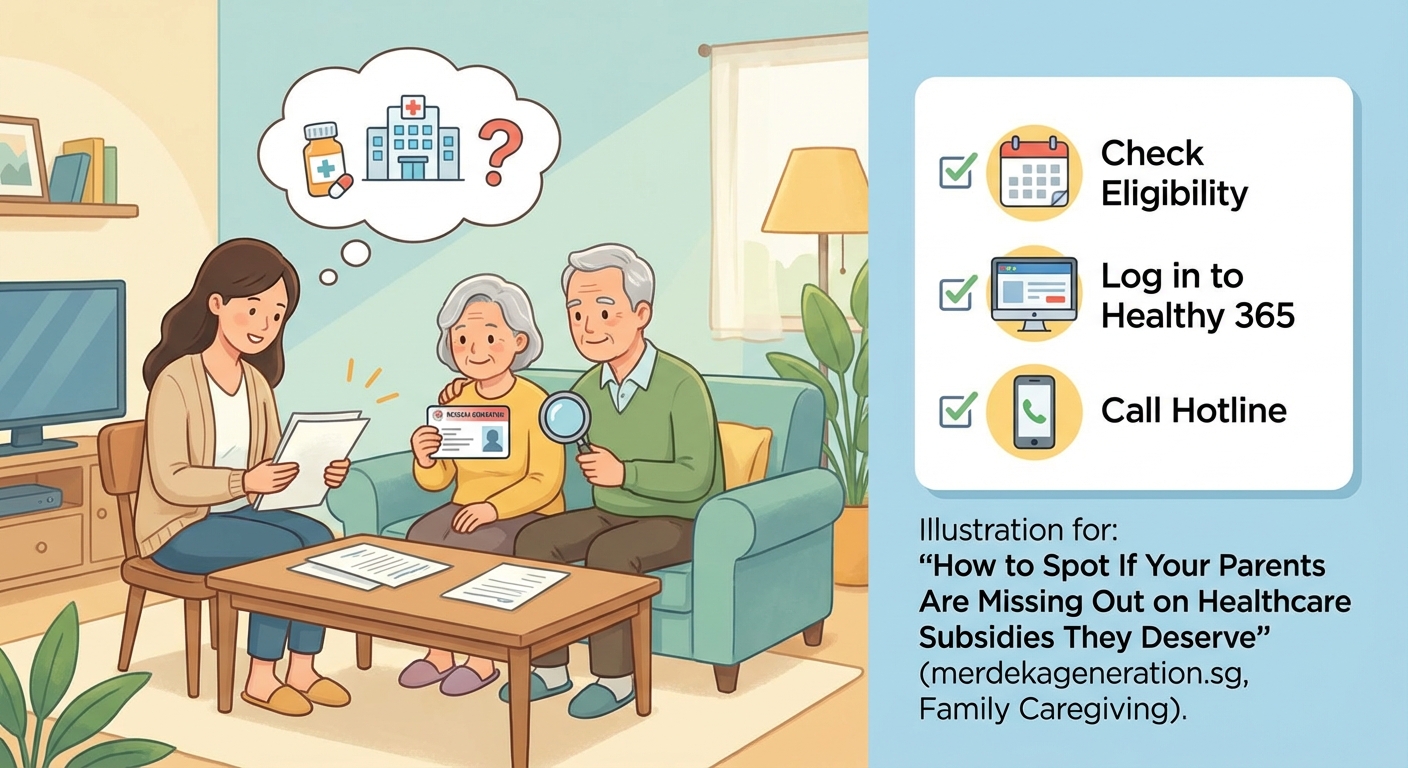
    How to Spot If Your Parents Are Missing Out on Healthcare Subsidies They Deserve

    Your mum mentions she’s skipping her doctor appointments because they’re too expensive. Your dad still doesn’t understand what his Merdeka Generation card actually does. Meanwhile, thousands of dollars in healthcare subsidies sit unclaimed because nobody explained how to use them properly.

    This isn’t rare. Many Merdeka Generation seniors qualify for significant healthcare support but never tap into it. Sometimes they don’t know it exists. Other times the application process feels too complicated. As an adult child, you’re in the perfect position to bridge that gap.

    Key Takeaway

    Your parents may qualify for [Merdeka Generation Package](https://www.moh.gov.sg/healthcare-schemes-subsidies/merdeka-generation-package) subsidies, CHAS card benefits, and MediShield Life premium support that could save thousands annually. Most seniors miss out because they don’t know where to start or assume they don’t qualify. This guide walks you through checking eligibility, gathering documents, and submitting applications so your parents get every subsidy they deserve without confusion or stress.

    Understanding what your parents actually qualify for

    Before you can help, you need to know what’s available.

    The Merdeka Generation Package offers several healthcare subsidies for Singaporeans born in the 1950s. These include outpatient subsidies, MediSave top-ups, and MediShield Life premium support. But the package isn’t automatic for everything. Some benefits apply at the clinic automatically, others need activation.

    Start by confirming your parents’ eligibility status. If they were born between 1950 and 1959 and are Singapore citizens, they should have received their Merdeka Generation card by mail. No card yet? That’s your first action item. You can check if you qualify for the Merdeka Generation Package in 2024 through the official government portal.

    Beyond the Merdeka Generation Package, your parents might also qualify for:

    • CHAS card subsidies for GP visits and dental care
    • MediShield Life premium support based on income
    • Community Health Assist Scheme (CHAS) chronic disease management
    • Pioneer Generation benefits if they were born before 1950
    • ElderShield or CareShield Life disability support

    Many families assume their parents don’t qualify because they own property or have some savings. That’s often wrong. Asset thresholds are more generous than most people think.

    Step by step process to help your parents apply

    How to Spot If Your Parents Are Missing Out on Healthcare Subsidies They Deserve — 1

    Here’s exactly how to get your parents enrolled in the subsidies they deserve.

    1. Gather all necessary documents first

    Don’t start any application without these ready. You’ll need your parents’ NRIC, proof of address, income statements for the past 12 months, and any existing healthcare cards they already have.

    If your parents are retired with no formal income, you’ll need to declare that. Bank statements help show their financial situation. Property ownership details matter for means-testing, so have those on hand too.

    Missing documents cause most application delays. Get everything together before you begin.

    2. Check their CHAS eligibility and card status

    The CHAS card gives subsidies at participating clinics and dental practices. Most Merdeka Generation seniors qualify automatically for at least the orange tier.

    Visit the CHAS website and use their eligibility checker. You’ll need your parent’s NRIC number. The system tells you immediately what tier they qualify for and whether they need to apply or if it’s already active.

    If they need to apply, the online form takes about 10 minutes. You can do this together or handle it yourself if you have their SingPass credentials. The CHAS card benefits explained for Merdeka Generation seniors covers exactly what subsidies apply where.

    3. Verify their MediShield Life coverage and premium support

    All Singapore citizens have MediShield Life automatically. But premium support varies based on income and age.

    Log into your parent’s CPF account or call CPF directly to confirm their current premium amount and whether they’re receiving any subsidies. Merdeka Generation members get additional premium support, but it needs to be claimed in some cases.

    If your parents struggle with high premiums despite their age, something might be misconfigured. CPF can fix this over the phone if you have the right documents ready.

    4. Activate their Merdeka Generation benefits at their regular clinic

    Here’s where many families get stuck. Your parents have the card, but the clinic doesn’t apply the subsidy automatically.

    Take your parent to their regular GP or polyclinic. Bring the Merdeka Generation card. Ask the receptionist to verify that the MG subsidies are linked to their patient record. Some clinics need to manually update their system.

    Once activated, your parent should see reduced bills immediately for subsequent visits. If the subsidy doesn’t appear on the receipt, question it on the spot. Don’t wait.

    5. Set up the annual MediSave top-up tracking

    Merdeka Generation members receive an annual MediSave top-up. This happens automatically, but you should verify it arrives each year.

    Check your parent’s CPF statement around their birthday month. The top-up should appear as a government contribution. If it doesn’t, contact CPF within 30 days. Delays happen, but they’re fixable if you catch them early.

    Understanding your $200 annual MG card top-up and how to use it helps you track this benefit properly.

    Common obstacles and how to solve them

    Even with clear instructions, you’ll hit roadblocks. Here’s how to handle the most frequent ones.

    Your parent doesn’t have SingPass or can’t remember their password. Visit a community centre with their NRIC. Staff there can help reset SingPass credentials on the spot. Bring your parent along for identity verification.

    The clinic says they’re not in the system. This happens when the clinic hasn’t updated their records. Ask them to check the government’s registry directly using your parent’s NRIC. If that fails, call the MG hotline together from the clinic so they can resolve it immediately.

    Your parent received a rejection letter. Don’t assume it’s final. Most rejections happen because of missing documents or outdated income information. Read the letter carefully for the specific reason. Then resubmit with the correct information. If you’re confused, the guide on what to do when your healthcare subsidy claim gets rejected walks through appeals.

    Your parent lost their MG card. Cards can be replaced. The subsidies still apply even without the physical card because they’re tied to the NRIC. But having the card makes clinic visits smoother. Learn what happens if you lost your Merdeka Generation card and how to get a replacement.

    Mistakes that cost families thousands in unclaimed subsidies

    How to Spot If Your Parents Are Missing Out on Healthcare Subsidies They Deserve — 2

    Some errors are expensive. Avoid these.

    Mistake Why it costs money How to fix it
    Assuming eligibility without checking You might qualify for higher subsidy tiers than you think Use official eligibility checkers for every scheme
    Only using the MG card at public hospitals Private clinics and GPs also accept CHAS and MG subsidies Ask every healthcare provider if they participate
    Not updating income status after retirement Outdated income records reduce subsidy amounts Submit updated income declarations annually
    Paying cash instead of using MediSave MediSave can cover many subsidised treatments Always ask if MediSave payment is accepted
    Ignoring rejection letters Appeals often succeed when you provide missing info Respond to every rejection within the stated timeframe

    The common mistakes Merdeka Generation seniors make when claiming benefits list shows even more pitfalls to watch for.

    Making sure the subsidies actually get applied at every visit

    Getting approved is only half the battle. You need to ensure the subsidies apply every single time your parents visit a doctor.

    Create a simple checklist your parents can keep in their wallet:

    • Bring NRIC and MG card to every appointment
    • Tell the receptionist you’re a Merdeka Generation member before paying
    • Check the receipt shows the subsidy before leaving
    • Keep all receipts for your records
    • Report any billing errors within 7 days

    Some clinics forget to apply subsidies, especially if your parent doesn’t visit often. Train your parents to speak up. The subsidy isn’t a favour. It’s an entitlement they’ve earned.

    If your parents feel uncomfortable questioning the bill, offer to call the clinic yourself after their appointment to verify the charges were correct.

    Coordinating multiple schemes without confusion

    Your parents might qualify for several overlapping schemes. That gets messy fast.

    Here’s how different subsidies stack:

    • CHAS subsidies apply at GP clinics and dental practices for outpatient care
    • Merdeka Generation subsidies provide additional discounts on top of CHAS at participating clinics
    • MediShield Life covers hospitalisation and certain outpatient treatments
    • MediSave can pay for MediShield Life premiums and some approved treatments

    These don’t cancel each other out. They work together. But you need to know which applies where.

    For routine GP visits, your parent should mention both their CHAS and MG status. For hospital stays, MediShield Life kicks in automatically. For chronic disease management, CHAS chronic subsidies apply.

    Keep a simple spreadsheet tracking which subsidy your parents use for what. Update it after each medical visit. This prevents confusion and helps you spot if something isn’t being applied correctly.

    What to do if your parent lives overseas part of the year

    Some Merdeka Generation seniors split their time between Singapore and another country. That complicates subsidy eligibility.

    Most healthcare subsidies require your parent to be a Singapore resident. If they spend more than six months abroad annually, they might lose certain benefits. The rules vary by scheme.

    Before your parent makes any long-term travel plans, check how it affects their healthcare coverage. The guide on moving overseas after retirement and Merdeka Generation benefits covers this scenario in detail.

    If your parent must travel for extended periods, consider timing medical appointments and treatments during their months in Singapore to maximise subsidy use.

    Teaching your parents to self-advocate at medical appointments

    You won’t always be there when your parent visits the doctor. They need to know how to ensure their subsidies apply without your help.

    Role-play the conversation with them:

    “Hello, I’m a Merdeka Generation member. Can you please confirm my subsidies are applied to today’s bill? Here’s my card and NRIC.”

    Practice this until it feels natural. Many seniors feel shy about asking for discounts or questioning authority figures like receptionists and doctors. Reframe it: they’re not asking for a favour, they’re claiming what they’re entitled to.

    Write the key phrases on a small card they can keep with their health documents. When they feel uncertain, they can read directly from it.

    Building a healthcare subsidy file for easy reference

    Create a physical folder or digital file with everything your parents need in one place.

    Include:

    • Copies of all healthcare cards (MG, CHAS, NRIC)
    • Eligibility confirmation letters
    • Contact numbers for each scheme’s hotline
    • List of participating clinics near their home
    • Record of past subsidy claims and amounts
    • Upcoming renewal dates for any benefits

    Update this file every six months. When your parent visits a new clinic or specialist, add it to the list with notes about whether the subsidies applied correctly there.

    This file becomes invaluable if you need to appeal a rejection or if another family member needs to help your parents while you’re unavailable.

    Planning for future healthcare costs beyond current subsidies

    Subsidies help, but they don’t cover everything. You need a broader financial strategy.

    Sit down with your parents and review their total healthcare spending over the past year. Include GP visits, medication, dental work, glasses, and any hospital stays. Then estimate what they’ll need in the next five years as health needs typically increase with age.

    Compare that to their available MediSave balance, CPF Life payouts, and other retirement income. Is there a gap? If so, you need to plan for it now.

    Options include topping up their MediSave, purchasing supplementary insurance, or setting aside a dedicated healthcare fund from their savings. The article on managing healthcare costs in retirement beyond MediSave and CHAS subsidies offers detailed strategies.

    Getting help when you’re stuck or overwhelmed

    You don’t have to figure this out alone.

    Silver Generation Office ambassadors visit seniors at home to explain Merdeka Generation benefits. Request a visit if your parents need face-to-face guidance. These ambassadors speak multiple languages and can clarify confusion on the spot.

    Community centres also run regular workshops on healthcare subsidies. Attend one with your parents. Hearing information from an official source sometimes carries more weight than hearing it from their children.

    For complex cases involving appeals or unusual circumstances, consider consulting a social worker at your parent’s polyclinic. They handle these situations daily and know exactly which forms to file and which departments to contact.

    Helping both parents when only one qualifies

    What if only one parent qualifies for Merdeka Generation benefits? The other might feel left out or confused about their own coverage.

    Each parent’s healthcare subsidies are individual. But some schemes consider household income, which affects both. If one parent has MG benefits and the other doesn’t, they might still both qualify for CHAS based on combined household income.

    Check eligibility separately for each parent across all schemes. Don’t assume they automatically have the same coverage just because they’re married. The explanation of whether your spouse can enjoy Merdeka Generation benefits if only you qualify clarifies this common confusion.

    Setting reminders for annual renewals and updates

    Some subsidies renew automatically. Others don’t.

    Set calendar reminders for:

    • Annual income declaration updates (if applicable)
    • CHAS card renewal dates
    • MediSave top-up verification each year
    • Review of subsidy tiers as your parents age or circumstances change

    Use your phone calendar and set reminders 30 days before any deadline. That gives you buffer time if you need to gather documents or make appointments.

    Missing a renewal deadline can mean weeks or months without subsidy coverage while you sort out the paperwork. Prevention is easier than fixing it after the fact.

    Maximising MediShield Life coverage alongside MG benefits

    MediShield Life and Merdeka Generation benefits work together but serve different purposes.

    MediShield Life covers hospitalisation and certain expensive outpatient treatments like dialysis and chemotherapy. Merdeka Generation benefits focus on subsidising outpatient care and reducing MediShield Life premiums.

    Make sure your parents understand which coverage applies in which situation. Hospital bills should automatically apply MediShield Life. But if your parent receives a hospital bill that seems too high, verify that MediShield Life was actually used.

    The guide to maximising your MediShield Life coverage as a Merdeka Generation senior shows exactly how to coordinate both.

    Keeping records that prove subsidies were applied correctly

    Always keep receipts and statements. If a dispute arises later, you need proof.

    Create a simple system:

    1. Collect the receipt immediately after every medical appointment
    2. Check that the subsidy amount is clearly shown
    3. File it chronologically in your healthcare folder
    4. Take a photo and store it digitally as backup
    5. Review all receipts monthly to spot any errors early

    If you notice a clinic consistently failing to apply subsidies correctly, switch to a different participating provider. Your parents’ health and finances are too important to tolerate repeated billing errors.

    When to involve other family members in the process

    If you have siblings or other relatives, divide the work.

    One person can handle document gathering. Another can attend appointments. A third can manage follow-up calls and tracking. This prevents burnout and ensures nothing falls through the cracks.

    Have a family meeting to assign responsibilities clearly. Use a shared document or group chat to update everyone on progress. When multiple people are involved, communication is critical.

    Just make sure your parents know who’s handling what so they don’t get confused by different family members asking for the same information repeatedly.

    Your next practical step

    Start with one action today. Don’t try to tackle everything at once.

    Pick the easiest task: check your parent’s CHAS eligibility online. It takes five minutes. Once you see they qualify (and they probably do), the momentum builds. You’ll feel more confident tackling the next step.

    Then schedule a time this week to sit with your parents and gather their healthcare documents. Make it casual, maybe over lunch or tea. Frame it as helping them organise their paperwork, not as a big formal process.

    Your parents worked hard their whole lives. These subsidies exist because they earned them. Your job is simply to make sure they actually receive what’s rightfully theirs. One step at a time, you’ll get there.

  • Balancing Work and Caregiving: Financial Support Schemes for Families Supporting MG Parents

    Balancing Work and Caregiving: Financial Support Schemes for Families Supporting MG Parents

    Caring for aging parents while holding down a full-time job feels like running two marathons at once. You’re managing medical appointments, medication schedules, and daily care needs on top of work deadlines and team meetings. The emotional weight is heavy enough without the financial strain that comes with it.

    Many adult children in Singapore face this reality every day. Your mum or dad might be part of the Merdeka Generation, born in the 1950s, now dealing with chronic conditions that need regular attention. You want to be there for them, but the costs add up fast. Transport to clinics, helper fees, medical supplies, and lost work hours all chip away at your monthly budget.

    The good news? Singapore offers several financial support schemes specifically designed to help family caregivers like you. These aren’t handouts. They’re recognition that caregiving is real work that deserves real support.

    Key Takeaway

    Family caregivers in Singapore can access multiple financial support schemes including the [Home Caregiving Grant](https://www.moh.gov.sg/), Foreign Domestic Worker Grant, Caregivers Training Grant, and workplace flexible arrangements. Understanding eligibility criteria and application processes for each programme helps reduce caregiving costs while maintaining employment income. Combining government subsidies with employer benefits and [tax reliefs](https://www.iras.gov.sg/taxes/individual-income-tax/basics-of-individual-income-tax/tax-reliefs-rebates-and-deductions/tax-reliefs) creates a sustainable financial framework for long-term caregiving responsibilities.

    Understanding what financial support for family caregivers actually means

    Financial support for family caregivers goes beyond just cash handouts. It includes subsidies, grants, tax reliefs, and workplace benefits that reduce the overall cost of caregiving.

    Think of it as a toolkit rather than a single tool.

    Some schemes pay for specific services like nursing care or therapy sessions. Others give you direct cash to spend as needed. A few provide indirect savings through tax deductions or subsidised equipment.

    The challenge isn’t lack of support. It’s knowing which programmes exist, who qualifies, and how to apply without drowning in paperwork.

    Most caregivers miss out on benefits simply because they don’t know these schemes exist. Or they assume the application process is too complicated to bother with.

    That’s exactly what we’re fixing here.

    Government grants that put money directly in your hands

    Balancing Work and Caregiving: Financial Support Schemes for Families Supporting MG Parents — 1

    Home Caregiving Grant

    This grant gives you up to $400 monthly to help with caregiving expenses. It’s designed for families caring for someone who needs moderate to severe disability support.

    Your parent needs to meet certain functional assessment criteria. A doctor or occupational therapist will evaluate their ability to perform daily activities like bathing, dressing, and eating.

    The grant comes as cash transferred to your bank account. You can use it for anything related to caregiving: helper salaries, adult diapers, transport to appointments, or medical supplies.

    Here’s how to apply:

    1. Get a functional assessment done through a Community Care provider or hospital.
    2. Submit your application through the Agency for Integrated Care (AIC) portal or at any AIC Link office.
    3. Provide supporting documents including NRIC copies, proof of relationship, and the functional assessment report.
    4. Wait for approval, which typically takes two to four weeks.
    5. Receive monthly payouts directly to your designated bank account.

    The grant isn’t means-tested based on your income. It focuses on your parent’s care needs and citizenship status.

    Foreign Domestic Worker Grant

    If you hire a helper to support your parent’s care, this grant offsets part of the levy. You can get up to $120 monthly per helper.

    The person being cared for must be a Singapore citizen with moderate to severe disability. The helper doesn’t need to be dedicated solely to your parent’s care, which makes this practical for families where the helper handles multiple household tasks.

    You’ll still pay the foreign domestic worker levy, but the grant reduces your out-of-pocket cost. It’s credited automatically to your account once approved.

    Application follows the same process as the Home Caregiving Grant. You can even apply for both simultaneously if you qualify.

    Caregivers Training Grant

    Learning proper caregiving techniques makes your life easier and keeps your parent safer. This grant covers 90% of training course fees, capped at $200 per person.

    Courses teach practical skills like proper lifting techniques, wound care, dementia management, and medication administration. These aren’t theoretical classes. You learn hands-on methods you’ll use the same day.

    Approved training providers include hospitals, community centres, and registered training organisations. Check the AIC website for the current list of eligible courses.

    The grant applies once per caregiver. Choose courses that match your parent’s specific conditions for maximum benefit.

    Merdeka Generation benefits your parent can access

    If your parent was born between 1950 and 1959, they qualify for the Merdeka Generation Package. This package significantly reduces their healthcare costs, which indirectly eases your financial burden.

    The package includes outpatient subsidies at CHAS GP clinics, MediShield Life premium subsidies, and additional MediSave top-ups. These benefits work automatically once your parent is enrolled.

    The $200 annual PAssist top-up helps cover transport costs to medical appointments. Your parent can use it for buses, trains, or even GrabAssist rides to hospitals and clinics.

    For chronic conditions like diabetes, high blood pressure, or Myasthenia Gravis, the CHAS card provides substantial subsidies at participating clinics. This reduces medication and consultation costs by 50% to 87.5%, depending on the subsidy tier.

    Understanding these benefits helps you plan medical expenses more accurately. You’ll know what’s covered and what you need to budget for separately.

    Workplace support you might not know you have

    Balancing Work and Caregiving: Financial Support Schemes for Families Supporting MG Parents — 2

    Flexible work arrangements

    Many employers now offer flexible arrangements specifically for caregivers. These aren’t favours. They’re official workplace policies.

    Options include:

    • Staggered hours so you can handle morning care routines
    • Remote work days to be home when needed
    • Compressed work weeks to free up full days for medical appointments
    • Job sharing arrangements with colleagues

    The Tripartite Standard on Flexible Work Arrangements encourages employers to consider these requests seriously. You have the right to ask, and employers must provide reasons if they decline.

    Start the conversation with your HR department. Come prepared with a proposed schedule that shows how you’ll maintain work quality while managing care responsibilities.

    Paid and unpaid leave options

    Some companies provide paid caregiver leave beyond standard annual leave. This might be three to five days per year specifically for caregiving duties.

    Extended unpaid leave is another option for serious medical situations. While you won’t get paid, your job remains protected during the leave period.

    The Shared Parental Leave scheme doesn’t apply to elderly parent care, but some progressive companies have created similar arrangements for elder care. Ask what your company offers.

    Document all leave requests properly. Keep records of medical appointments and care needs in case you need to justify time off later.

    Tax reliefs that reduce your annual burden

    Parent Relief and Handicapped Parent Relief

    If you’re supporting your parent financially, you can claim Parent Relief of $9,000 annually. If your parent has a disability, this increases to $14,000 under Handicapped Parent Relief.

    Your parent’s annual income must be $4,000 or less to qualify. You and your siblings can’t claim relief for the same parent, so coordinate who claims it each year.

    The relief directly reduces your taxable income. If you’re in the 11.5% tax bracket, a $14,000 relief saves you about $1,610 in taxes annually.

    Claim this when filing your annual tax return. IRAS will ask for your parent’s NRIC and income details.

    Foreign Domestic Worker Levy Relief

    If you hire a helper primarily to care for your parent, you can claim Foreign Domestic Worker Levy Relief. This gives you twice the levy amount as a tax deduction.

    For example, if you pay $300 monthly levy ($3,600 annually), you can claim $7,200 in tax relief.

    You can’t claim both this relief and the standard concessionary levy rate. Choose whichever gives you better savings based on your tax bracket.

    Community and voluntary welfare support

    Community Silver Trust

    This fund helps lower-income seniors who need financial assistance for daily living expenses. If your parent’s income and savings fall below certain thresholds, they might qualify for regular monthly support.

    The assistance isn’t huge, typically $100 to $300 monthly, but it helps cover basic needs like food and utilities.

    Apply through your nearest Social Service Office. Bring proof of income, bank statements, and medical reports showing care needs.

    VWO-specific programmes

    Voluntary Welfare Organisations run their own assistance programmes. Some provide free or subsidised adult day care, respite care, or home nursing services.

    Organisations like AWWA, Apex Harmony Lodge, and St Luke’s ElderCare each have different eligibility criteria and services. Research which ones serve your parent’s specific condition or neighbourhood.

    These programmes often have waiting lists. Apply early and follow up regularly on your application status.

    Making the most of multiple schemes at once

    You can combine several support schemes simultaneously. There’s no rule saying you can only access one type of help.

    Here’s a realistic example:

    Support Type Monthly Value Annual Value
    Home Caregiving Grant $400 $4,800
    FDW Grant $120 $1,440
    MG Package savings (estimated) $150 $1,800
    Tax relief savings (estimated) $134 $1,610
    Total Support $804 $9,650

    That’s nearly $10,000 in annual support, which covers a significant portion of caregiving costs.

    The key is applying systematically rather than randomly. Create a checklist of every scheme you might qualify for, then work through applications one by one.

    Common mistakes that cost caregivers thousands

    Many families leave money on the table through simple oversights. Here are the most expensive mistakes:

    • Assuming they don’t qualify without actually checking eligibility criteria
    • Waiting too long to apply, missing backdated payments
    • Not keeping proper receipts and documentation for claims
    • Failing to inform authorities about changes in care needs or living arrangements
    • Claiming reliefs incorrectly on tax returns, triggering audits

    “I thought the grants were only for very poor families. Turns out the Home Caregiving Grant isn’t means-tested at all. I qualified immediately and got six months of backdated payments. That was $2,400 I almost missed out on.” — Sarah T., caregiver for her mother with dementia

    The most common mistakes Merdeka Generation families make often involve not updating information when circumstances change. If your parent’s condition worsens, reapply for assessments to potentially qualify for higher support tiers.

    Practical steps to start accessing support this month

    Getting started feels overwhelming, but breaking it into small actions makes it manageable.

    Week 1: Gather documents

    Collect your parent’s NRIC, medical reports, recent bills, and your own employment details. Having everything ready speeds up all applications.

    Week 2: Get functional assessment

    Book an appointment with a Community Care provider for your parent’s functional assessment. This single assessment unlocks multiple grants.

    Week 3: Submit grant applications

    Apply for the Home Caregiving Grant and FDW Grant (if applicable) through the AIC portal. The online process takes about 20 minutes per application.

    Week 4: Talk to your employer

    Schedule a meeting with HR to discuss flexible work arrangements. Prepare a written proposal showing how you’ll balance both responsibilities.

    Ongoing: Track and optimise

    Set calendar reminders to review your support package every six months. Care needs change, and new schemes launch regularly.

    When your parent’s needs change over time

    Caregiving isn’t static. Your parent’s condition might improve, stabilise, or worsen over months and years.

    Request reassessments when you notice significant changes. A stroke, fall, or new diagnosis can shift them into a higher support tier.

    Some schemes like the Home Caregiving Grant require annual renewals. Mark these dates clearly and submit renewal applications a month before expiry to avoid payment gaps.

    If your parent eventually needs nursing home care, different subsidies apply. The ElderShield and CareShield Life schemes provide monthly payouts for severe disability, whether at home or in a facility.

    Planning ahead prevents financial shocks when care needs escalate.

    Building a sustainable caregiving budget

    Financial support schemes work best as part of a broader budget strategy.

    Start by calculating your monthly caregiving costs:

    • Helper salary and levy
    • Medical appointments and medications
    • Transport
    • Special equipment (wheelchair, hospital bed, etc.)
    • Adult care supplies
    • Therapy sessions
    • Respite care

    Then map which schemes cover which expenses. The gaps show where you need to allocate your own funds.

    Creating a monthly budget on fixed income principles apply here too. Fixed support (grants) covers baseline costs. Variable expenses need flexible planning.

    Build an emergency fund specifically for caregiving. Unexpected hospitalisations or equipment needs pop up without warning.

    Resources that make applications easier

    You don’t have to navigate this alone. Several resources simplify the process:

    AIC Link offices provide face-to-face help with applications. Staff can check your eligibility, fill forms with you, and submit everything on the spot.

    Silver Generation Office ambassadors visit homes to explain available support. They’re particularly helpful for families less comfortable with online applications.

    Social Service Offices coordinate multiple types of assistance and can fast-track urgent cases.

    Community Development Councils run their own assistance programmes and can guide you to neighbourhood-specific support.

    Calling the AIC hotline (1800-650-6060) connects you with someone who can answer specific questions about your situation.

    Support that goes beyond just money

    While this guide focuses on financial support for family caregivers, remember that emotional and practical support matter too.

    Caregiver support groups provide a space to share experiences and coping strategies. Many hospitals and community centres run regular sessions.

    Respite care services give you breaks from caregiving. Even a few hours weekly to rest, exercise, or meet friends prevents burnout.

    Training programmes teach you skills that make daily care less physically demanding and stressful. Proper techniques for lifting, bathing, and managing difficult behaviours protect both you and your parent.

    The financial schemes work better when combined with these non-monetary supports. Money solves some problems, but not all of them.

    Why starting today matters more than perfect timing

    You might think you should wait until you understand everything perfectly before applying. That’s the perfectionist trap that keeps many caregivers from getting help.

    Start with one application this week. Just one.

    The Home Caregiving Grant is a good first choice because it has broad eligibility and provides direct cash support. You can tackle other schemes once that’s approved.

    Every month you delay is another month of support payments you miss. Most schemes don’t backdate more than six months, so waiting costs you real money.

    Your parent worked hard their whole life. They contributed to building Singapore. These support schemes exist because society recognises that contribution and the challenges families face in providing care.

    You’re not asking for charity. You’re accessing support that’s rightfully available to families like yours. The only mistake is not claiming what you qualify for.

    Making caregiving work for your family

    Balancing work and caregiving never feels perfectly smooth. Some days you’ll manage both well. Other days everything feels like it’s falling apart.

    Financial support schemes don’t solve every problem, but they remove one major source of stress. When money isn’t constantly tight, you have more energy for the actual work of caring.

    Your parent raised you, probably while juggling their own work and family pressures. Now it’s your turn, but you have resources they didn’t have access to. Use them.

    Start with the schemes that match your situation best. Apply systematically. Follow up on applications. Adjust as your parent’s needs change.

    The support is there. It’s real. It works. You just need to take the first step to access it.

  • Your Parents Received a MG Package Letter—Now What? A Caregiver’s Action Checklist

    Your mum just forwarded you a letter about the Merdeka Generation Package. Your dad keeps missing his doctor appointments. Your siblings are asking what happens if something goes wrong.

    You’re not alone in feeling overwhelmed.

    Becoming a caregiver for aging parents often happens suddenly. One moment you’re managing your own household, the next you’re fielding calls from clinics, sorting through government forms, and trying to understand CPF rules you never needed before.

    Key Takeaway

    This caregiver checklist for aging parents covers essential tasks across health, legal, and financial matters. You’ll learn how to organise medical appointments, secure important documents, understand Merdeka Generation benefits, manage finances, and prepare for emergencies. Each section includes actionable steps you can start today, even if you’re juggling work and family responsibilities.

    Understanding what your parents actually need

    Before you start tackling tasks, take stock of where your parents stand right now.

    Sit down with them for a proper conversation. Not the “how are you feeling” chat over Sunday lunch. A real conversation about their health, finances, and what they need help with.

    Many caregivers assume they know what their parents need. Then they discover Mum has been skipping medications because she can’t open the bottles. Or Dad hasn’t been to the dentist in three years because he doesn’t know about his CHAS subsidies.

    Start with these questions:

    • What daily tasks are becoming difficult?
    • Which bills are they paying, and how?
    • When was their last medical checkup?
    • Do they have a will or lasting power of attorney?
    • Are they claiming all the government benefits they’re entitled to?

    Write down the answers. You’ll need them for the next steps.

    Medical and health management tasks

    Organising medical information

    Create a master file with all your parents’ medical information. This saves time during emergencies and prevents duplicate tests.

    Your file should include:

    • Current medications and dosages
    • Known allergies
    • Chronic conditions and diagnoses
    • Names and contact details of all doctors
    • Recent test results and reports
    • Insurance policy numbers

    Keep both physical and digital copies. Store the digital version somewhere you can access from your phone.

    Setting up regular health monitoring

    Book these appointments now if they haven’t happened in the past year:

    1. General health screening at a polyclinic
    2. Eye examination
    3. Dental checkup
    4. Hearing test if they’re above 65

    Polyclinics offer subsidised health screenings for seniors. The Screen for Life programme covers common conditions like diabetes, high blood pressure, and high cholesterol.

    For Merdeka Generation seniors, additional subsidies apply. They get extra support for outpatient care at polyclinics and participating GP clinics through the CHAS card benefits explained: what Merdeka Generation seniors need to know.

    Managing medications safely

    Medication errors are common among seniors managing multiple prescriptions.

    Set up a system:

    • Use a weekly pill organiser with morning and evening compartments
    • Set phone reminders for medication times
    • Keep an updated list of all medications in their wallet
    • Review medications with the doctor every six months

    Ask the pharmacist to use easy-open caps if arthritis makes regular caps difficult.

    Understanding available healthcare subsidies

    Your parents may qualify for multiple healthcare subsidies they’re not using.

    Subsidy Programme Who Qualifies What It Covers
    CHAS All Singapore citizens GP visits, dental, and some chronic disease management
    MediShield Life All Singapore citizens and PRs Hospitalisation and certain outpatient treatments
    Merdeka Generation Package Born 1950-1959 Additional outpatient subsidies, MediSave top-ups
    Community Health Assist Scheme Lower to middle income Enhanced subsidies for medical and dental care

    The Merdeka Generation Package provides significant support. If you’re unsure whether your parents qualify, check if you qualify for the Merdeka Generation Package in 2024.

    Many seniors don’t realise they need to activate certain benefits. Understanding your $200 annual MG card top-up: when it comes and how to use it explains how to maximise these subsidies.

    Essential legal documents to secure

    Legal paperwork feels tedious until you need it urgently. Then it becomes critical.

    Lasting Power of Attorney

    A Lasting Power of Attorney (LPA) lets your parents appoint someone to make decisions on their behalf if they lose mental capacity.

    This covers two areas:

    • Personal welfare decisions (medical treatment, where they live)
    • Property and financial affairs

    Apply through the Office of the Public Guardian. The application costs $75 for both parts, or $50 for one part only.

    Do this while your parents still have mental capacity. Once dementia or serious illness sets in, it’s too late.

    Advance Medical Directive

    An Advance Medical Directive (AMD) tells doctors whether your parent wants life-sustaining treatment if they become terminally ill and unconscious.

    It’s different from an LPA. The AMD covers end-of-life decisions. The LPA covers ongoing medical decisions.

    Register an AMD through the National Registry of Advance Medical Directives. There’s no fee.

    Will and estate planning

    A valid will prevents family disputes and ensures your parents’ assets go where they want.

    Without a will, the Intestate Succession Act determines who inherits what. This may not match your parents’ wishes.

    Encourage your parents to:

    • List all assets (property, bank accounts, CPF, investments)
    • Decide who gets what
    • Appoint an executor
    • Engage a lawyer to draft the will properly

    For CPF savings specifically, your parents should make a CPF nomination. This is separate from a will. Learn more about what happens to your CPF savings when you pass away: estate planning essentials.

    Insurance policies and coverage review

    Gather all insurance documents:

    • Life insurance policies
    • Health and hospitalisation insurance
    • Critical illness coverage
    • Long-term care insurance

    Check whether coverage is adequate. Many seniors bought policies decades ago that no longer meet current healthcare costs.

    For Merdeka Generation seniors, maximising your MediShield Life coverage can reduce out-of-pocket expenses significantly.

    Financial management and planning

    Getting visibility on finances

    You can’t help manage finances if you don’t know what’s there.

    Ask your parents to share:

    • Monthly income sources (CPF LIFE, pension, rental, dividends)
    • Monthly expenses and bills
    • Bank account details and balances
    • Outstanding debts or loans
    • Investment portfolios

    This conversation can feel uncomfortable. Frame it as planning together, not taking over.

    Understanding CPF and retirement income

    CPF LIFE provides monthly payouts for life. But many caregivers don’t understand how it works or whether their parents are getting the right plan.

    Key things to check:

    • Which CPF LIFE plan are they on?
    • What’s their monthly payout amount?
    • Can they afford their current lifestyle on this amount?
    • Should they consider voluntary top-ups?

    If your parents are struggling financially, topping up your parents’ MediSave might help reduce their medical expenses.

    For broader financial questions, start with 8 questions every caregiver should ask about their parents’ CPF and retirement funds.

    Creating a sustainable budget

    Help your parents create a realistic monthly budget.

    List fixed expenses:

    • Housing (property tax, conservancy, utilities)
    • Insurance premiums
    • Medications and medical appointments
    • Transport
    • Phone and internet
    • Food and groceries

    Then list discretionary spending:

    • Entertainment and outings
    • Gifts for grandchildren
    • Dining out
    • Hobbies

    Compare total expenses against total income. If expenses exceed income, you need to make adjustments.

    Creating a monthly budget that works on fixed CPF LIFE and pension income provides practical strategies.

    Exploring additional financial support

    If your parents are struggling, several options exist:

    • Silver Support Scheme for lower-income seniors
    • ComCare for urgent financial assistance
    • Lease Buyback Scheme to unlock HDB value
    • Downsizing to a smaller flat

    The Lease Buyback Scheme lets your parents sell part of their flat lease back to HDB while continuing to live there. This tops up their CPF and provides additional monthly income.

    Learn whether you should lease back your flat under the Lease Buyback Scheme.

    Home safety and modifications

    Conducting a home safety audit

    Walk through your parents’ home and look for hazards.

    Common issues:

    • Loose rugs or mats that cause tripping
    • Poor lighting in corridors and bathrooms
    • Slippery bathroom floors
    • High thresholds between rooms
    • Cluttered walkways
    • Unstable furniture

    Fix these before a fall happens. Hip fractures in seniors often lead to serious complications.

    Installing essential safety features

    Consider these modifications:

    • Grab bars in the bathroom and toilet
    • Non-slip mats in wet areas
    • Raised toilet seat
    • Shower chair
    • Improved lighting, especially near stairs
    • Ramps if there are steps

    The Enhancement for Active Seniors (EASE) programme provides subsidies for home modifications. Eligible households can get up to $7,500 for approved improvements.

    Emergency response systems

    An emergency button or medical alert device gives your parents a way to call for help if they fall or feel unwell when alone.

    Options include:

    • Pendant-style emergency buttons
    • Smartwatches with fall detection
    • Motion sensors that alert you if there’s no movement

    Some systems connect directly to emergency services. Others alert family members first.

    Coordinating care and building support

    Assembling your care team

    You can’t do everything alone.

    Identify who can help:

    • Other siblings or family members
    • Domestic helper if applicable
    • Neighbours who can check in
    • Professional caregivers or day care centres
    • Community volunteers

    Be specific about responsibilities. Don’t just say “we’ll all help.” Assign actual tasks.

    Finding community resources

    Singapore offers numerous support services for seniors and caregivers:

    • Senior Activity Centres for social activities and meals
    • Day Rehabilitation Centres for seniors needing therapy
    • Befriending services for isolated seniors
    • Caregiver support groups
    • Respite care when you need a break

    Agency for Integrated Care (AIC) can help you find appropriate services. Call their hotline at 1800-650-6060.

    Managing caregiver stress

    Caregiving is exhausting. You’re managing your own life while taking on significant responsibility for someone else’s.

    “The biggest mistake caregivers make is not taking care of themselves. You can’t pour from an empty cup. Schedule breaks, accept help, and don’t feel guilty about needing time for yourself.”

    Watch for signs of caregiver burnout:

    • Constant fatigue
    • Irritability or mood swings
    • Withdrawing from friends and activities
    • Feeling overwhelmed or hopeless
    • Neglecting your own health

    Join a caregiver support group. Talking with others in similar situations helps you feel less alone.

    Navigating Merdeka Generation benefits

    Activating all available benefits

    Many Merdeka Generation seniors aren’t using all their entitled benefits.

    Your parents should have:

    • Their Merdeka Generation card (for identification)
    • CHAS card activated
    • Understanding of their MediSave top-up
    • Knowledge of subsidised health screenings

    If they’ve lost their card, find out what happens if you lost your Merdeka Generation card.

    Avoiding common mistakes

    Seniors often make errors when claiming benefits. Learn about the 5 common mistakes Merdeka Generation seniors make when claiming benefits to help your parents avoid them.

    Getting help with claims

    If a healthcare subsidy claim gets rejected, don’t give up. Learn what to do when your healthcare subsidy claim gets rejected.

    The process might seem complicated, but most issues can be resolved with proper documentation and follow-up.

    Preparing for emergencies

    Creating an emergency contact list

    Compile a list everyone can access:

    • Your contact details
    • Other family members
    • Parents’ doctors
    • Nearest hospital emergency department
    • Ambulance (995)
    • Police (999)
    • Poison control
    • Utility companies
    • Insurance company emergency lines

    Put copies on the fridge, in your parents’ wallets, and in your phone.

    Packing a hospital go-bag

    Keep a bag ready with:

    • Change of clothes
    • Toiletries
    • Copies of important documents
    • List of current medications
    • Phone charger
    • Some cash
    • Snacks
    • Reading material

    When emergencies happen, you won’t have time to pack thoughtfully.

    Planning for “what if” scenarios

    Have difficult but necessary conversations:

    • What if one parent needs nursing home care?
    • What if they can no longer live independently?
    • What are their wishes for end-of-life care?
    • How will you handle medical decisions if they can’t communicate?

    Document their preferences. Share this information with all family members involved in care decisions.

    Making this checklist work for your situation

    Not every item on this caregiver checklist for aging parents will apply to your situation. Your parents might be healthy and independent, needing only light support. Or they might require intensive daily care.

    Start with the most urgent tasks. If your parents don’t have an LPA, prioritise that. If they’re missing medical appointments, focus on health management first.

    Break large tasks into smaller steps. You don’t need to organise everything in one weekend. Tackle one section per month if that’s what works.

    The goal isn’t perfection. The goal is ensuring your parents are safe, their needs are met, and you’re not carrying the entire burden alone. With the right systems in place, caregiving becomes more manageable for everyone involved.

  • How to Help Your Parents Claim All Their Merdeka Generation Benefits Without the Confusion

    How to Help Your Parents Claim All Their Merdeka Generation Benefits Without the Confusion

    Your mum just called. She’s worried about her next medical bill. Your dad mentioned something about CPF withdrawals but isn’t sure what he’s entitled to. You want to help, but between government schemes, healthcare subsidies, and retirement planning, the options feel overwhelming.

    You’re not alone. Thousands of Singaporeans in their 30s and 40s are trying to figure out how to support their parents financially without making costly mistakes or missing out on benefits that could save thousands of dollars each year.

    Key Takeaway

    Supporting your elderly parents financially starts with understanding what government benefits they already qualify for, particularly the Merdeka Generation Package, CHAS subsidies, and CPF options. Most families leave thousands of dollars unclaimed simply because they don’t know these schemes exist. This guide walks you through practical steps to assess your parents’ situation, claim all available benefits, and create a sustainable financial support plan without draining your own savings.

    Start with what your parents already have

    Before you transfer money or set up monthly allowances, take stock of what’s already available.

    Many adult children jump straight into giving cash support without realising their parents qualify for substantial government assistance. This leads to unnecessary financial strain on both generations.

    Sit down with your parents and gather these documents:

    • NRIC and birth certificates
    • CPF statements
    • MediShield Life and MediSave records
    • Bank statements from the past three months
    • Any existing subsidy cards (CHAS, PAssion Silver, Merdeka Generation)
    • Property ownership documents

    This exercise alone often reveals forgotten savings accounts, unclaimed CPF monies, or subsidy cards that expired without renewal.

    Your parents might qualify for the Merdeka Generation Package if they were born between 1950 and 1959. The package includes outpatient subsidies, MediSave top-ups, and MediShield Life premium support. Many families miss this because their parents never registered properly or lost their Merdeka Generation card.

    Check eligibility for all government schemes

    How to Help Your Parents Claim All Their Merdeka Generation Benefits Without the Confusion - Illustration 1

    Government support in Singapore is generous but fragmented. Your parents might qualify for multiple schemes simultaneously.

    Here’s a practical checklist:

    1. Verify Merdeka Generation eligibility and ensure all benefits are activated
    2. Check CHAS card tier based on household income and property value
    3. Review CPF LIFE payout options and monthly amounts
    4. Assess MediShield Life coverage and any gaps
    5. Look into Silver Support Scheme eligibility for lower-income seniors
    6. Check public transport concessions and senior citizen discounts

    The CHAS card benefits alone can save your parents hundreds of dollars monthly on GP visits, dental care, and chronic disease management.

    Most seniors qualify for higher subsidy tiers than they realise. A simple income reassessment can upgrade their card and increase savings substantially.

    Understanding CPF options at retirement age

    CPF becomes more complex after 55, and most seniors don’t fully understand their options.

    Your parents can withdraw CPF savings at 65 under specific conditions, but this isn’t always the smartest move. CPF LIFE provides guaranteed monthly payouts for life, which often beats lump sum withdrawals for long-term financial security.

    The three CPF LIFE plans offer different payout structures:

    • Standard Plan: Moderate monthly payouts with some bequest
    • Basic Plan: Higher monthly payouts with minimal bequest
    • Escalating Plan: Lower initial payouts that increase over time

    Many retirees pick the wrong plan because they don’t understand the trade-offs. If your parents need higher income now, the Basic Plan makes sense. If they want to leave more to children, the Standard Plan works better.

    You can also consider topping up your parents’ CPF to increase their monthly payouts while enjoying tax relief for yourself.

    Map out monthly income versus expenses

    Create a simple budget that shows exactly where your parents stand financially.

    List all monthly income sources:

    • CPF LIFE payouts
    • Pension or annuity payments
    • Rental income from property
    • Part-time work earnings
    • Investment dividends
    • Support from children

    Then list all expenses:

    • Housing (property tax, utilities, maintenance)
    • Food and groceries
    • Healthcare and medication
    • Insurance premiums
    • Transport
    • Personal spending and entertainment

    The gap between income and expenses tells you how much support they actually need. Many families discover the gap is smaller than expected once all government subsidies are factored in.

    If your parents struggle with budgeting, help them create a monthly budget that works on fixed income. Fixed income requires different planning than working years.

    Reduce healthcare costs before they spiral

    How to Help Your Parents Claim All Their Merdeka Generation Benefits Without the Confusion - Illustration 2

    Healthcare expenses are the biggest financial worry for most elderly Singaporeans.

    Start by managing your parents’ medical appointments strategically. Book them at CHAS-accredited clinics where subsidies apply. Consolidate specialist visits to avoid duplicate tests and unnecessary procedures.

    Make sure their MediSave is being used properly. Many seniors don’t realise how much MediSave they need and how to use it wisely for approved medical expenses.

    If your parents have chronic conditions like diabetes or high blood pressure, register them for the Chronic Disease Management Programme (CDMP). This provides additional subsidies on top of CHAS.

    “Most families overpay for healthcare simply because they don’t know which subsidies to stack. A senior with both Merdeka Generation benefits and CHAS Orange can pay as little as $5 for a GP visit that would cost $40 without subsidies.” — Community Health Assist Scheme coordinator

    Keep all medical receipts organised. If a healthcare subsidy claim gets rejected, you’ll need documentation to appeal.

    Consider housing options that free up cash

    Your parents’ home might be their biggest untapped financial resource.

    If they own an HDB flat, several schemes can convert property value into retirement income:

    The Lease Buyback Scheme allows seniors to sell part of their lease back to HDB while continuing to live there. This generates a lump sum plus monthly payouts. Should you lease back your flat depends on your parents’ age, flat value, and income needs.

    The Silver Housing Bonus pays up to $30,000 when seniors downsize to a smaller flat. Downsizing from a 4-room to a 3-room flat can also reduce conservancy charges, utilities, and maintenance costs.

    Some families consider applying for a studio apartment if their parents need less space and want to maximise cash from their current flat.

    Before making housing decisions, calculate the full financial impact. Downsizing isn’t always beneficial if the new flat’s location increases transport costs or reduces quality of life.

    Set up sustainable financial support

    How to Help Your Parents Claim All Their Merdeka Generation Benefits Without the Confusion - Illustration 3

    If your parents need regular financial help, structure it properly from the start.

    Many adult children give irregular amounts whenever parents ask. This creates stress on both sides and makes budgeting impossible.

    Instead, establish a fixed monthly support amount based on the income-expense gap you calculated earlier. Transfer it automatically on the same date each month.

    Consider splitting support among siblings fairly. One common arrangement:

    • Each sibling contributes based on their income capacity
    • One sibling handles administrative tasks (appointments, paperwork)
    • Another manages household maintenance and repairs
    • Everyone contributes to major expenses (hospitalisation, home repairs)

    Document everything. Keep records of transfers, major expenses, and shared contributions. This prevents misunderstandings later, especially when dealing with estate matters.

    If you’re worried about your own finances, set boundaries early. You can’t support your parents if you’re drowning in debt or neglecting your own retirement savings.

    Avoid these common financial mistakes

    Mistake Why it hurts Better approach
    Giving lump sums without a plan Money gets spent randomly, parents ask for more Set up structured monthly support
    Ignoring government schemes Leave thousands unclaimed annually Audit all eligibility yearly
    Paying for private healthcare unnecessarily Waste money on services subsidised elsewhere Use CHAS clinics and polyclinics first
    Withdrawing all CPF at 55 Lose guaranteed lifetime income Keep funds in CPF LIFE for monthly payouts
    Not discussing finances openly Make assumptions that lead to poor decisions Have honest conversations about needs and limits

    The common mistakes Merdeka Generation seniors make when claiming benefits often stem from lack of information rather than poor judgment.

    Plan for increasing care needs

    How to Help Your Parents Claim All Their Merdeka Generation Benefits Without the Confusion - Illustration 4

    Your parents’ financial needs will likely increase as they age.

    Healthcare costs typically rise after 75 as chronic conditions worsen and mobility decreases. Budget for this now rather than scrambling later.

    Research eldercare options before they’re needed:

    • Day rehabilitation centres for therapy and social activities
    • Home care services for meal preparation and cleaning
    • Nursing homes for round-the-clock medical care

    Each option has different costs and subsidy schemes. Choosing between ageing-in-place and sheltered housing depends on your parents’ health, your family’s capacity to help, and financial resources.

    ElderShield and CareShield Life provide some coverage for severe disability, but payouts rarely cover full care costs. Plan for the gap.

    Maximise everyday savings

    Small savings add up when you’re on a fixed income.

    Help your parents take advantage of senior discounts:

    Many seniors don’t use these benefits because they don’t know about them or find the application process confusing. Spend an afternoon helping your parents register for everything they qualify for.

    Community centres offer affordable activities that keep seniors active and social. Affordable active ageing programmes cost far less than private gyms or classes while providing similar benefits.

    Handle the emotional side of financial help

    Money conversations with parents can be awkward.

    Many seniors feel embarrassed about needing help or defensive about their financial decisions. Approach these discussions with empathy and respect.

    Frame conversations around their wellbeing rather than their mistakes. Instead of “You’re wasting money on expensive clinics,” try “I found a CHAS clinic nearby that might save you money. Want me to help you register?”

    Let your parents maintain control where possible. If they’re mentally sharp, involve them in all decisions. Offer to handle paperwork and research, but let them make final choices.

    Some parents resist help because they don’t want to burden their children. Reassure them that using available government benefits isn’t charity but their rightful entitlement as citizens who contributed to Singapore’s growth.

    Protect yourself while helping them

    Supporting your parents financially shouldn’t destroy your own financial health.

    Set clear limits on what you can afford. If you have young children, a mortgage, or your own retirement to fund, those obligations come first. You can’t pour from an empty cup.

    Don’t raid your own CPF or retirement savings to support your parents. This creates a cycle where you’ll need support from your own children later.

    If your parents have debt, understand that you’re not legally responsible for it unless you’re a guarantor. Their debt doesn’t transfer to you when they pass away, though it will be settled from their estate.

    For estate planning, help your parents understand what happens to CPF savings when they pass away. Proper nomination prevents delays and disputes.

    When professional help makes sense

    Some situations need expert guidance.

    Consider consulting a financial planner if:

    • Your parents have complex investments or multiple income sources
    • Estate planning involves significant assets or family disputes
    • You’re unsure how to structure support tax-efficiently
    • Healthcare costs are overwhelming and you need to optimise insurance coverage

    Fee-only financial planners (who don’t earn commissions on products they sell) provide unbiased advice. The cost pays for itself if they identify overlooked benefits or optimise your support structure.

    For legal matters like Lasting Power of Attorney or advance medical directives, consult an elder law specialist. These documents protect your parents and simplify decision-making if they become incapacitated.

    Supporting your parents without losing yourself

    Helping elderly parents financially is about more than money transfers and subsidy forms.

    It’s about giving them dignity, security, and peace of mind in their later years. It’s about honouring the sacrifices they made raising you while still protecting your own family’s future.

    Start with the low-hanging fruit. Claim all government benefits your parents qualify for. Optimise their existing income sources. Reduce unnecessary expenses. Only then should you consider direct financial support.

    The goal isn’t to solve every problem immediately. It’s to create a sustainable system that works for everyone involved. Small steps taken consistently beat grand gestures that burn you out.

    Your parents built their lives in an era when retirement planning looked very different. Government support schemes have evolved significantly, creating opportunities they might not recognise. Your role is to bridge that knowledge gap and help them access what they’ve earned.

    Take it one conversation, one form, one benefit at a time. You’ll be surprised how much financial pressure lifts once you’ve claimed everything available and created a clear plan. Your parents will feel more secure, and you’ll feel more confident about supporting them sustainably for years to come.