Category: Healthcare Subsidies

  • Step-by-Step Guide to Applying for Additional Healthcare Subsidies Beyond the Merdeka Generation Package

    The Merdeka Generation Package gives you outpatient subsidies, MediSave top-ups, and help with long-term care. But many seniors don’t realise that’s just the starting point. There are at least seven other healthcare subsidy schemes you can layer on top of your MG benefits, and most of them require separate applications. If you were born between 1950 and 1959, you could be leaving thousands of dollars on the table simply because you didn’t know these programmes exist or how to apply for them.

    Key Takeaway

    Merdeka Generation additional subsidies include CHAS, MediFund, ElderShield Supplement, Interim Disability Assistance Programme for the Elderly (IDAPE), and the Silver Support Scheme. Each requires a separate application and has different income or functional criteria. Stacking these schemes can cut your out-of-pocket healthcare costs by 50 to 90 percent, especially if you have chronic conditions or mobility challenges. Always check eligibility before your next appointment.

    Why the Merdeka Generation Package alone isn’t enough

    Your MG card covers part of your outpatient bills at participating clinics and gives you an annual $200 top-up to your MediSave account. It also reduces your MediShield Life premiums and subsidises long-term care costs if you need nursing-home support.

    But here’s what it doesn’t do.

    It doesn’t waive your co-payment at polyclinics. It doesn’t cover the full cost of specialist visits at public hospitals. It doesn’t pay for mobility aids like wheelchairs or grab bars. And it won’t help if you’re disabled and need cash assistance to hire a caregiver at home.

    That’s where Merdeka Generation additional subsidies come in. These programmes fill the gaps the MG package leaves open, and they’re designed to work together. The trick is knowing which ones you qualify for and how to apply without getting lost in government websites.

    Understanding the subsidy landscape in Singapore

    Singapore’s healthcare financing system is built in layers. At the bottom sits MediSave, which you use for hospitalisation and approved outpatient treatments. Above that is MediShield Life, which covers large hospital bills. Then come the targeted schemes for lower-income households, seniors, and people with disabilities.

    The Merdeka Generation Package sits alongside these schemes, not above them. So you can hold a CHAS card, receive Silver Support payouts, and still enjoy your MG outpatient subsidies at the same time. The government doesn’t stop you from stacking benefits as long as you meet each programme’s eligibility criteria.

    Most schemes use means testing. That means they look at your household income per capita or the annual value of your home. A few programmes, like IDAPE, focus on functional ability instead of income. Understanding which yardstick each scheme uses will save you hours of confusion.

    CHAS for even deeper outpatient discounts

    The Community Health Assist Scheme (CHAS) gives you subsidies at private general practitioners, dental clinics, and traditional Chinese medicine providers. If you already have the CHAS card benefits explained: what Merdeka generation seniors need to know, you’ll know there are three tiers based on household income and property value.

    Merdeka Generation seniors on CHAS Orange or Blue can enjoy subsidies of $18.50 to $28.50 per chronic-disease visit at participating GP clinics. That’s on top of your MG outpatient subsidy, which typically covers $3.75 to $7.50 per visit. Together, these two schemes can bring your out-of-pocket cost down to just a few dollars.

    Here’s how to apply for CHAS if you don’t have it yet.

    1. Visit the CHAS website or download the HealthHub app.
    2. Log in with your Singpass.
    3. Check your auto-assessed tier. Most Merdeka Generation seniors will see their tier displayed immediately.
    4. If you’re not auto-enrolled, submit a manual application with your household income documents.
    5. Wait three to five working days for approval.
    6. Collect your physical card at any Community Club or use the digital version in the HealthHub app.

    Your CHAS card is valid for one year and renews automatically if your income stays within the threshold. You don’t need to reapply unless your household circumstances change.

    MediFund for safety-net support

    MediFund is Singapore’s medical endowment fund. It covers bills that patients cannot afford even after MediSave, MediShield Life, and other subsidies. There’s no fixed income cap, and each application is assessed case by case by a hospital medical social worker.

    If you’ve just had a hospital stay and your final bill is still too high, ask the hospital billing counter to refer you to the medical social services department. They’ll review your financial situation, including your savings, CPF balances, family support, and monthly expenses.

    MediFund can cover part or all of your remaining bill. The approval usually takes one to two weeks. You won’t get cash; the fund pays the hospital directly. But it’s one of the most powerful Merdeka Generation additional subsidies because it has no application limit. You can apply every time you’re hospitalised, as long as you genuinely need help.

    “MediFund is designed as a true safety net. We don’t want any Singaporean to avoid treatment because they can’t afford it, especially our seniors who’ve contributed to the nation for decades.” – Ministry of Health spokesperson, 2023

    ElderShield and CareShield Life supplements

    ElderShield is a basic disability insurance scheme that pays you $400 a month if you become severely disabled and need help with at least three activities of daily living. If you were born between 1950 and 1959, you’re covered under ElderShield 300 or 400, depending on your cohort.

    But $400 a month won’t cover a full-time domestic helper or nursing-home fees. That’s why the government introduced CareShield Life, which starts at $600 a month and increases every year. Merdeka Generation seniors can opt in to CareShield Life if they want higher payouts.

    On top of that, you can buy ElderShield Supplement plans from private insurers. These top up your monthly payout by another $300 to $3,000, depending on the plan you choose. Premiums are payable using MediSave, so you don’t need to fork out cash.

    If you’re already receiving ElderShield payouts, check whether you’re also eligible for IDAPE, which we’ll cover next. You can claim both at the same time.

    Interim Disability Assistance Programme for the Elderly (IDAPE)

    IDAPE gives cash assistance to lower-income seniors who are severely disabled but don’t qualify for ElderShield because they were already disabled before the scheme started. The payout is $150 a month, and it’s means tested.

    To qualify for IDAPE, you must meet all of these conditions.

    • Born in 1959 or earlier
    • Assessed as severely disabled in at least three activities of daily living
    • Household income per capita below $2,600
    • Not receiving ElderShield or CareShield Life payouts

    You can apply through the Agency for Integrated Care (AIC) or any hospital medical social worker. The assessment involves a home visit by a trained nurse, who will check whether you need help bathing, dressing, feeding, toileting, walking, or transferring from bed to chair.

    Once approved, the $150 is credited to your bank account every month. It’s not a lot, but it helps offset part of your helper’s salary or transport costs for medical appointments.

    Silver Support Scheme for low-income retirees

    The Silver Support Scheme is a quarterly cash payout for lower-income seniors who earned low wages throughout their working lives. The payout ranges from $300 to $750 every quarter, depending on your age and assessed income tier.

    If you were born between 1950 and 1959 and meet the income criteria, you’ll receive a letter from the CPF Board inviting you to apply. Most eligible seniors are auto-enrolled, but if you think you qualify and didn’t receive a letter, you can submit a manual application through the CPF website.

    Silver Support is not the same as CPF LIFE. You can receive both at the same time. The scheme is designed to top up the retirement income of seniors who didn’t manage to save much in CPF due to low wages or employment gaps.

    Here’s a comparison of the main Merdeka Generation additional subsidies and their eligibility criteria.

    Scheme What it covers Income cap Application method
    CHAS Outpatient GP, dental, TCM visits Household income per capita ≤ $2,300 (Blue) or ≤ $1,200 (Orange) Auto-enrolment via HealthHub or manual application
    MediFund Hospital bills after all other subsidies Case-by-case assessment Referral by hospital medical social worker
    ElderShield Supplement Top-up for severe disability payouts No income cap Purchase from private insurers using MediSave
    IDAPE Monthly cash for severely disabled seniors Household income per capita ≤ $2,600 Apply via AIC or hospital social worker
    Silver Support Quarterly cash top-up for low-wage retirees Assessed based on lifetime wages and property value Auto-enrolment or manual application via CPF

    Seniors’ Mobility and Enabling Fund (SMF)

    The Seniors’ Mobility and Enabling Fund subsidises assistive devices like wheelchairs, walking frames, hearing aids, and home modifications such as ramps or grab bars. If you have mobility or sensory challenges, SMF can cover up to 90 percent of the cost, depending on your means-test tier.

    You don’t apply for SMF directly. Instead, you go through an AIC-accredited vendor or a hospital occupational therapist. They’ll assess your needs, recommend the right equipment, and submit the subsidy claim on your behalf.

    For example, if you need a motorised wheelchair that costs $3,000, SMF might cover $2,700 if you’re on the highest subsidy tier. You pay the remaining $300 out of pocket or using MediSave if the item is MediSave-approved.

    This is one of the most underused Merdeka Generation additional subsidies because many seniors don’t know it exists. If you’ve been putting off buying a hearing aid or installing a shower grab bar because of cost, check whether SMF can help.

    Foreign Domestic Worker Grant

    If you’re severely disabled and need a helper at home, the Foreign Domestic Worker (FDW) Grant gives you up to $120 a month to offset your helper’s levy. The grant is means tested and requires a functional assessment by AIC.

    To qualify, you must be assessed as needing help with at least one activity of daily living. Your household income per capita must be below $2,600. If you’re already receiving IDAPE, you’ll likely qualify for the FDW Grant as well.

    The application is done through the Ministry of Manpower’s Work Permit Online system. You’ll need to upload your AIC assessment report and proof of household income. Once approved, the $120 is deducted from your monthly levy payment automatically.

    How to stack subsidies without double-claiming

    One common worry is whether you’re allowed to use multiple subsidies at the same time. The answer is yes, as long as each subsidy covers a different part of your expenses.

    For example, you can use your Merdeka Generation outpatient subsidy and your CHAS subsidy together at the same GP visit. You can receive Silver Support payouts while also claiming ElderShield. You can get MediFund help for a hospital bill and still use MediShield Life to cover part of the same bill.

    What you cannot do is claim the same subsidy twice for the same expense. You can’t use two CHAS cards for one visit, and you can’t submit the same hospital bill to MediFund twice.

    Here’s a simple rule. If two subsidies cover different line items or different services, you can stack them. If they cover the exact same thing, you can only use one.

    Common mistakes when applying for additional subsidies

    Many Merdeka Generation seniors miss out on subsidies because of simple application errors. Here are the top five mistakes and how to avoid them.

    • Not checking auto-enrolment status. CHAS and Silver Support often enrol you automatically. Check HealthHub or your CPF account before submitting a manual application.
    • Forgetting to bring supporting documents. If you’re applying for MediFund or IDAPE, bring your NRIC, recent payslips or CPF statements, utility bills, and a list of your monthly expenses.
    • Assuming you don’t qualify because you own property. Many schemes look at annual value, not ownership. A three-room HDB flat with low annual value can still qualify you for CHAS Orange or Blue.
    • Not renewing CHAS on time. Your card expires every year. Set a calendar reminder three months before the expiry date to check your renewal status.
    • Applying to the wrong agency. Each scheme has a different administrator. CHAS is under MOH, Silver Support is under CPF, IDAPE is under AIC, and MediFund is handled by individual hospitals.

    If you want to avoid these pitfalls, read up on the 5 common mistakes Merdeka Generation seniors make when claiming benefits before you start any application.

    Step-by-step action plan for maximising your subsidies

    Here’s a practical checklist you can follow today to make sure you’re getting every dollar of support you’re entitled to.

    1. Check your CHAS status. Log in to HealthHub and see if you’re auto-enrolled. If not, apply now.
    2. Review your ElderShield coverage. If you’re already severely disabled, check whether you qualify for IDAPE or the FDW Grant.
    3. Ask your hospital about MediFund. Next time you’re discharged, ask the billing counter if you can apply for MediFund assistance.
    4. Apply for Silver Support if you haven’t received a letter. Use the CPF website to submit a manual application.
    5. Talk to an AIC care consultant about SMF. If you need mobility aids, call AIC at 1800 650 6060 to arrange an assessment.
    6. Keep a folder of all your subsidy cards and approval letters. Bring it to every medical appointment so you don’t forget to claim.

    Don’t try to do everything in one day. Pick one or two schemes that seem most relevant to your situation and start there. Once you’ve secured those benefits, move on to the next.

    What to do if your application is rejected

    Rejection doesn’t mean you’re out of options. Most schemes allow you to appeal or reapply if your circumstances change.

    If your CHAS application is rejected because your household income is too high, check whether you can exclude a working adult child who has moved out. The income assessment is based on who lives at the same address, not who’s listed on the title deed.

    If MediFund turns you down, ask the medical social worker for a detailed explanation. Sometimes it’s because you still have CPF savings that can be used. In that case, you might qualify for a partial grant instead of a full waiver.

    If IDAPE rejects you because the nurse assessed you as needing help with only two activities of daily living, you can request a second assessment. Functional ability can change over time, especially if you’ve had a stroke or fall since the first visit.

    Always ask for feedback and keep records of your appeals. Persistence pays off, especially if your financial or health situation has genuinely worsened.

    Combining Merdeka Generation benefits with spouse and family support

    If your spouse is a Pioneer Generation member, they’ll have their own set of subsidies that are even more generous than yours. You can’t transfer benefits between spouses, but you can coordinate your healthcare spending to maximise household savings.

    For example, if your spouse has unlimited MediSave withdrawals for outpatient chronic treatments under the Pioneer Generation Package, they should be the one paying for shared household medications. Meanwhile, you use your MG outpatient subsidy and CHAS card for your own visits.

    If you’re wondering whether can your spouse enjoy Merdeka Generation benefits if only you qualify, the short answer is no. But you can still plan together to make sure every subsidy in your household is fully used.

    Keeping track of your annual top-ups and renewals

    Your Merdeka Generation card comes with a $200 MediSave top-up every year. That money is credited automatically around your birthday month, but it’s easy to forget it’s there if you don’t check your CPF statement regularly.

    Set a reminder every January to review all your subsidy statuses. Check whether your CHAS card has renewed, whether your Silver Support payout amount has changed, and whether you’ve used up your annual outpatient subsidy cap.

    If you’ve misplaced your MG card, don’t panic. You can still enjoy subsidies by showing your NRIC at participating clinics. But it’s worth getting a replacement card for convenience. Learn more about what happens if you lost your Merdeka Generation card and how to request a new one.

    Why these subsidies matter more as you age

    Healthcare costs don’t stay flat. They rise sharply after 70, especially if you develop chronic conditions like diabetes, high blood pressure, or heart disease. A single hospital admission for pneumonia can cost $8,000 to $15,000 even after MediShield Life, and that’s before factoring in follow-up specialist visits and medications.

    Merdeka Generation additional subsidies act as shock absorbers. They smooth out the peaks in your spending and prevent you from depleting your savings too fast. The earlier you set them up, the better, because some schemes require functional assessments or income verification that can take weeks.

    If you’re still working part-time or helping to care for grandchildren, it’s tempting to put off these applications. But the forms don’t get simpler with age, and your memory won’t get sharper. Do it now while you still have the energy and clarity to navigate the process.

    Getting help if you’re overwhelmed

    If all of this sounds like too much paperwork, you’re not alone. Many Merdeka Generation seniors feel the same way. The good news is you don’t have to do it by yourself.

    You can ask an adult child or trusted relative to help you apply online using Singpass. You can also visit your nearest Silver Generation Office, where trained ambassadors can walk you through each application step by step. They speak multiple languages and understand the common pain points seniors face.

    Another option is to engage a family service centre or a voluntary welfare organisation in your neighbourhood. Many of them offer free assistance with subsidy applications as part of their community outreach programmes.

    Don’t let pride or embarrassment stop you from asking for help. These subsidies exist because the government recognises that seniors like you built this country and deserve support in your later years.

    Making every healthcare dollar count

    You’ve spent decades contributing to Singapore’s growth. You paid taxes, raised families, and helped build the nation we enjoy today. The Merdeka Generation Package is one way the government says thank you, but it’s not the only way.

    By layering on CHAS, MediFund, IDAPE, Silver Support, and the other schemes we’ve covered, you can cut your out-of-pocket healthcare costs by half or more. That’s money you can use for better food, more time with your grandchildren, or simply peace of mind knowing you won’t be a financial burden on your family.

    Take the first step today. Pick one subsidy from this guide, check whether you qualify, and submit your application. Once that’s done, move on to the next. Before you know it, you’ll have a full safety net in place, ready to catch you whenever healthcare costs spike.
  • Comparing Pioneer vs Merdeka Generation Healthcare Benefits: Which Subsidies Are Yours?

    Many Singaporean families sit at the dinner table wondering the same thing. Mum was born in 1951, Dad in 1949. Which generation package do they belong to? What subsidies are they missing out on?

    Getting this wrong means leaving thousands of dollars on the table every year. Healthcare costs add up fast, and knowing exactly which benefits belong to you makes a real difference to your retirement budget.

    Key Takeaway

    Pioneer Generation members born in 1949 or earlier receive more generous subsidies, including free Medisave top-ups and higher outpatient care discounts. Merdeka Generation members born between 1950 and 1959 get substantial but slightly lower benefits. Both packages offer MediShield Life premium subsidies, outpatient care support, and CareShield Life bonuses, but the amounts differ significantly. Knowing which generation you belong to helps you claim the right subsidies and plan your healthcare spending accurately.

    Who qualifies for each generation package

    The birth year cutoff is the most important detail.

    Pioneer Generation members were born in 1949 or earlier and became Singapore citizens by 31 December 1986. They built the foundations of modern Singapore during the earliest years of independence.

    Merdeka Generation members were born between 1950 and 1959 and became citizens by 31 December 1996. They contributed during Singapore’s rapid development phase in the 1970s and 1980s.

    If you were born in January 1950, you belong to the Merdeka Generation, not the Pioneer Generation. Even one month makes a difference.

    Both groups must have obtained citizenship by the specified dates. Permanent residents do not qualify, regardless of how long they have lived here.

    If you are unsure which package applies to you, the government sent personalised letters and cards to eligible members. How to check if you qualify for the Merdeka Generation Package in 2024 walks through the verification process step by step.

    Lost your card? What happens if you lost your Merdeka Generation card explains how to get a replacement without losing access to your benefits.

    Breaking down the Medisave top-up differences

    This is where the two packages start to show clear differences.

    Pioneer Generation members receive automatic Medisave top-ups every year. The government deposits money directly into your Medisave account without requiring any application. These top-ups are permanent and continue for life.

    The amount varies based on your birth year. Older pioneers receive higher annual top-ups, ranging from $200 to $800 per year.

    Merdeka Generation members receive a different structure. Instead of annual Medisave top-ups, they get a one-time $200 top-up to their PAssion Silver Card or Community Health Assist Scheme (CHAS) card. After that, they receive $200 annually to the same card, not to Medisave.

    This card credit can be used at participating clinics for outpatient care, dental services, and traditional Chinese medicine treatments. It does not sit in your Medisave account.

    The distinction matters for planning. If you are a Pioneer Generation member, your Medisave balance grows automatically each year. If you are a Merdeka Generation member, you get spending credits for immediate healthcare needs instead.

    Understanding your $200 annual MG card top-up: when it comes and how to use it explains exactly when the money arrives and where you can spend it.

    Outpatient care subsidies at a glance

    Both generations receive extra help with clinic visits, but the amounts differ.

    Pioneer Generation members enjoy subsidies of 50% for outpatient care at general practitioner (GP) clinics and dental clinics in the Community Health Assist Scheme network. For specialist outpatient care at polyclinics and public hospitals, the subsidy is 50% as well.

    Merdeka Generation members receive subsidies of up to 25% for outpatient care at CHAS GP clinics and dental clinics. For specialist outpatient care at polyclinics, they also get an additional 25% subsidy on top of existing subsidies.

    The gap is noticeable. A $50 clinic bill costs a Pioneer Generation member $25 after subsidy. The same bill costs a Merdeka Generation member $37.50 after subsidy.

    Over a year of regular clinic visits, this adds up to hundreds of dollars in difference.

    Both groups can use their subsidies at the same network of clinics. CHAS card benefits explained: what Merdeka Generation seniors need to know lists which clinics accept these subsidies and how to maximise your savings.

    MediShield Life premium support comparison

    Both packages include help with MediShield Life premiums, but again, the amounts differ.

    Pioneer Generation members receive premium subsidies ranging from 40% to 60%, depending on age and other factors. The government automatically applies these subsidies, so your premium deduction from Medisave is lower.

    Merdeka Generation members receive an additional 5% premium subsidy on top of any existing subsidies they already qualify for. This stacks with income-based subsidies, making premiums more affordable.

    For example, if you already receive a 30% subsidy based on income, the Merdeka Generation benefit brings your total subsidy to 35%.

    The Pioneer Generation subsidy is more generous in absolute terms, but both packages significantly reduce the burden of MediShield Life premiums.

    Premiums increase with age, so these subsidies become more valuable as you get older. A 70-year-old pays much higher premiums than a 60-year-old, making the subsidy difference more pronounced.

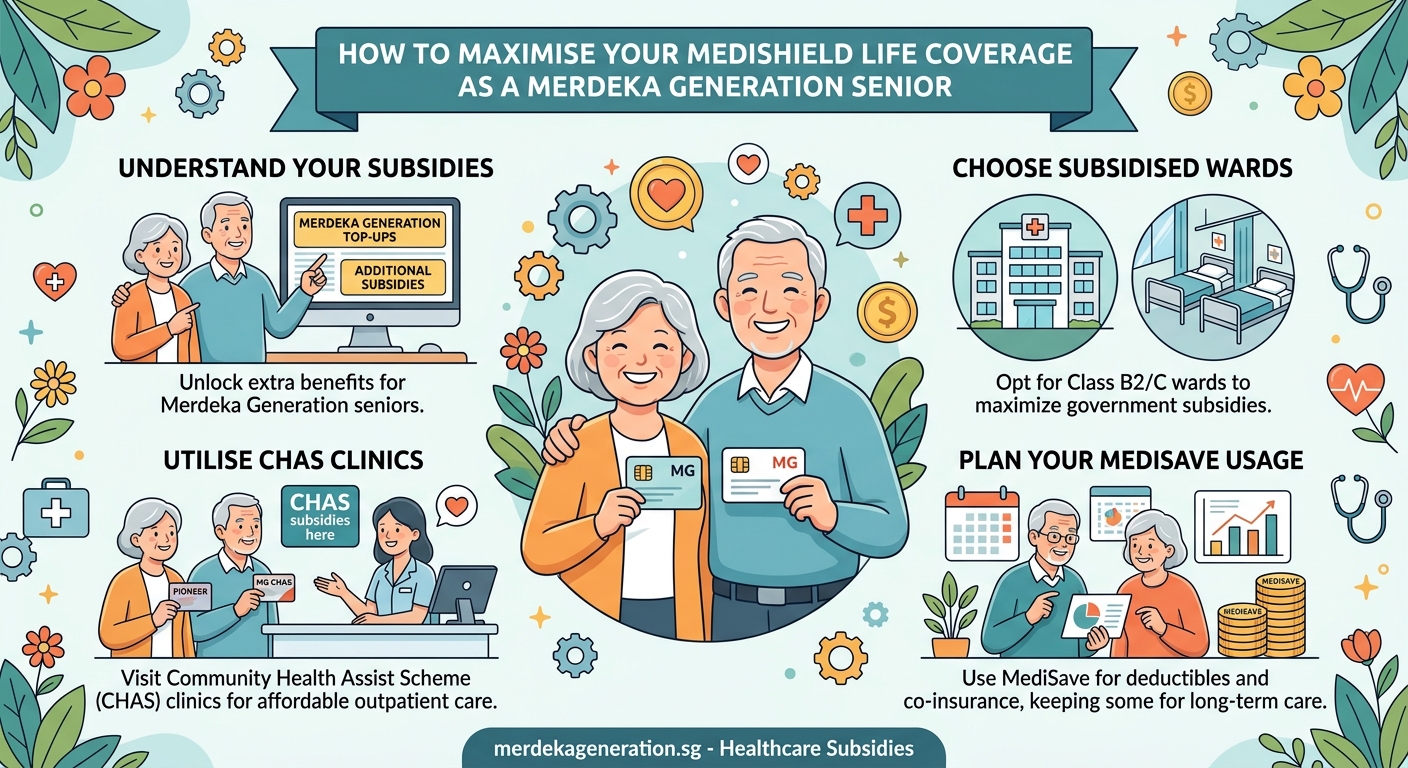
    How to maximise your MediShield Life coverage as a Merdeka Generation senior shows how to combine these subsidies with other support schemes for maximum savings.

    CareShield Life participation bonuses

    Both generations receive incentives to join CareShield Life, the long-term care insurance scheme.

    Pioneer Generation members who join CareShield Life receive a one-time bonus of $3,000 credited to their Medisave accounts. This bonus helps offset the cost of premiums.

    Merdeka Generation members who join receive a one-time bonus of $1,500 credited to their Medisave accounts. Still substantial, but half the Pioneer Generation amount.

    CareShield Life provides monthly cash payouts if you become severely disabled and need help with daily activities like bathing, dressing, or eating. The payouts continue for life as long as you remain severely disabled.

    The participation bonus is a one-time payment, but the insurance coverage lasts for life. For someone who joins at 60, the premiums add up over decades, so the bonus provides meaningful upfront relief.

    If you are eligible for either generation package, joining CareShield Life makes financial sense. The bonus alone covers several years of premiums.

    How to claim your benefits without mistakes

    Claiming your subsidies should be automatic in most cases, but errors happen.

    Follow these steps to ensure you receive everything you are entitled to:

    1. Verify your eligibility status by checking the letter and card you received from the government. If you never received one, contact the hotline to confirm your status.
    2. Register your Merdeka Generation or Pioneer Generation card at your regular clinic. Show it during your first visit so the clinic can apply the correct subsidies.
    3. Check your Medisave account annually to confirm top-ups have been credited. Log in to your CPF account online and review the transaction history.
    4. Use your PAssion Silver or CHAS card credits before they expire. Some credits have validity periods, so track your balance regularly.
    5. Keep receipts for all medical expenses. If a subsidy was not applied correctly, you can submit a claim for reimbursement.

    Common mistakes include forgetting to show your card at the clinic, assuming subsidies apply automatically without registration, and not tracking your Medisave top-ups.

    5 common mistakes Merdeka Generation seniors make when claiming benefits highlights the errors that cost people the most money and how to avoid them.

    Side-by-side benefit comparison table

    Here is a clear breakdown of how the two packages compare across major categories.

    Benefit Category Pioneer Generation Merdeka Generation
    Annual Medisave top-up $200 to $800 per year None
    Annual card credit None $200 per year
    Outpatient care subsidy 50% at CHAS clinics Up to 25% at CHAS clinics
    Specialist outpatient subsidy 50% at polyclinics and public hospitals Additional 25% at polyclinics
    MediShield Life premium subsidy 40% to 60% Additional 5% on top of existing subsidies
    CareShield Life bonus $3,000 one-time $1,500 one-time
    Eligibility birth year 1949 or earlier 1950 to 1959

    The table makes it easy to see where the gaps are. If you are helping a parent or relative understand their benefits, this comparison gives you the full picture at a glance.

    What if only one spouse qualifies

    Many couples find themselves in mixed situations. One spouse qualifies for the Merdeka Generation package, while the other does not.

    Benefits are individual, not household-based. If your spouse qualifies, they receive the subsidies. You do not automatically receive them just because you are married to a member.

    However, you can still benefit indirectly. If your spouse receives annual Medisave top-ups, that money can be used for your medical expenses under Medisave withdrawal rules. Medisave can be used for immediate family members, including spouses, children, and parents.

    Similarly, if your spouse receives the annual $200 card credit, they can use it for their own clinic visits, reducing the household’s overall medical expenses.

    Can your spouse enjoy Merdeka Generation benefits if only you qualify covers the details of how benefits can be shared within a family.

    Planning your retirement budget around these benefits

    Knowing your exact subsidies helps you forecast your retirement healthcare costs more accurately.

    Start by listing your regular medical expenses. Include GP visits, specialist appointments, medication, dental care, and any chronic condition management.

    Next, calculate how much your subsidies reduce these costs. A Merdeka Generation member visiting the GP twice a month saves about $600 a year with the 25% subsidy. Add the $200 annual card credit, and total savings reach $800 annually.

    A Pioneer Generation member with the same visit frequency saves about $1,200 a year with the 50% subsidy, plus receives an annual Medisave top-up of at least $200. Total savings exceed $1,400 annually.

    Over a 20-year retirement, these differences compound. A Merdeka Generation member saves around $16,000. A Pioneer Generation member saves over $28,000.

    These are conservative estimates. If you develop chronic conditions requiring more frequent care, the savings multiply.

    “Many seniors underestimate how much their generation package saves them each year. Tracking your actual expenses and subsidies over 12 months gives you a realistic picture of your healthcare budget. Use that data to adjust your retirement savings plan accordingly.”

    How much money do Merdeka Generation seniors really need for retirement in Singapore? provides a detailed framework for calculating your retirement needs based on your specific benefits.

    What happens if you move overseas

    Retirement plans sometimes include relocating abroad, either permanently or for extended periods.

    Your Pioneer or Merdeka Generation benefits remain tied to your Singapore citizenship, but accessing them requires you to be physically present in Singapore.

    If you move overseas, you cannot use your outpatient care subsidies or card credits abroad. These benefits only apply at participating clinics and hospitals in Singapore.

    Your Medisave account remains active, and any automatic top-ups continue to be credited. However, you cannot use Medisave for medical expenses incurred overseas unless they fall under specific portability schemes.

    MediShield Life coverage includes limited overseas coverage for emergency treatments during short trips, but it is not designed for long-term overseas residence.

    If you plan to spend significant time abroad, factor in the loss of these subsidies when budgeting for healthcare. You may need private insurance in your destination country.

    Moving overseas after retirement: will you lose your Merdeka Generation benefits explains the rules in detail and what you can do to preserve your benefits.

    Key benefits you might be overlooking

    Some subsidies fly under the radar because they are less publicised.

    Both Pioneer and Merdeka Generation members receive additional subsidies for community health screenings. These include cancer screenings, diabetes checks, and cardiovascular health assessments.

    Dental subsidies are another underused benefit. Many seniors focus on medical care but forget that dental work is also covered under the outpatient care subsidies.

    Traditional Chinese medicine (TCM) treatments at participating clinics also qualify for subsidies. If you regularly see a TCM practitioner for acupuncture or herbal treatments, your generation package reduces those costs too.

    Chronic Disease Management Programme (CDMP) benefits stack with your generation subsidies. If you have diabetes, hypertension, or high cholesterol, you receive additional subsidies on top of your Pioneer or Merdeka Generation benefits.

    Track all these subsidies together to get a full picture of your healthcare savings.

    Why knowing the difference protects your retirement savings

    Healthcare is one of the largest expenses in retirement. Small differences in subsidies add up to thousands of dollars over time.

    If you mistakenly believe you qualify for Pioneer Generation benefits when you are actually Merdeka Generation, you will budget incorrectly. You might underestimate your out-of-pocket costs and run short on savings later.

    Conversely, if you do not realise you qualify for Merdeka Generation benefits, you might be paying full price for services that should be subsidised. That is money wasted.

    Verify your status once, then build your retirement budget around the correct subsidies. Review your benefits annually to catch any changes or updates.

    Government schemes evolve. New subsidies get added, and existing ones sometimes increase. Staying informed ensures you never leave money on the table.

    Merdeka Generation Package vs Pioneer Generation Package: key differences explained keeps you updated on any changes to the schemes.

    Making the most of what you have

    Whether you qualify for Pioneer or Merdeka Generation benefits, both packages offer substantial support.

    The key is using them actively. Register your card at every clinic you visit. Track your Medisave top-ups and card credits. Combine your generation subsidies with other schemes like CHAS and CDMP for maximum savings.

    If you are helping a parent or relative, take time to sit down and map out their benefits together. Many seniors are not comfortable with technology or navigating government schemes. A little help goes a long way.

    Set calendar reminders to check for annual top-ups and credits. Make it a habit to review your CPF and Medisave statements every quarter.

    Your generation package is a gift from the government, recognising your contributions to building Singapore. Use every dollar of it.

  • Comparing Pioneer vs Merdeka Generation Healthcare Benefits: Which Subsidies Are Yours?

    Many Singaporean families sit at the dinner table wondering the same thing. Mum was born in 1951, Dad in 1949. Which generation package do they belong to? What subsidies are they missing out on?

    Getting this wrong means leaving thousands of dollars on the table every year. Healthcare costs add up fast, and knowing exactly which benefits belong to you makes a real difference to your retirement budget.

    Key Takeaway

    Pioneer Generation members born in 1949 or earlier receive more generous subsidies, including free Medisave top-ups and higher outpatient care discounts. Merdeka Generation members born between 1950 and 1959 get substantial but slightly lower benefits. Both packages offer MediShield Life premium subsidies, outpatient care support, and CareShield Life bonuses, but the amounts differ significantly. Knowing which generation you belong to helps you claim the right subsidies and plan your healthcare spending accurately.

    Who qualifies for each generation package

    The birth year cutoff is the most important detail.

    Pioneer Generation members were born in 1949 or earlier and became Singapore citizens by 31 December 1986. They built the foundations of modern Singapore during the earliest years of independence.

    Merdeka Generation members were born between 1950 and 1959 and became citizens by 31 December 1996. They contributed during Singapore’s rapid development phase in the 1970s and 1980s.

    If you were born in January 1950, you belong to the Merdeka Generation, not the Pioneer Generation. Even one month makes a difference.

    Both groups must have obtained citizenship by the specified dates. Permanent residents do not qualify, regardless of how long they have lived here.

    If you are unsure which package applies to you, the government sent personalised letters and cards to eligible members. How to check if you qualify for the Merdeka Generation Package in 2024 walks through the verification process step by step.

    Lost your card? What happens if you lost your Merdeka Generation card explains how to get a replacement without losing access to your benefits.

    Breaking down the Medisave top-up differences

    This is where the two packages start to show clear differences.

    Pioneer Generation members receive automatic Medisave top-ups every year. The government deposits money directly into your Medisave account without requiring any application. These top-ups are permanent and continue for life.

    The amount varies based on your birth year. Older pioneers receive higher annual top-ups, ranging from $200 to $800 per year.

    Merdeka Generation members receive a different structure. Instead of annual Medisave top-ups, they get a one-time $200 top-up to their PAssion Silver Card or Community Health Assist Scheme (CHAS) card. After that, they receive $200 annually to the same card, not to Medisave.

    This card credit can be used at participating clinics for outpatient care, dental services, and traditional Chinese medicine treatments. It does not sit in your Medisave account.

    The distinction matters for planning. If you are a Pioneer Generation member, your Medisave balance grows automatically each year. If you are a Merdeka Generation member, you get spending credits for immediate healthcare needs instead.

    Understanding your $200 annual MG card top-up: when it comes and how to use it explains exactly when the money arrives and where you can spend it.

    Outpatient care subsidies at a glance

    Both generations receive extra help with clinic visits, but the amounts differ.

    Pioneer Generation members enjoy subsidies of 50% for outpatient care at general practitioner (GP) clinics and dental clinics in the Community Health Assist Scheme network. For specialist outpatient care at polyclinics and public hospitals, the subsidy is 50% as well.

    Merdeka Generation members receive subsidies of up to 25% for outpatient care at CHAS GP clinics and dental clinics. For specialist outpatient care at polyclinics, they also get an additional 25% subsidy on top of existing subsidies.

    The gap is noticeable. A $50 clinic bill costs a Pioneer Generation member $25 after subsidy. The same bill costs a Merdeka Generation member $37.50 after subsidy.

    Over a year of regular clinic visits, this adds up to hundreds of dollars in difference.

    Both groups can use their subsidies at the same network of clinics. CHAS card benefits explained: what Merdeka Generation seniors need to know lists which clinics accept these subsidies and how to maximise your savings.

    MediShield Life premium support comparison

    Both packages include help with MediShield Life premiums, but again, the amounts differ.

    Pioneer Generation members receive premium subsidies ranging from 40% to 60%, depending on age and other factors. The government automatically applies these subsidies, so your premium deduction from Medisave is lower.

    Merdeka Generation members receive an additional 5% premium subsidy on top of any existing subsidies they already qualify for. This stacks with income-based subsidies, making premiums more affordable.

    For example, if you already receive a 30% subsidy based on income, the Merdeka Generation benefit brings your total subsidy to 35%.

    The Pioneer Generation subsidy is more generous in absolute terms, but both packages significantly reduce the burden of MediShield Life premiums.

    Premiums increase with age, so these subsidies become more valuable as you get older. A 70-year-old pays much higher premiums than a 60-year-old, making the subsidy difference more pronounced.

    How to maximise your MediShield Life coverage as a Merdeka Generation senior shows how to combine these subsidies with other support schemes for maximum savings.

    CareShield Life participation bonuses

    Both generations receive incentives to join CareShield Life, the long-term care insurance scheme.

    Pioneer Generation members who join CareShield Life receive a one-time bonus of $3,000 credited to their Medisave accounts. This bonus helps offset the cost of premiums.

    Merdeka Generation members who join receive a one-time bonus of $1,500 credited to their Medisave accounts. Still substantial, but half the Pioneer Generation amount.

    CareShield Life provides monthly cash payouts if you become severely disabled and need help with daily activities like bathing, dressing, or eating. The payouts continue for life as long as you remain severely disabled.

    The participation bonus is a one-time payment, but the insurance coverage lasts for life. For someone who joins at 60, the premiums add up over decades, so the bonus provides meaningful upfront relief.

    If you are eligible for either generation package, joining CareShield Life makes financial sense. The bonus alone covers several years of premiums.

    How to claim your benefits without mistakes

    Claiming your subsidies should be automatic in most cases, but errors happen.

    Follow these steps to ensure you receive everything you are entitled to:

    1. Verify your eligibility status by checking the letter and card you received from the government. If you never received one, contact the hotline to confirm your status.
    2. Register your Merdeka Generation or Pioneer Generation card at your regular clinic. Show it during your first visit so the clinic can apply the correct subsidies.
    3. Check your Medisave account annually to confirm top-ups have been credited. Log in to your CPF account online and review the transaction history.
    4. Use your PAssion Silver or CHAS card credits before they expire. Some credits have validity periods, so track your balance regularly.
    5. Keep receipts for all medical expenses. If a subsidy was not applied correctly, you can submit a claim for reimbursement.

    Common mistakes include forgetting to show your card at the clinic, assuming subsidies apply automatically without registration, and not tracking your Medisave top-ups.

    5 common mistakes Merdeka Generation seniors make when claiming benefits highlights the errors that cost people the most money and how to avoid them.

    Side-by-side benefit comparison table

    Here is a clear breakdown of how the two packages compare across major categories.

    Benefit Category Pioneer Generation Merdeka Generation
    Annual Medisave top-up $200 to $800 per year None
    Annual card credit None $200 per year
    Outpatient care subsidy 50% at CHAS clinics Up to 25% at CHAS clinics
    Specialist outpatient subsidy 50% at polyclinics and public hospitals Additional 25% at polyclinics
    MediShield Life premium subsidy 40% to 60% Additional 5% on top of existing subsidies
    CareShield Life bonus $3,000 one-time $1,500 one-time
    Eligibility birth year 1949 or earlier 1950 to 1959

    The table makes it easy to see where the gaps are. If you are helping a parent or relative understand their benefits, this comparison gives you the full picture at a glance.

    What if only one spouse qualifies

    Many couples find themselves in mixed situations. One spouse qualifies for the Merdeka Generation package, while the other does not.

    Benefits are individual, not household-based. If your spouse qualifies, they receive the subsidies. You do not automatically receive them just because you are married to a member.

    However, you can still benefit indirectly. If your spouse receives annual Medisave top-ups, that money can be used for your medical expenses under Medisave withdrawal rules. Medisave can be used for immediate family members, including spouses, children, and parents.

    Similarly, if your spouse receives the annual $200 card credit, they can use it for their own clinic visits, reducing the household’s overall medical expenses.

    Can your spouse enjoy Merdeka Generation benefits if only you qualify covers the details of how benefits can be shared within a family.

    Planning your retirement budget around these benefits

    Knowing your exact subsidies helps you forecast your retirement healthcare costs more accurately.

    Start by listing your regular medical expenses. Include GP visits, specialist appointments, medication, dental care, and any chronic condition management.

    Next, calculate how much your subsidies reduce these costs. A Merdeka Generation member visiting the GP twice a month saves about $600 a year with the 25% subsidy. Add the $200 annual card credit, and total savings reach $800 annually.

    A Pioneer Generation member with the same visit frequency saves about $1,200 a year with the 50% subsidy, plus receives an annual Medisave top-up of at least $200. Total savings exceed $1,400 annually.

    Over a 20-year retirement, these differences compound. A Merdeka Generation member saves around $16,000. A Pioneer Generation member saves over $28,000.

    These are conservative estimates. If you develop chronic conditions requiring more frequent care, the savings multiply.

    “Many seniors underestimate how much their generation package saves them each year. Tracking your actual expenses and subsidies over 12 months gives you a realistic picture of your healthcare budget. Use that data to adjust your retirement savings plan accordingly.”

    How much money do Merdeka Generation seniors really need for retirement in Singapore? provides a detailed framework for calculating your retirement needs based on your specific benefits.

    What happens if you move overseas

    Retirement plans sometimes include relocating abroad, either permanently or for extended periods.

    Your Pioneer or Merdeka Generation benefits remain tied to your Singapore citizenship, but accessing them requires you to be physically present in Singapore.

    If you move overseas, you cannot use your outpatient care subsidies or card credits abroad. These benefits only apply at participating clinics and hospitals in Singapore.

    Your Medisave account remains active, and any automatic top-ups continue to be credited. However, you cannot use Medisave for medical expenses incurred overseas unless they fall under specific portability schemes.

    MediShield Life coverage includes limited overseas coverage for emergency treatments during short trips, but it is not designed for long-term overseas residence.

    If you plan to spend significant time abroad, factor in the loss of these subsidies when budgeting for healthcare. You may need private insurance in your destination country.

    Moving overseas after retirement: will you lose your Merdeka Generation benefits explains the rules in detail and what you can do to preserve your benefits.

    Key benefits you might be overlooking

    Some subsidies fly under the radar because they are less publicised.

    Both Pioneer and Merdeka Generation members receive additional subsidies for community health screenings. These include cancer screenings, diabetes checks, and cardiovascular health assessments.

    Dental subsidies are another underused benefit. Many seniors focus on medical care but forget that dental work is also covered under the outpatient care subsidies.

    Traditional Chinese medicine (TCM) treatments at participating clinics also qualify for subsidies. If you regularly see a TCM practitioner for acupuncture or herbal treatments, your generation package reduces those costs too.

    Chronic Disease Management Programme (CDMP) benefits stack with your generation subsidies. If you have diabetes, hypertension, or high cholesterol, you receive additional subsidies on top of your Pioneer or Merdeka Generation benefits.

    Track all these subsidies together to get a full picture of your healthcare savings.

    Why knowing the difference protects your retirement savings

    Healthcare is one of the largest expenses in retirement. Small differences in subsidies add up to thousands of dollars over time.

    If you mistakenly believe you qualify for Pioneer Generation benefits when you are actually Merdeka Generation, you will budget incorrectly. You might underestimate your out-of-pocket costs and run short on savings later.

    Conversely, if you do not realise you qualify for Merdeka Generation benefits, you might be paying full price for services that should be subsidised. That is money wasted.

    Verify your status once, then build your retirement budget around the correct subsidies. Review your benefits annually to catch any changes or updates.

    Government schemes evolve. New subsidies get added, and existing ones sometimes increase. Staying informed ensures you never leave money on the table.

    Merdeka Generation Package vs Pioneer Generation Package: key differences explained keeps you updated on any changes to the schemes.

    Making the most of what you have

    Whether you qualify for Pioneer or Merdeka Generation benefits, both packages offer substantial support.

    The key is using them actively. Register your card at every clinic you visit. Track your Medisave top-ups and card credits. Combine your generation subsidies with other schemes like CHAS and CDMP for maximum savings.

    If you are helping a parent or relative, take time to sit down and map out their benefits together. Many seniors are not comfortable with technology or navigating government schemes. A little help goes a long way.

    Set calendar reminders to check for annual top-ups and credits. Make it a habit to review your CPF and Medisave statements every quarter.

    Your generation package is a gift from the government, recognising your contributions to building Singapore. Use every dollar of it.

  • What to Do When Your Healthcare Subsidy Claim Gets Rejected

    What to Do When Your Healthcare Subsidy Claim Gets Rejected

    Getting a rejection letter for your healthcare subsidy or insurance claim feels like a punch to the gut. You followed the rules, submitted the forms, and expected the coverage you’re entitled to. Now you’re stuck with a bill and a confusing explanation that doesn’t make sense.

    Key Takeaway

    When your health insurance claim or subsidy gets denied, don’t panic. Most rejections happen due to paperwork errors, missing documents, or misunderstood eligibility rules. You have the right to appeal within specific timeframes. Gather your medical records, understand the exact denial reason, contact your insurer or subsidy provider immediately, and follow their formal appeal process. Many denials get overturned with proper documentation.

    Why healthcare claims and subsidies get rejected

    Understanding the reason behind your rejection is the first step to fixing it.

    Most denials fall into a few common categories. Your claim might have been flagged for incomplete information. Perhaps your doctor’s referral letter didn’t include specific details the insurer needed. Or the treatment code on your bill doesn’t match what your policy covers.

    Timing issues cause plenty of rejections too. You might have submitted your claim after the deadline. Some policies require pre-approval for certain procedures, and going ahead without it triggers an automatic denial.

    Eligibility problems are another major culprit. If you’re applying for Merdeka Generation subsidies but the system shows you don’t meet the age criteria, your claim gets rejected. Sometimes it’s just a database error, but you need to prove your eligibility.

    Here are the most frequent rejection reasons:

    • Missing or incomplete medical documentation
    • Treatment not covered under your policy or subsidy scheme
    • Late submission past the claim deadline
    • Pre-approval not obtained before treatment
    • Eligibility criteria not met or not verified
    • Billing codes that don’t match approved procedures
    • Duplicate claims already processed
    • Policy lapsed or premium payments overdue

    Steps to take immediately after receiving a denial

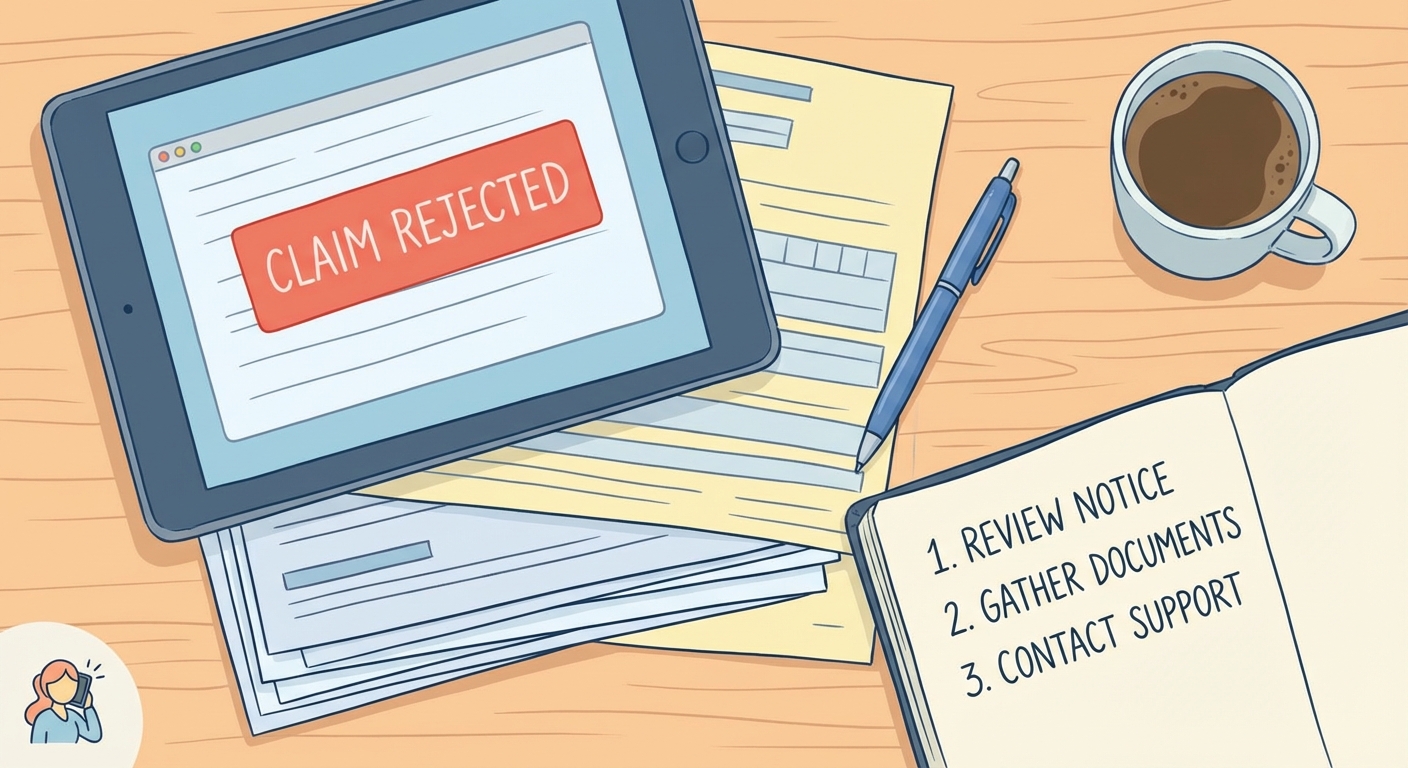
    What to Do When Your Healthcare Subsidy Claim Gets Rejected - Illustration 1

    Time matters when dealing with rejections. Most appeal windows are tight.

    Step 1: Read the rejection letter carefully

    Your denial notice contains crucial information. Look for the specific reason code or explanation. Check the date by which you must file an appeal. Note the contact person or department handling your case.

    Don’t skip the fine print. Sometimes the letter includes forms you need to complete or documents you must provide.

    Step 2: Contact your provider or insurer right away

    Call the number on your rejection letter. Ask for clarification on anything you don’t understand. Request a detailed explanation of why your claim was denied.

    Take notes during the call. Write down the name of the person you spoke with, the date, and what they told you. This documentation helps if you need to escalate later.

    Step 3: Gather all relevant documents

    Pull together every piece of paper related to your claim. This includes your original application, medical receipts, doctor’s letters, referral notes, and any correspondence with the insurer or government agency.

    If you’re claiming Merdeka Generation subsidies, make sure you have proof of eligibility. Your Merdeka Generation card, NRIC, and any verification letters should be in your file.

    Step 4: Check your policy or subsidy terms

    Go back to your insurance policy document or the official Merdeka Generation Package guidelines. Verify whether the treatment or service should actually be covered.

    Sometimes what seems like an error is actually a legitimate exclusion you missed. Other times, you’ll find clear evidence that the denial was wrong.

    Step 5: Submit your appeal within the deadline

    Most insurers give you 30 to 90 days to appeal. Government subsidy programs have their own timelines. Missing the deadline usually means losing your right to challenge the decision.

    Follow the exact appeal process outlined in your rejection letter. Use the correct forms, submit to the right address or email, and include all supporting documents.

    Step 6: Follow up regularly

    Don’t assume your appeal is being processed just because you sent it. Call or email every week to check the status. Keep records of every interaction.

    Persistence pays off. Many claims get resolved simply because someone kept asking.

    How to write an effective appeal letter

    Your appeal letter needs to be clear, factual, and persuasive.

    Start with your personal details: name, policy number or subsidy ID, claim number, and contact information. State clearly that you’re appealing the denial dated [specific date].

    Explain why you believe the denial was incorrect. Reference specific policy clauses or subsidy guidelines that support your position. Attach copies of all supporting documents.

    “Keep your appeal letter professional and focused on facts. Emotional language rarely helps. Stick to what the policy says, what documentation proves, and why the denial doesn’t align with the terms you agreed to.”

    Include a timeline of events if relevant. For example, if you were told verbally that a treatment was covered, mention that conversation and any follow-up you did.

    End with a clear request: “I am requesting that you reverse the denial and approve my claim for [specific amount] based on the evidence provided.”

    Common mistakes that lead to rejected appeals

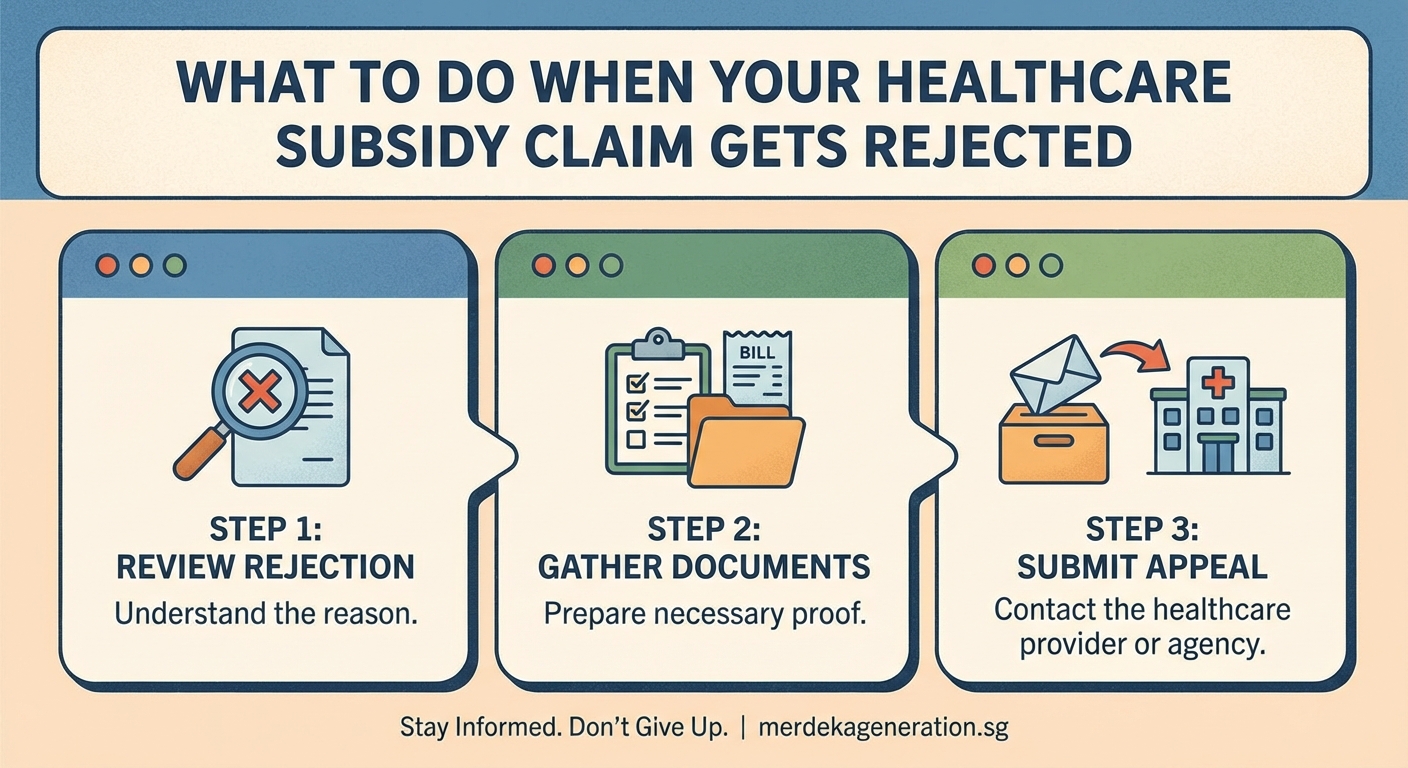
    What to Do When Your Healthcare Subsidy Claim Gets Rejected - Illustration 2

    Even people with valid claims lose appeals because of avoidable errors.

    Mistake Why It Hurts Your Case How to Avoid It
    Submitting incomplete documentation Gives the reviewer an easy reason to deny again Create a checklist of required documents before sending
    Missing the appeal deadline Automatic rejection regardless of merit Mark the deadline on your calendar immediately
    Not addressing the specific denial reason Reviewer thinks you didn’t understand the issue Quote the exact denial reason in your appeal
    Using emotional or aggressive language Makes reviewers less sympathetic Stay professional and factual throughout
    Failing to provide medical necessity proof Insurer can claim treatment was optional Get a detailed letter from your doctor explaining why treatment was necessary
    Submitting duplicate or contradictory information Raises red flags about claim validity Review all documents for consistency before submission

    Understanding your rights as a healthcare consumer

    You have more protection than you might realize.

    In Singapore, insurance companies must follow guidelines set by the Monetary Authority of Singapore. They’re required to handle claims fairly and respond to appeals within reasonable timeframes.

    For government subsidies like the Merdeka Generation Package, you can escalate to the relevant ministry if you believe you’ve been treated unfairly. The process is transparent, and officials are required to review your case properly.

    If your insurer repeatedly denies valid claims or fails to follow their own procedures, you can file a complaint with the Financial Industry Disputes Resolution Centre. This independent body helps resolve disputes between consumers and financial institutions.

    For subsidy-related issues, the Ministry of Health has channels for feedback and appeals. Don’t hesitate to use them if you’re not getting answers through normal channels.

    Special considerations for Merdeka Generation subsidies

    Merdeka Generation members have specific benefits that sometimes get confused with general healthcare subsidies.

    Your Merdeka Generation Package includes subsidies for outpatient care, MediShield Life premiums, and long-term care. Each component has different eligibility rules and claim processes.

    If your subsidy claim gets rejected, check whether you’re actually eligible for that specific benefit. For instance, the outpatient care subsidies work differently from the MediShield Life premium subsidies.

    Sometimes rejection happens because the clinic or hospital didn’t properly verify your Merdeka Generation status at the point of service. If you showed your card but the subsidy wasn’t applied, contact the healthcare provider first. They may need to resubmit the claim with correct coding.

    Lost your Merdeka Generation card? That could be why your claim was rejected. Get a replacement before trying to claim subsidies.

    Common Merdeka Generation subsidy claim issues include:

    • Healthcare provider not registered under the scheme
    • Services provided outside the covered categories
    • Failure to present the Merdeka Generation card during visit
    • Database not updated with your eligibility status
    • Confusion between Pioneer Generation and Merdeka Generation benefits

    The differences between Pioneer and Merdeka Generation packages matter. Make sure you’re claiming the right benefits for your generation.

    When to escalate beyond the initial appeal

    Sometimes your first appeal doesn’t work. That doesn’t mean you’re out of options.

    If your appeal gets denied again, request a detailed written explanation. Ask specifically which policy clause or regulation supports their decision. This information helps you decide whether to escalate further.

    For private insurance, your next step is usually an internal review at a higher level within the company. Request this in writing and provide any additional documentation you’ve gathered.

    If internal reviews don’t resolve the issue, external dispute resolution becomes necessary. The Financial Industry Disputes Resolution Centre handles cases where insurers and policyholders can’t reach agreement. There’s a small fee, but it’s worth it for significant claims.

    For government subsidies, escalate to the supervising ministry. Write a formal letter explaining your situation, what you’ve tried so far, and why you believe the rejection is incorrect. Include copies of all correspondence and supporting documents.

    How to prevent future claim rejections

    Learning from a rejection helps you avoid the same problem next time.

    Always verify coverage before receiving treatment. Call your insurer or check the subsidy guidelines online. Get written confirmation if possible.

    Keep meticulous records. Save every receipt, every letter from your doctor, and every form you submit. Take photos of documents before mailing them.

    Submit claims promptly. Don’t wait until the last minute. Early submission gives you time to fix problems if something’s missing.

    Understand your policy inside and out. Read the fine print at least once. Know what’s covered, what’s excluded, and what requires pre-approval.

    For Merdeka Generation benefits, stay updated on any changes to the package. The government occasionally adjusts eligibility criteria or covered services. Checking your eligibility regularly prevents surprises.

    Many seniors make common mistakes when claiming benefits. Learning what these are helps you avoid them.

    Getting help with complex cases

    Some rejections are too complicated to handle alone.

    Patient advocacy services exist to help people navigate insurance and subsidy systems. Some hospitals have patient relations officers who can assist with claim issues.

    Community organizations serving seniors often provide free advice on healthcare subsidies. They understand the Merdeka Generation Package thoroughly and can spot errors in rejections.

    If your case involves significant money or ongoing treatment, consider consulting a lawyer who specializes in insurance disputes. The initial consultation fee might save you thousands in denied claims.

    Financial counsellors can also help, especially if the rejection affects your ability to pay for necessary care. They can suggest alternative funding sources or payment plans while you appeal.

    What to do while waiting for your appeal decision

    Don’t let the appeal process delay necessary treatment.

    If you need ongoing care, continue receiving it. Work out a payment plan with your healthcare provider if needed. Many clinics and hospitals are willing to defer payment while insurance issues get resolved.

    Keep all new receipts and documentation. If your appeal succeeds, you’ll need these to get reimbursed for treatments you paid for out of pocket.

    Stay on top of your appeal status. Set reminders to follow up every week. The squeaky wheel really does get the grease in these situations.

    If financial pressure is mounting, look into additional healthcare subsidies you might qualify for. These can provide relief while your main claim is being resolved.

    Consider whether maximizing your MediShield Life coverage could prevent similar issues in future.

    Making the system work for you

    Rejected claims feel personal, but they’re usually just administrative hiccups.

    The healthcare and insurance systems in Singapore have multiple safety nets built in. Appeals exist because mistakes happen. Reviewers understand that paperwork gets confusing, especially for complex government schemes.

    Your persistence matters more than anything else. People who follow up consistently and provide thorough documentation usually get their legitimate claims approved eventually.

    Don’t let one rejection discourage you from claiming benefits you’ve earned. The Merdeka Generation Package exists to support you. Government subsidies and insurance coverage are your rights as a policyholder and citizen.

    Take it one step at a time. Read the rejection letter, gather your documents, write your appeal, and follow up. Most claims that deserve approval eventually get it.

    Stay organized, stay patient, and don’t give up on money that rightfully belongs to you.

  • CHAS Card Benefits Explained: What Merdeka Generation Seniors Need to Know

    If you were born between 1950 and 1959, you’re part of Singapore’s Merdeka Generation. That means you’re entitled to special healthcare subsidies that can save you hundreds of dollars every year. But many seniors still don’t know exactly what their CHAS card covers or how to use it properly.

    Key Takeaway

    Merdeka Generation seniors automatically receive CHAS cards that provide subsidies at participating GP clinics, dental clinics, and for chronic conditions. These subsidies stack with your Merdeka Generation Package benefits, giving you deeper discounts than standard CHAS cardholders. You don’t need to apply separately, and your card works immediately at over 2,000 clinics across Singapore.

    What the CHAS card actually does for you

    Your CHAS card isn’t just a piece of plastic. It’s your ticket to affordable healthcare at private GP clinics and dental practices near your home.

    Without CHAS, a typical GP visit can cost $30 to $50. With your card, you pay much less.

    The card covers three main areas: general medical care, dental treatment, and chronic disease management. Each category has its own subsidy rates.

    Most importantly, if you’re a Merdeka Generation senior, you get enhanced subsidies. This means you pay even less than younger CHAS cardholders.

    How much you actually save at the clinic

    Let’s talk real numbers. Here’s what you can expect to pay at a CHAS clinic.

    For a standard consultation, Merdeka Generation seniors typically pay between $10 and $18.50 after subsidies. The exact amount depends on the clinic’s fees and your card tier.

    Dental visits work similarly. A basic check-up and cleaning that normally costs $80 to $120 can drop to $30 to $50 with your subsidies.

    Chronic condition management gets even better. If you’re managing diabetes, high blood pressure, or high cholesterol, you can visit participating clinics for as little as $5 per session.

    Service Type Without CHAS With MG CHAS Your Savings
    GP consultation $30-$50 $10-$18.50 Up to $40
    Dental scaling $80-$120 $30-$50 Up to $90
    Chronic care visit $25-$40 $5-$10 Up to $35

    These savings add up fast. If you visit the doctor four times a year and the dentist twice, you could save over $300 annually.

    Understanding your card colour and tier

    CHAS cards come in three colours: blue, orange, and green. Your colour determines your subsidy level.

    Merdeka Generation seniors typically receive orange or blue cards. These provide the highest subsidies.

    The colour depends on your household income and property value. But here’s the good news: even if you have a green card, you still get Merdeka Generation top-ups that boost your subsidies beyond standard rates.

    You can check if you qualify for the Merdeka Generation package to understand your exact tier.

    Your card colour appears clearly on the physical card. If you’re using the digital version through the HealthHub app, the colour shows on your phone screen.

    Finding clinics that accept your card

    Over 2,000 clinics across Singapore participate in CHAS. That includes neighbourhood GPs, dental practices, and Traditional Chinese Medicine practitioners.

    Here’s how to find them:

    1. Visit the CHAS clinic locator on the official CHAS website
    2. Enter your postal code or neighbourhood name
    3. Filter by the type of service you need (GP, dental, chronic care, etc.)
    4. Check the clinic’s operating hours and contact details
    5. Call ahead to confirm they have appointments available

    Most heartland areas have at least five to ten participating clinics within a 2km radius. You’re not limited to one clinic either. You can visit any participating provider.

    Some clinics display the CHAS logo prominently at their entrance. Others might not advertise it as clearly, so always ask at the counter if you’re unsure.

    Expert tip: Build a relationship with one or two regular CHAS clinics near you. They’ll keep your medical history on file, which means better continuity of care and fewer repeated questions at every visit.

    The extra $200 top-up you receive annually

    Beyond the per-visit subsidies, Merdeka Generation seniors get an annual MedSave top-up of $200. This money sits in your MedSave account and can be used for approved medical expenses.

    The top-up arrives automatically. You don’t need to apply or claim it.

    This $200 works differently from your CHAS subsidies. While CHAS reduces what you pay at the clinic counter, the MedSave top-up helps cover hospitalisation, certain outpatient treatments, and approved chronic disease management programmes.

    You can track your annual MG card top-up through your CPF statement or the CPF mobile app.

    Using your card for chronic conditions

    If you’re managing long-term health conditions, your CHAS card becomes even more valuable.

    The Chronic Disease Management Programme (CDMP) covers these conditions:

    • Diabetes
    • High blood pressure (hypertension)
    • High cholesterol (lipid disorders)
    • Stroke
    • Asthma and chronic obstructive pulmonary disease (COPD)
    • Schizophrenia and other major psychiatric conditions

    Under CDMP, you can visit participating GP clinics for regular monitoring and medication at heavily subsidised rates. Some visits cost as little as $5.

    Your doctor will enrol you in the programme. Once enrolled, you can claim subsidies for consultations, basic tests like blood sugar or blood pressure checks, and certain medications.

    The programme encourages you to manage your condition proactively. Regular monitoring prevents complications and keeps you healthier longer.

    What your card doesn’t cover

    CHAS subsidies are generous, but they have limits.

    Your card doesn’t cover:

    • Specialist visits at private hospitals
    • Emergency department visits
    • Cosmetic procedures
    • Health screening packages
    • Vaccinations not on the approved list
    • Medical certificates for non-medical purposes

    Some medications also fall outside the subsidy scheme. If your doctor prescribes something not covered, you’ll pay the full cost.

    Dental coverage focuses on basic preventive and restorative care. Complex procedures like implants or orthodontics typically aren’t subsidised.

    Understanding these gaps helps you plan. For specialist care, you’ll usually need to visit polyclinics or public hospital specialist outpatient clinics, where different subsidy schemes apply.

    Common mistakes that cost you money

    Many seniors leave money on the table because they don’t use their cards correctly.

    Here are the biggest mistakes:

    Not showing your card before payment. Always present your CHAS card at registration, not after the consultation. Clinics can’t apply subsidies retroactively.

    Assuming all clinics participate. Not every GP or dentist accepts CHAS. Always check before booking.

    Forgetting to update your details. If you move house or your income changes, your card tier might change too. Update your information through HealthHub to ensure you’re getting the right subsidies.

    Not using the card because you think you don’t qualify. If you’re Merdeka Generation, you qualify automatically. There’s no income ceiling that disqualifies you from at least some level of subsidy.

    You can avoid common mistakes Merdeka Generation seniors make by staying informed about your entitlements.

    Digital vs physical card: which to use

    You can access your CHAS benefits through either a physical card or the digital version in the HealthHub app.

    The physical card is a tangible backup. Keep it in your wallet alongside your NRIC. Some older clinic systems still require staff to scan or manually enter the physical card number.

    The digital card lives in your smartphone. Open HealthHub, navigate to the CHAS section, and show the QR code or card details at the clinic counter.

    Both work equally well. The digital version updates automatically if your tier changes, while physical cards might need replacement.

    If you lost your Merdeka Generation card, you can still access benefits through the digital version while waiting for a replacement.

    Combining CHAS with other healthcare schemes

    Your CHAS benefits stack with other government healthcare subsidies. This is where things get really good.

    At polyclinics, you get additional Merdeka Generation subsidies on top of standard polyclinic rates. A consultation that costs $10.50 for regular residents might cost you just $5 or less.

    For public hospital specialist outpatient clinics, similar additional subsidies apply. You pay less than non-Merdeka Generation patients for the same services.

    You can also use MediSave for certain approved treatments. The CHAS subsidies reduce your out-of-pocket cost, and MediSave can cover part of what remains.

    This layering of benefits means your actual healthcare expenses can drop to very manageable levels, even if you need regular medical attention.

    If you’re thinking about maximising your MediShield Life coverage, understanding how these schemes work together becomes crucial.

    How to verify your subsidies were applied

    Sometimes you’ll want to double-check that you received the correct subsidy.

    Your clinic receipt should show:

    • The full consultation fee
    • The CHAS subsidy amount
    • Your final payment amount

    If the numbers don’t look right, ask the clinic staff immediately. Mistakes happen, especially if the system didn’t register your card properly.

    You can also check your subsidy history through the HealthHub app. It logs every CHAS transaction, showing which clinic you visited, what subsidy you received, and how much you paid.

    If you spot an error after leaving the clinic, call them within a few days. Most clinics can process corrections if you have your receipt and card details.

    Planning your healthcare budget with CHAS

    Knowing your subsidy rates helps you budget more accurately for healthcare costs.

    Here’s a simple planning approach:

    1. Count how many times you typically visit the doctor each year
    2. Add your dental visits (aim for at least two cleanings annually)
    3. If you have chronic conditions, factor in monthly or quarterly monitoring visits
    4. Multiply each visit type by your expected co-payment after CHAS subsidies
    5. Add a buffer of 20% for unexpected visits or treatments

    For most Merdeka Generation seniors using CHAS regularly, annual out-of-pocket healthcare costs for routine care stay under $500. That’s remarkably affordable compared to private healthcare without subsidies.

    This predictability makes retirement planning easier. You’re not gambling on unpredictable medical bills.

    If you’re wondering whether to top up your CPF LIFE after 65, factor in these lower healthcare costs when calculating your retirement needs.

    What happens if you’re overseas

    Your CHAS card only works in Singapore. If you’re travelling or living abroad temporarily, you can’t use the subsidies.

    However, your Merdeka Generation status doesn’t expire. When you return to Singapore, your card reactivates automatically.

    The annual $200 MedSave top-up continues regardless of where you are. It credits to your account each year, even if you’re overseas.

    If you’re considering moving overseas after retirement, understand that you’ll lose access to CHAS subsidies while abroad, but your other Merdeka Generation benefits remain intact.

    How CHAS differs from Pioneer Generation benefits

    If you have friends or relatives in the Pioneer Generation (born 1949 or earlier), you might notice they have different cards and subsidy rates.

    Pioneer Generation seniors receive even deeper subsidies than Merdeka Generation. Their card is distinctly marked and provides higher per-visit subsidies.

    The structure is similar, though. Both schemes use CHAS as the delivery mechanism for GP and dental subsidies.

    Understanding the key differences between Merdeka Generation and Pioneer Generation packages helps you appreciate what you’re entitled to and avoid confusion when comparing notes with older friends.

    Neither package is transferable. Your spouse doesn’t automatically qualify just because you do. Each person’s eligibility depends on their own birth year and citizenship history.

    You can learn more about whether your spouse can enjoy Merdeka Generation benefits if only one of you qualifies.

    Keeping your information current

    Your CHAS subsidies depend on accurate personal information. If your circumstances change, update your details promptly.

    Major changes that affect your subsidies include:

    • Moving to a new address
    • Changes in household income
    • Changes in property ownership
    • Changes in household composition

    Update your information through the HealthHub app or website. The system reassesses your card tier based on the new information.

    If your tier improves (for example, your income drops after retirement), you’ll get higher subsidies. If it drops, your subsidies decrease but don’t disappear entirely. Merdeka Generation seniors always receive some level of benefit.

    Updates typically process within a few weeks. Your new card tier appears in HealthHub, and physical card replacements arrive by mail if needed.

    Making the most of your healthcare benefits

    Your CHAS card represents a significant government investment in your health. The subsidies are designed to keep you healthy and active throughout your retirement years.

    Use them. Don’t skip doctor visits because of cost. Don’t postpone dental check-ups. Don’t let chronic conditions go unmanaged.

    The subsidies make preventive care affordable. Catching health issues early almost always costs less and leads to better outcomes than waiting until problems become serious.

    Build a routine. Schedule annual check-ups. See your dentist twice a year. If you have chronic conditions, stick to your monitoring schedule.

    Your CHAS card makes all of this financially manageable. That’s exactly what it’s designed to do.

    Take advantage of it, stay healthy, and enjoy your retirement with the peace of mind that comes from accessible, affordable healthcare.

  • How to Maximise Your MediShield Life Coverage as a Merdeka Generation Senior

    How to Maximise Your MediShield Life Coverage as a Merdeka Generation Senior

    Healthcare costs keep climbing. If you were born between 1950 and 1959, you belong to Singapore’s Merdeka Generation, and the government has set aside special subsidies to help you manage medical expenses without draining your retirement savings. MediShield Life already provides baseline hospital insurance, but as a Merdeka Generation senior, you receive extra premium subsidies that many people don’t fully understand or claim.

    Key Takeaway

    Merdeka Generation seniors receive automatic MediShield Life premium subsidies ranging from 5% to 10% depending on age, plus access to additional outpatient care subsidies and CareShield Life incentives. These benefits apply for life, require no application, and work alongside existing income-based subsidies to reduce your annual healthcare insurance costs by hundreds of dollars each year.

    Understanding your MediShield Life premium subsidies

    MediShield Life is compulsory health insurance that covers all Singaporeans for large hospital bills and certain outpatient treatments. Everyone pays premiums, but not everyone pays the same amount.

    Your premium depends on your age. A 65-year-old pays around $770 annually. A 75-year-old pays about $1,230. A 90-year-old faces premiums close to $2,730.

    As a Merdeka Generation member, you automatically receive between 5% and 10% off these premiums. The exact discount depends on your birth year.

    Here’s how it breaks down:

    Birth Year Range Premium Subsidy Percentage
    1950 to 1954 10%
    1955 to 1959 5%

    These subsidies apply every year for the rest of your life. You don’t need to reapply. You don’t need to meet income criteria. The system deducts the subsidy automatically before calculating what you owe.

    If you also qualify for income-based subsidies through the Additional Premium Support scheme, both subsidies stack. A lower-income Merdeka Generation senior might receive up to 50% total premium support when combining both schemes.

    How your premiums get paid

    How to Maximise Your MediShield Life Coverage as a Merdeka Generation Senior — image 1

    MediShield Life premiums come out of your MediSave account first. If your MediSave balance runs low, the system draws from your immediate family members’ MediSave accounts, then your own cash if needed.

    Most Merdeka Generation seniors have enough MediSave to cover premiums without touching cash. The government also provides annual MediSave top-ups through the Matched Retirement Savings Scheme and other programmes that help keep your account funded.

    Your premium payment happens automatically each year. CPF sends you a statement showing the premium amount, the subsidies applied, and the final deduction from MediSave.

    Check your statement carefully. Make sure the Merdeka Generation subsidy appears. If it’s missing, contact CPF immediately. Sometimes administrative errors occur, especially if you became a Singapore citizen after the initial Merdeka Generation registration period.

    Additional outpatient care subsidies that reduce daily medical costs

    Beyond MediShield Life premium subsidies, Merdeka Generation members receive extra help with outpatient care. This covers visits to clinics, polyclinics, and specialist outpatient clinics.

    At CHAS clinics, you receive an additional subsidy of up to $15 per visit for common illnesses. This stacks on top of existing CHAS subsidies based on your household income and dwelling type.

    At polyclinics, you enjoy an extra subsidy of up to $18.50 per visit. For specialist outpatient clinic visits at public hospitals, you get up to $37.50 more in subsidies.

    These amounts might seem small, but they add up. If you visit the polyclinic six times a year for chronic disease management, that additional $18.50 per visit saves you $111 annually. Over ten years, that’s $1,110 in savings.

    The outpatient subsidies also apply automatically. When you register at a clinic or polyclinic, show your NRIC. The system recognises your Merdeka Generation status and applies the subsidy to your bill before you pay.

    “Many seniors don’t realise the outpatient subsidies work separately from MediShield Life. You can use both. The premium subsidy reduces your insurance cost, while the outpatient subsidy reduces what you pay at each doctor visit. They’re designed to work together.” (Ministry of Health guidance)

    Verifying your Merdeka Generation status

    How to Maximise Your MediShield Life Coverage as a Merdeka Generation Senior — image 2

    Most people born between 1950 and 1959 who were Singapore citizens by 1996 automatically qualify. But citizenship timing matters.

    If you became a citizen after 1996, you might not be registered. If you’re unsure about your status, check if you qualify for the Merdeka Generation package through the official verification process.

    You should have received a Merdeka Generation card in the mail around 2019. This card doesn’t unlock benefits, it just confirms your status. The benefits themselves are tied to your NRIC number in government systems.

    If you never received a card or lost your Merdeka Generation card, your benefits still apply. The card is informational only.

    To verify your status without the card:

    1. Log into your SingPass account
    2. Navigate to the MyInfo section
    3. Look for Merdeka Generation status under government benefits
    4. If it shows as active, your subsidies are working

    Alternatively, call the Merdeka Generation hotline at 1800-2222-888. They can confirm your status over the phone using your NRIC number.

    Combining MediShield Life with Integrated Shield Plans

    MediShield Life covers Class B2 and C wards in public hospitals. If you want coverage for private hospitals or better ward classes, you need an Integrated Shield Plan.

    Integrated Shield Plans are private insurance that sits on top of MediShield Life. They cover what MediShield Life doesn’t, like private hospital stays, Class A wards, or specialist treatments.

    Your Merdeka Generation premium subsidy only applies to the MediShield Life portion of your premium. It doesn’t reduce the cost of the Integrated Shield Plan rider.

    For example, if your total annual premium is $2,000 and $800 of that is the MediShield Life portion, your 10% Merdeka Generation subsidy saves you $80. The remaining $1,200 for the private rider receives no subsidy.

    Many seniors wonder if Integrated Shield Plans are worth the extra cost. It depends on your health, your savings, and your preference for ward class.

    If you have chronic conditions and prefer seeing specialists in private settings, the rider might make sense. If you’re comfortable with public hospital care and want to preserve your retirement funds, MediShield Life alone might suffice.

    Common mistakes that reduce your benefits

    Even with automatic subsidies, some Merdeka Generation seniors miss out on full benefits. Here are the most frequent errors:

    Not updating your residential address with government agencies. If CPF or MOH has an outdated address, you might miss important notices about premium changes or additional support schemes.

    Assuming subsidies apply to all insurance products. Your Merdeka Generation subsidies only cover MediShield Life premiums and specific outpatient care. They don’t reduce costs for dental care, traditional Chinese medicine, or private insurance riders.

    Forgetting to show your NRIC at clinics. The subsidy applies automatically, but only if the clinic system recognises you. Always present your NRIC when registering, even at familiar clinics.

    Not checking annual premium statements. Errors happen. If the subsidy doesn’t appear on your statement, you might be paying more than necessary. Review every statement when it arrives.

    Believing the card itself provides benefits. The physical Merdeka Generation card is just a memento. Your NRIC number carries your status. Even without the card, all benefits remain active.

    For a complete breakdown of common errors, review the common mistakes Merdeka Generation seniors make when claiming benefits.

    What happens to your spouse

    Your Merdeka Generation benefits are personal. They don’t automatically extend to your spouse, even if you’ve been married for decades.

    If your spouse was also born between 1950 and 1959 and became a Singapore citizen by 1996, they have their own Merdeka Generation status and receive their own subsidies.

    If your spouse was born outside that window, they don’t qualify for Merdeka Generation benefits. They might qualify for Pioneer Generation benefits if born before 1950, or they might receive only standard MediShield Life coverage if born after 1959.

    Some couples have one Merdeka Generation member and one non-member. In these cases, the member receives subsidies, and the non-member pays full premiums. There’s no joint subsidy or family plan option.

    For detailed information about spousal benefits, see whether your spouse can enjoy Merdeka Generation benefits if only you qualify.

    Managing premiums as you age

    MediShield Life premiums rise as you get older. Even with subsidies, a 90-year-old pays significantly more than a 65-year-old.

    Your MediSave account helps absorb these increases. The government also provides periodic MediSave top-ups to seniors, including a $200 annual top-up for Merdeka Generation members.

    This annual top-up lands in your MediSave account automatically. You can learn when the $200 annual top-up comes and how to use it for premium payments or other approved medical expenses.

    If your MediSave runs low, consider these strategies:

    • Ask adult children to pay premiums from their MediSave accounts
    • Apply for Additional Premium Support if your household income qualifies
    • Budget for premium increases in your annual retirement spending plan
    • Review whether your Integrated Shield Plan rider still fits your needs

    Some seniors downgrade or cancel their Integrated Shield Plan riders in their late 70s or 80s to reduce costs. This decision should factor in your health status, your savings, and your family’s ability to support large medical bills.

    Planning for long-term care alongside MediShield Life

    MediShield Life covers hospital stays and certain outpatient treatments. It doesn’t cover long-term care like nursing homes or home care services.

    For long-term care, you need CareShield Life, a separate insurance scheme that provides monthly cash payouts if you become severely disabled.

    Merdeka Generation members receive special participation incentives for CareShield Life. If you joined by a certain deadline, you received a bonus payout of up to $1,500 plus premium subsidies of up to 30% for the first five years.

    These incentives are separate from your MediShield Life benefits but part of the broader Merdeka Generation package. Both schemes work together to create a comprehensive healthcare safety net.

    If you haven’t joined CareShield Life yet, check whether late joiners still receive incentives. The government occasionally extends deadlines or introduces new support measures.

    Comparing Merdeka Generation and Pioneer Generation benefits

    If you were born before 1950, you belong to the Pioneer Generation instead of the Merdeka Generation. The Pioneer Generation receives more generous subsidies because they lived through Singapore’s earliest independence years.

    Pioneer Generation members receive:

    • Higher MediShield Life premium subsidies (up to 40% to 60%)
    • Larger outpatient care subsidies at CHAS clinics and polyclinics
    • Additional MediSave top-ups

    Merdeka Generation subsidies are smaller but still meaningful. Both generations receive lifetime benefits that require no reapplication.

    For a detailed side-by-side breakdown, read about Merdeka Generation package versus Pioneer Generation package key differences.

    What happens if you move overseas

    Singapore citizens who move overseas permanently often worry about losing government benefits. Your Merdeka Generation status remains active even if you live abroad.

    However, practical access to benefits changes. MediShield Life only covers treatments in Singapore. If you receive medical care overseas, the insurance doesn’t pay.

    Your premium subsidies continue to apply, but if you’re not using Singapore’s healthcare system, the subsidies provide little practical value.

    Some seniors who split time between Singapore and other countries maintain their MediShield Life coverage for periods when they return home. Others cancel coverage if they’ve permanently relocated and use local health insurance in their new country.

    Before making decisions about coverage while living overseas, review the full implications in moving overseas after retirement and whether you lose your Merdeka Generation benefits.

    Maximising your overall retirement healthcare strategy

    MediShield Life premium subsidies form one piece of a larger healthcare funding puzzle. To truly maximise your coverage, think about how all your resources work together.

    Your MediSave account pays for MediShield Life premiums, certain outpatient treatments, and approved medical procedures. Keep enough balance to cover rising premiums as you age.

    Your CPF LIFE payouts provide monthly retirement income. Some seniors consider whether to top up CPF LIFE after 65 to increase monthly payouts, which can then cover out-of-pocket medical expenses.

    Your Merdeka Generation outpatient subsidies reduce the cost of regular doctor visits for chronic disease management. Use these subsidies actively rather than avoiding medical care to save money.

    Your CareShield Life coverage protects against long-term care costs that MediShield Life doesn’t cover. Make sure you’ve enrolled and understand how payouts work.

    Your personal savings and investments fill gaps that insurance doesn’t cover, like dental work, glasses, hearing aids, or experimental treatments.

    A balanced approach uses each resource for its intended purpose. Don’t drain MediSave trying to avoid using insurance. Don’t skip preventive care to save subsidy dollars. Don’t ignore government support because you think you don’t need it.

    Getting help when you need it

    Government healthcare schemes can feel complicated. If you’re confused about your coverage, subsidies, or premium amounts, several resources can help.

    CPF Board handles MediShield Life premium payments and can explain why certain amounts were deducted from your MediSave. Call 1800-2222-888 or visit a CPF Service Centre.

    Ministry of Health oversees the Merdeka Generation package and can verify your status or explain benefit details. Their website includes calculators and detailed guides.

    Community Development Councils and Silver Generation Office ambassadors provide in-person help, especially useful if you’re not comfortable with online resources or phone calls.

    Your family members can help you review statements, verify subsidies, and make informed decisions about insurance coverage. Many adult children assist their parents with these administrative tasks.

    Don’t hesitate to ask for clarification. These benefits exist to help you, and using them effectively requires understanding how they work.

    Making the most of what you’ve earned

    Your Merdeka Generation subsidies aren’t charity. They’re recognition of the work you did building Singapore during the nation’s formative decades.

    You paid taxes. You raised families. You contributed to the economy. These subsidies help ensure that healthcare costs don’t undo your lifetime of savings and planning.

    Use them without guilt. Check your premium statements. Show your NRIC at clinics. Ask questions when something seems wrong. Plan your healthcare funding with these subsidies factored in.

    The subsidies work best when combined with smart financial planning, regular preventive care, and open conversations with your family about healthcare preferences and costs. They’re tools, and like any tool, they’re most effective when you understand how to use them properly.