You visit the polyclinic for your regular check-up, and the bill comes to $10.50 instead of the usual $14. That’s the Merdeka Generation subsidy at work, shaving 25% off your bill every single visit. It might not sound like much, but when you’re managing chronic conditions and seeing the doctor every month, those savings add up fast.
Key Takeaway
Merdeka Generation seniors enjoy an automatic 25% discount on polyclinic visits and public specialist outpatient clinics. Combined with standard subsidies, you’ll pay around $10.50 per polyclinic visit instead of $14. No application needed. Your NRIC triggers the discount automatically. For chronic conditions, this means hundreds saved annually without any paperwork or hassle.
Understanding the actual discount at polyclinics
The Merdeka Generation subsidy gives you an extra 25% off the subsidised bill at polyclinics.
Here’s the catch: it’s 25% off the already subsidised rate, not the full price.
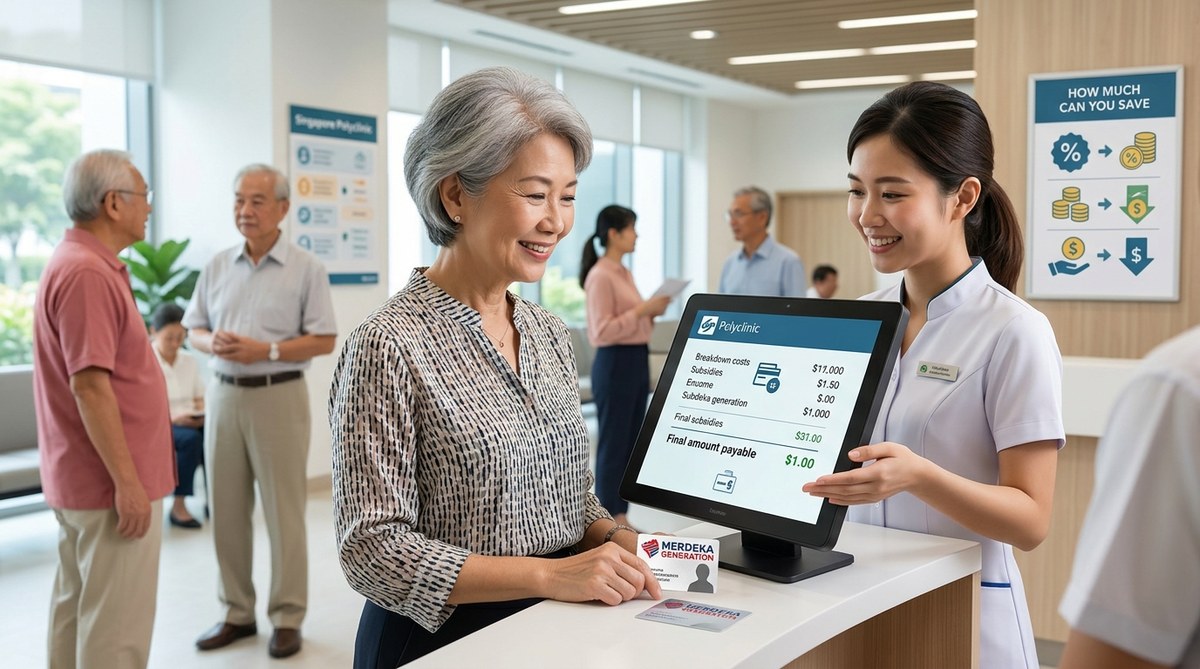
Let’s break down what you actually pay. A typical polyclinic consultation for a Singaporean citizen costs around $14 after standard subsidies. With your Merdeka Generation card, you get another 25% off that amount.
So your out-of-pocket becomes roughly $10.50 per visit.
That’s a $3.50 saving each time you walk through the door.
For someone visiting the polyclinic once a month for diabetes or hypertension follow-ups, that’s $42 saved per year. Over five years, you’re looking at $210 in your pocket.
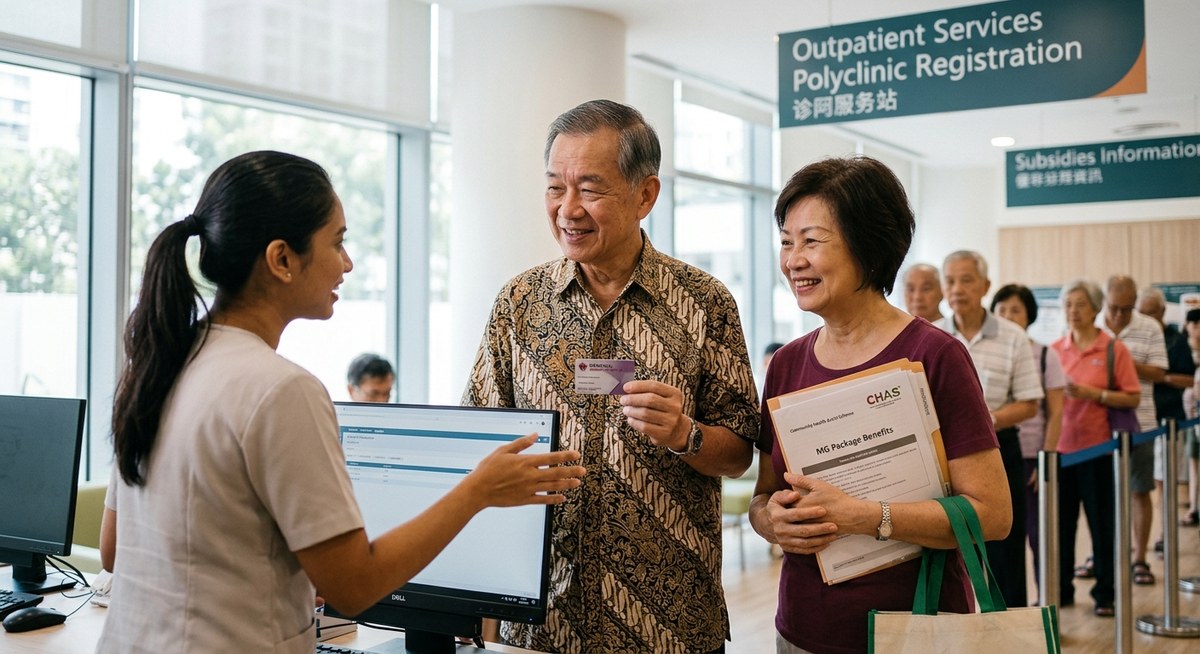
The subsidy applies automatically when you present your NRIC at registration. No forms to fill, no separate claims to file. The system recognises your birth year and applies the discount on the spot.
If you’re checking if you qualify for the Merdeka Generation package, you’ll find the polyclinic discount is one of the simplest benefits to use.
What services get the discount
The 25% Merdeka Generation subsidy covers more than just doctor consultations.
Here’s what you can save on:
- General practitioner consultations at polyclinics
- Specialist outpatient clinic (SOC) visits at public hospitals
- Dental services at polyclinics
- Medications prescribed during your visit
- Basic lab tests ordered by your polyclinic doctor
- Follow-up appointments for chronic disease management
One area that surprises many seniors: the discount applies to medications too. If your polyclinic doctor prescribes blood pressure pills or diabetes medication, that 25% comes off the pharmacy bill as well.
For example, a three-month supply of common chronic disease medications might cost $15 after standard subsidies. With the Merdeka Generation discount, you pay around $11.25.
The subsidy does not cover:
- Private GP clinics (unless they’re CHAS-registered, where different rules apply)
- Emergency department visits
- Inpatient hospital stays
- Elective procedures like cataract surgery
Those services have their own subsidy schemes, separate from the polyclinic benefits.
How the subsidy stacks with other benefits
Many Merdeka Generation seniors also hold a CHAS card. The good news: these benefits don’t cancel each other out.
At CHAS GP clinics, you get CHAS subsidies for common conditions like hypertension, diabetes, and high cholesterol. The Merdeka Generation package enhances this by giving you access to CHAS benefits regardless of your income.
Previously, CHAS was means-tested. Now, all Merdeka Generation seniors qualify automatically.
At the polyclinic, it’s a different system. You don’t use your CHAS card there. Instead, the 25% Merdeka Generation discount applies on top of the standard polyclinic subsidies.
Here’s a comparison table to make it clearer:
| Location |
Standard Citizen Rate |
With Merdeka Generation |
Your Savings |
| Polyclinic consultation |
$14 |
$10.50 |
$3.50 |
| Polyclinic dental scaling |
$23.60 |
$17.70 |
$5.90 |
| Specialist outpatient clinic |
$49 |
$36.75 |
$12.25 |
| CHAS GP (chronic condition) |
$18.50 |
$10 |
$8.50 |
The CHAS card benefits work differently at private clinics, so it’s worth understanding both systems.
Step-by-step process to claim your polyclinic subsidy
You don’t need to “claim” the subsidy in the traditional sense. It happens automatically. But here’s how to make sure you get it every time:
- Book your polyclinic appointment as usual (online, by phone, or walk-in).
- Bring your NRIC to the registration counter.
- Present your NRIC when the staff asks for it.
- Check your receipt to confirm the Merdeka Generation discount appears.
- Pay the reduced amount at the cashier.
That’s it. No separate application, no waiting period.
The system reads your NRIC number, checks your birth year (1950 to 1959 for Merdeka Generation), and applies the 25% discount automatically.
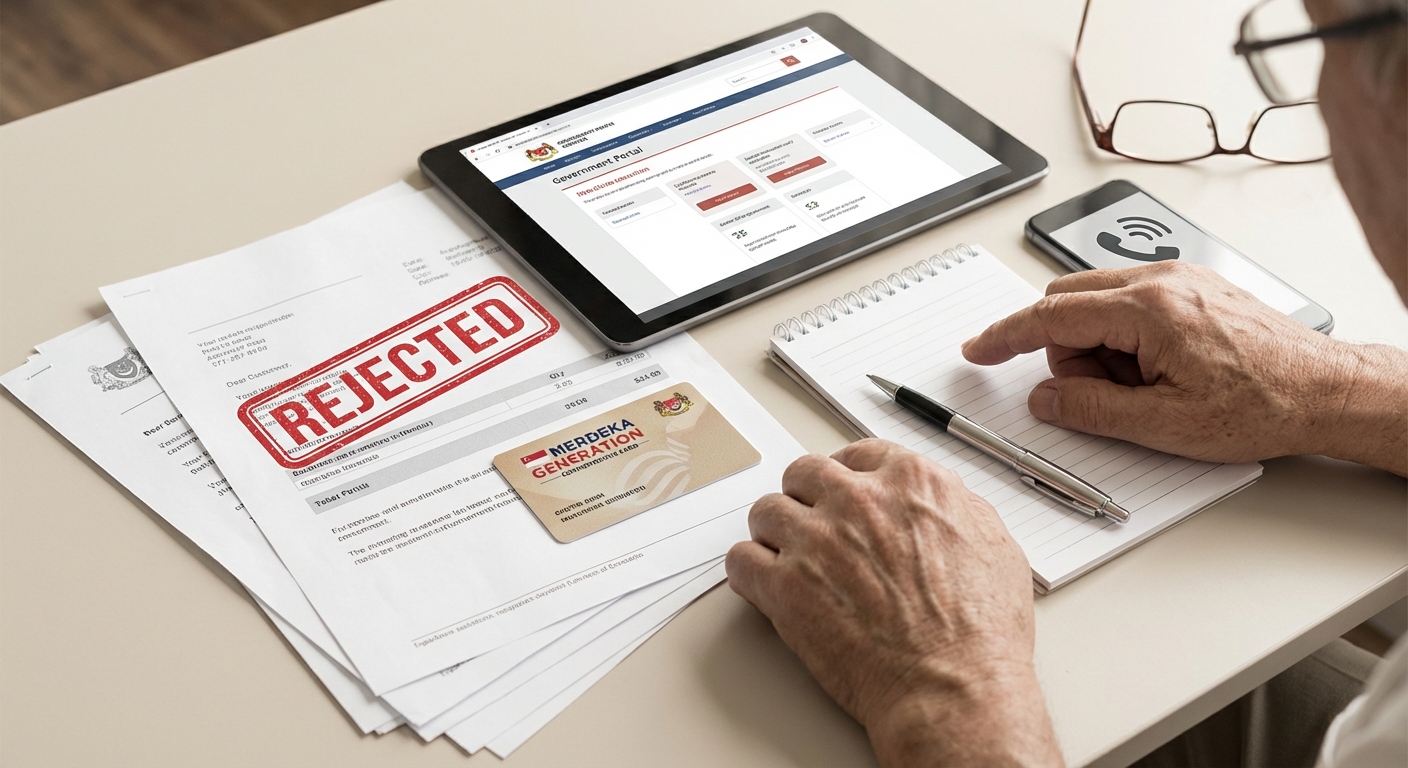
If the discount doesn’t appear on your receipt, ask the counter staff immediately. Sometimes the system needs a manual override, especially if you’re a new patient at that polyclinic.
Keep your receipts. They’re useful for tracking your healthcare spending and can be needed if you’re claiming other subsidies or tax relief later.
Common scenarios where you save the most
Some situations make the Merdeka Generation subsidy more valuable than others.
Chronic disease management
If you’re managing conditions like diabetes, hypertension, or high cholesterol, you’re likely visiting the polyclinic every two to three months.
Let’s say you go four times a year. At $3.50 saved per visit, that’s $14 annually. Add in medication savings of about $3.75 per refill (25% off $15), and you’re saving another $15 a year on prescriptions.
Total annual savings: around $29 just for one chronic condition.
Many seniors manage two or three conditions. The savings multiply.
Dental care
Polyclinic dental services get the same 25% discount. Scaling and polishing, which costs about $23.60 for regular citizens, drops to $17.70 for Merdeka Generation seniors.
If you go twice a year (as dentists recommend), you save $11.80 annually.
Specialist follow-ups
After a hospital procedure, you might need regular follow-ups at the specialist outpatient clinic.
These visits are pricier. A standard subsidised SOC visit costs around $49. With the Merdeka Generation discount, you pay $36.75.
That’s a $12.25 saving per visit. If you need quarterly follow-ups, you’re saving nearly $50 a year.
“I see my cardiologist every three months at the SOC. The Merdeka Generation discount saves me about $12 each time. Over the year, that’s close to $50. It’s not life-changing money, but it takes the edge off the medical bills.” — Mr Tan, 68, retired technician
What to do if the discount doesn’t apply
Sometimes the system glitches. It’s rare, but it happens.
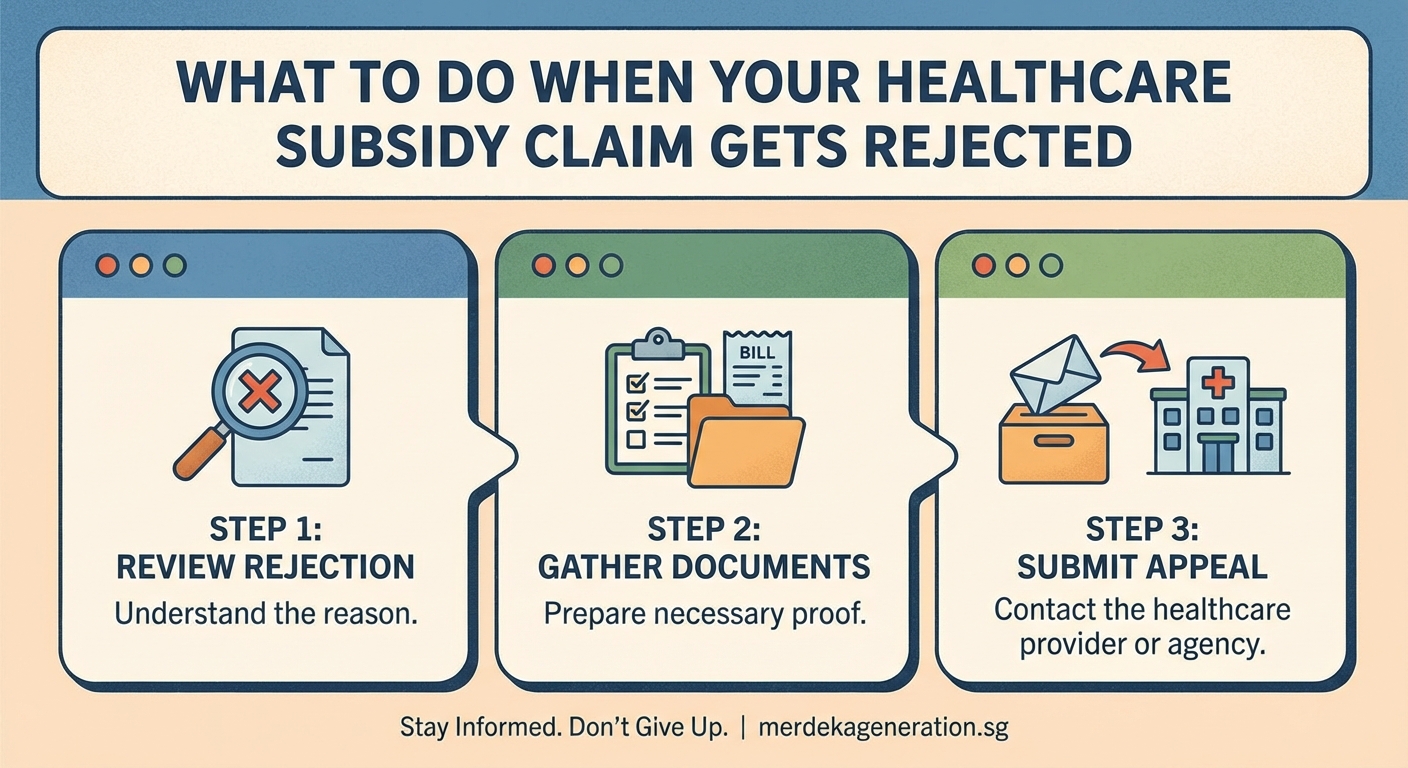
If you notice the full amount on your receipt instead of the discounted rate, speak up immediately at the counter.
The staff can manually check your eligibility and adjust the bill on the spot.
Bring your Merdeka Generation card if you have it. While your NRIC should be enough, the card serves as visual proof and speeds up the verification process.
If you’ve lost your Merdeka Generation card, don’t panic. The discount is tied to your NRIC, not the physical card. The card is just a convenience.
In the rare case where the polyclinic insists you’re not eligible (maybe due to a database error), ask for a supervisor. They can escalate the issue and usually resolve it within minutes.
If the problem persists, contact the Merdeka Generation hotline at 1800-2222-888. They can verify your eligibility and ensure your records are updated.
Mistakes that cost you money
Even with an automatic system, some seniors miss out on savings due to simple errors.
Mistake 1: Not bringing your NRIC
The discount won’t apply if you can’t prove your identity. Always bring your NRIC to every polyclinic visit.
Some seniors bring a photocopy or a photo on their phone. That doesn’t work. You need the physical card.
Mistake 2: Assuming all clinics give the same discount
Private GPs don’t offer the 25% polyclinic discount, even if they’re CHAS-registered. The 25% is strictly for polyclinics and public SOCs.
At CHAS GPs, you get different subsidies based on the CHAS tier and the condition being treated.
Mistake 3: Not checking your receipt
Always glance at your receipt before leaving the counter. If the discount didn’t apply, you can fix it immediately. Once you leave, it’s harder to backtrack.
Mistake 4: Forgetting to update your contact details
If the polyclinic has outdated information (old phone number, wrong address), it can cause delays or errors in your records. Update your details at the counter whenever something changes.
Many of these issues are covered in the common mistakes Merdeka Generation seniors make when claiming benefits.
How this compares to Pioneer Generation benefits
If you’re wondering how the Merdeka Generation package stacks up against the Pioneer Generation package, the polyclinic discount is one key difference.
Pioneer Generation seniors get a 50% discount at polyclinics, double the Merdeka Generation rate.
So a Pioneer Generation senior pays around $7 for the same consultation that costs a Merdeka Generation senior $10.50.
That’s a $3.50 difference per visit.
Over a year of monthly visits, that’s $42 more out of pocket for Merdeka Generation seniors.
It’s a noticeable gap, but the Merdeka Generation package still offers meaningful savings compared to non-package Singaporeans, who pay the full $14.
For a detailed breakdown, see the comparison between Pioneer and Merdeka Generation healthcare benefits.
Combining polyclinic subsidies with MediSave
You can use MediSave to pay for certain polyclinic services, but there are limits.
MediSave can cover:
- Vaccinations (like flu shots or pneumonia vaccines)
- Some chronic disease management programmes
- Specific outpatient treatments approved by MOH
For regular polyclinic consultations, you usually pay cash. MediSave doesn’t cover routine GP visits.
But here’s where it gets useful: if you’re enrolled in a chronic disease management programme at the polyclinic, MediSave can help pay for some of those visits.
The Merdeka Generation discount applies first, reducing your bill. Then, if eligible, MediSave covers part of the remaining amount.
This layering of benefits means you pay even less out of pocket.
If you’re also looking at maximising your MediShield Life coverage, understanding how these subsidies interact is crucial.
Planning your healthcare budget with these savings
Knowing your exact costs helps you plan better.
Let’s say you visit the polyclinic once a month for a chronic condition. That’s 12 visits a year.
At $10.50 per visit, you’re spending $126 annually on consultations alone.
Add medications. If you refill prescriptions four times a year at $11.25 each, that’s $45.
Total annual polyclinic costs: around $171.
Without the Merdeka Generation subsidy, you’d be paying:
- $14 per consultation x 12 = $168
- $15 per medication refill x 4 = $60
- Total: $228
Your annual savings: $57.
That might not sound huge, but it’s $57 you can put towards other needs. Over 10 years, that’s $570.
And this is just for one chronic condition at the polyclinic. If you also visit the SOC, get dental care, or see CHAS GPs, the total savings grow.
For broader retirement planning, consider reading about how much money Merdeka Generation seniors really need for retirement.
Additional subsidies you might qualify for
The Merdeka Generation package isn’t the only help available.
Depending on your income and household situation, you might also qualify for:
- Community Health Assist Scheme (CHAS): Subsidies at private GP clinics for common conditions.
- MediShield Life premium subsidies: Extra help paying your annual MediShield Life premiums.
- CareShield Life incentives: Additional participation incentives if you opt into CareShield Life.
- Pioneer Generation subsidies: If you were born in 1949 or earlier, you qualify for even better benefits.
Some seniors are eligible for both CHAS and Merdeka Generation benefits. The two schemes complement each other.
If you’re interested in stacking subsidies, the step-by-step guide to applying for additional healthcare subsidies walks through the process.
When to use the polyclinic versus a CHAS GP
Both options offer Merdeka Generation subsidies, but they work differently.
Choose the polyclinic when:
- You need lab tests or X-rays (cheaper and more integrated)
- You’re managing multiple chronic conditions
- You prefer a one-stop centre with pharmacy, lab, and specialists under one roof
- You don’t mind slightly longer waiting times
Choose a CHAS GP when:
- You want shorter waiting times
- You prefer a neighbourhood clinic close to home
- You need after-hours care
- You value continuity with a specific doctor
At CHAS GPs, your subsidy depends on the condition and the CHAS tier. For chronic conditions, you might pay around $10 per visit after subsidies.
At the polyclinic, you pay the flat $10.50 (with Merdeka Generation discount) regardless of the condition.
For routine follow-ups, the costs are similar. The choice often comes down to convenience and personal preference.
Keeping track of your healthcare spending
It’s easy to lose track of medical bills when you’re seeing multiple providers.
Here’s a simple system:
- Keep all polyclinic receipts in one envelope or folder.
- Note the date, amount paid, and reason for visit on each receipt.
- At the end of the year, add up your total spending.
This helps you:
- Claim tax relief for medical expenses (if eligible)
- Spot any billing errors
- Plan next year’s healthcare budget
- Track whether your conditions are stable or requiring more frequent visits
Some seniors use a simple notebook or a spreadsheet. Others snap photos of receipts and store them in a phone album.
Find a method that works for you and stick with it.
Making the most of your annual top-up
Merdeka Generation seniors also receive a $200 annual MediSave top-up. This is separate from the polyclinic subsidy, but it’s part of the same package.
You can use this top-up to:
- Pay MediShield Life premiums
- Cover approved outpatient treatments
- Build up your MediSave balance for future hospital stays
The annual $200 MG card top-up guide explains exactly when it arrives and how to use it wisely.
Combining the MediSave top-up with your polyclinic subsidies gives you a solid foundation for managing healthcare costs in retirement.
Real-world impact on your monthly budget
Let’s put this in perspective with a realistic monthly budget.
Say you’re a Merdeka Generation senior living on a modest income. Your monthly expenses might look like this:
- Utilities: $80
- Groceries: $300
- Transport: $50
- Healthcare: $30 (polyclinic + medications)
- Miscellaneous: $40
Without the Merdeka Generation subsidy, your healthcare line item would be closer to $40 per month.
That $10 difference might not seem huge, but it’s 25% of your monthly healthcare budget. For someone on a tight budget, that’s meaningful.
It’s the difference between affording an extra meal out with your grandchildren or having to skip it.
Small savings compound. They give you breathing room.
What happens if you move or travel
The Merdeka Generation subsidy is tied to your citizenship, not your address.
If you move to a different part of Singapore, you can still use the subsidy at any polyclinic island-wide.
If you’re travelling overseas for an extended period, the subsidy doesn’t apply to foreign healthcare. But it’s waiting for you when you return.
Some seniors worry about losing their Merdeka Generation benefits if they move overseas. The short answer: as long as you remain a Singapore citizen, your benefits stay intact.
Getting help if you’re confused
Healthcare subsidies can be confusing. If you’re unsure about anything, ask for help.
The polyclinic staff are trained to explain the Merdeka Generation benefits. Don’t hesitate to ask questions at the counter.
You can also call the Merdeka Generation hotline at 1800-2222-888. They can clarify your eligibility, explain how the subsidies work, and help troubleshoot any issues.
Many community centres also run informational sessions for seniors. These sessions walk through the Merdeka Generation package step by step.
Bring a family member or friend if you find it easier to have someone else listen and take notes.
Putting your savings to work
Every dollar you save on healthcare is a dollar you can use elsewhere.
Some seniors put their polyclinic savings into a small emergency fund. Even $5 a month adds up to $60 a year.
Others use the savings to afford better nutrition, which in turn keeps them healthier and reduces future medical costs.
A few treat themselves. There’s nothing wrong with using your savings to enjoy life a little more.
The point is: these subsidies give you options. They give you a bit more control over your budget.
And that control matters, especially in retirement when income is fixed.
Your healthcare, your choices
The Merdeka Generation subsidy for polyclinic visits isn’t flashy. It won’t make headlines. But it’s a steady, reliable benefit that puts real money back in your pocket every time you see a doctor.
$3.50 per visit adds up. Over a year, over a decade, it becomes a meaningful part of your healthcare strategy.
You’ve contributed to Singapore’s growth. This subsidy is one small way the nation says thank you.
Use it. Track it. Let it ease the burden of staying healthy in your golden years.