Author: john

  • How to Apply for a Studio Apartment Under the Silver Housing Bonus Scheme

    How to Apply for a Studio Apartment Under the Silver Housing Bonus Scheme

    Thinking about downsizing your HDB flat to boost your retirement funds? The Silver Housing Bonus (SHB) scheme can put up to $30,000 into your CPF Retirement Account when you move to a smaller home. But many seniors miss out simply because they don’t know the application steps or assume the process is too complicated.

    Key Takeaway

    The Silver Housing Bonus gives eligible seniors aged 65 and above up to $30,000 when they downsize to a smaller HDB flat. You apply through HDB when purchasing your replacement flat, and the bonus goes directly into your CPF Retirement Account. Your household income and property ownership affect your eligibility, and you must meet specific conditions including maintaining a minimum CPF balance after the move.

    Who can receive the Silver Housing Bonus

    Before you start the application, make sure you meet the basic requirements.

    You must be at least 65 years old when you apply. Your spouse, if you’re applying as a couple, must also be 65 or above.

    Your current flat must be a 3-room or larger HDB unit. You’ll be moving to a smaller flat, either a 2-room Flexi or 3-room flat.

    Average gross household income matters. If you’re single, your monthly income must not exceed $6,000. For couples or families, the combined household income cap is $12,000 per month.

    Property ownership affects your eligibility too. You can own only one property at the time of application, which is the flat you’re selling. If you or anyone in your household owns other properties, including private property, you won’t qualify unless the total annual value of all properties stays below $21,000.

    You must not have received the Silver Housing Bonus before. This is a one-time benefit.

    “Many seniors think they don’t qualify because they have some savings or own their flat outright. The scheme actually looks at your monthly income and property ownership, not your total wealth. Don’t rule yourself out before checking the full criteria.” (HDB eligibility guidelines)

    Understanding your bonus amount
    How to Apply for a Studio Apartment Under the Silver Housing Bonus Scheme — image 1

    The Silver Housing Bonus isn’t a fixed sum. Your bonus amount depends on your replacement flat type and your property ownership situation.

    If you’re moving to a 2-room Flexi flat, you can receive up to $30,000. Moving to a 3-room flat gets you up to $15,000.

    But there’s a catch. If you or anyone in your household owns any other property, including private property with annual value, your bonus gets reduced by $1 for every $1 of annual value above $0, up to $21,000.

    Here’s how it works in practice:

    Your situation Replacement flat Maximum bonus
    No other property 2-room Flexi $30,000
    No other property 3-room flat $15,000
    Own property with $10,000 annual value 2-room Flexi $20,000
    Own property with $15,000 annual value 3-room flat $0

    The bonus goes straight into your CPF Retirement Account. You cannot receive it as cash. This ensures the money supports your retirement income through CPF LIFE payouts.

    Checking your CPF balance requirements

    The Silver Housing Bonus comes with a mandatory CPF top-up requirement. This ensures you maintain adequate retirement savings after downsizing.

    After you sell your current flat and buy the smaller one, you must have at least $60,000 in your CPF Retirement Account. This includes the Silver Housing Bonus amount.

    If you’re applying as a couple, each person must meet this $60,000 threshold individually. Your spouse’s CPF balance doesn’t count towards your requirement.

    Let’s say you currently have $40,000 in your CPF Retirement Account. You’re moving to a 2-room Flexi flat and qualify for the full $30,000 bonus. After the sale proceeds are used for the new flat purchase and the bonus is credited, you’d have $70,000. That meets the requirement.

    But if you only have $20,000 in your CPF Retirement Account, even with the $30,000 bonus you’d only reach $50,000. You’d need to top up an additional $10,000 from your sale proceeds to meet the $60,000 minimum.

    Planning ahead helps. Before you commit to selling, calculate your expected CPF balance after the transaction. Factor in your current balance, the bonus amount, and how much of your sale proceeds you’ll need for the new flat purchase.

    Step by step application process

    How to Apply for a Studio Apartment Under the Silver Housing Bonus Scheme — image 2

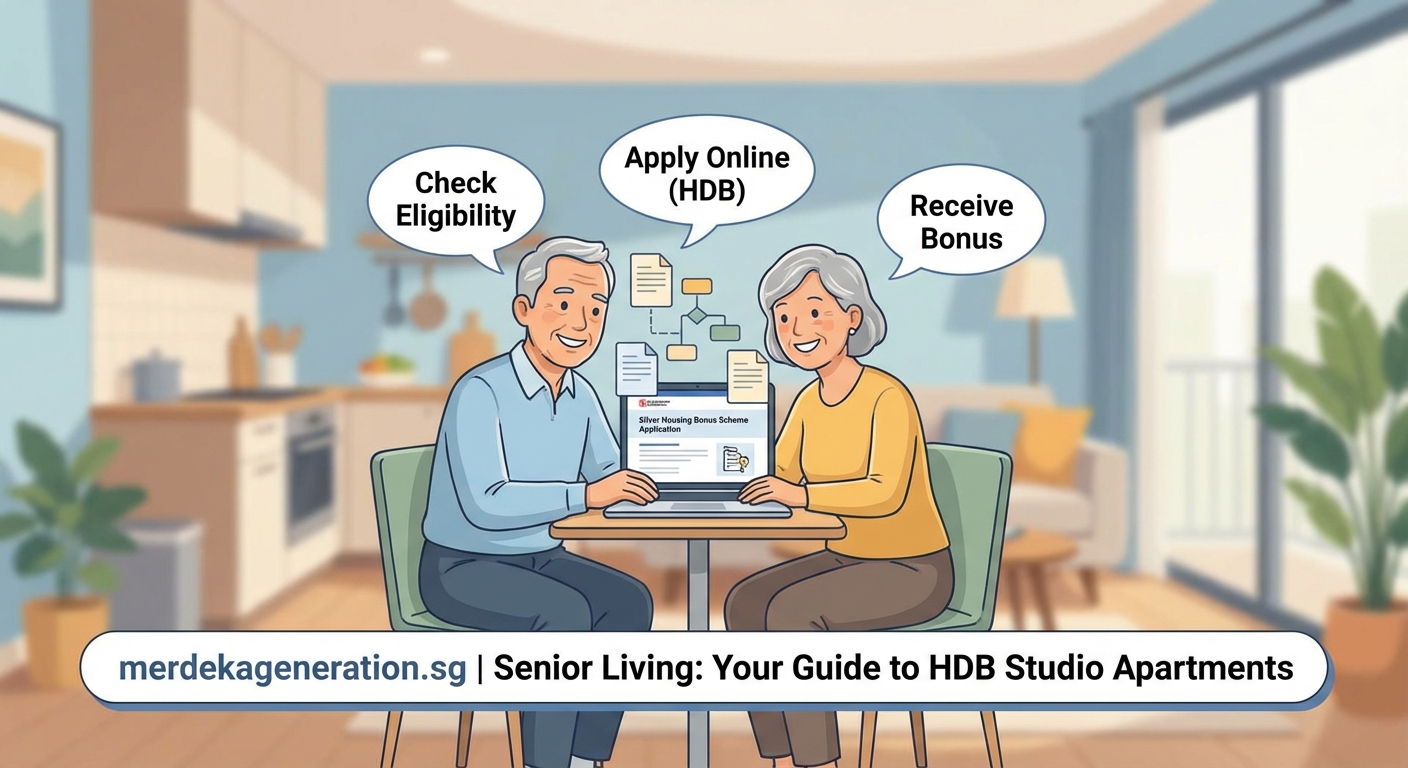
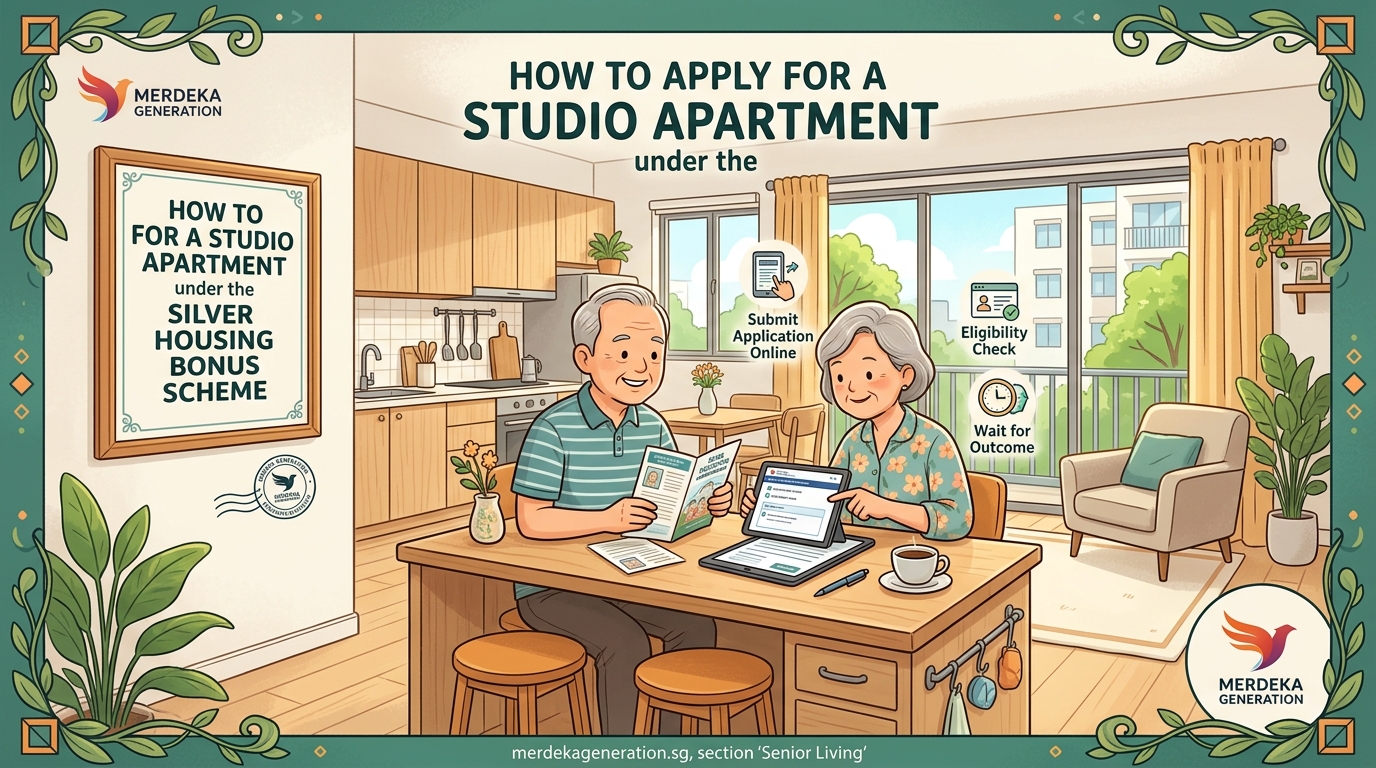
    The application happens during your flat purchase, not as a separate process. Here’s exactly what to do.

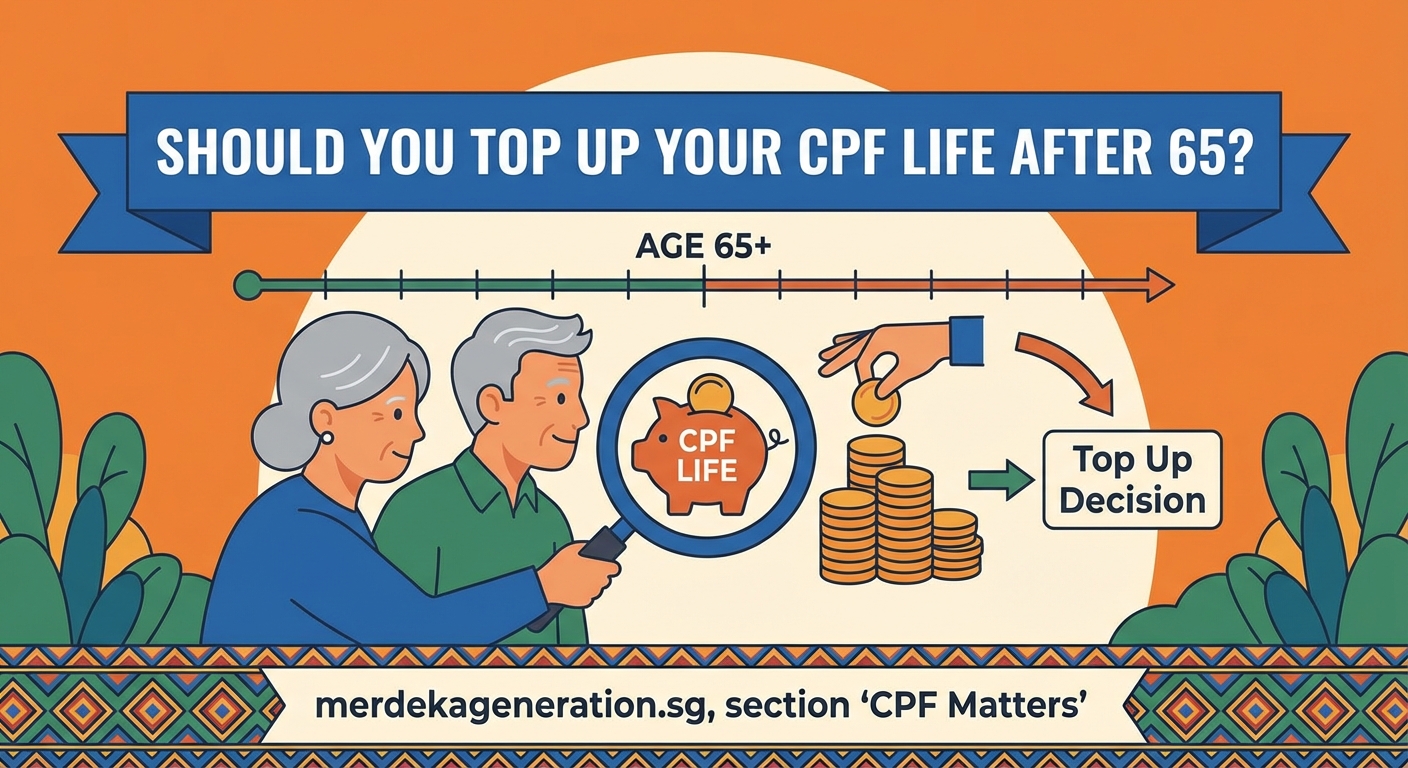
    1. Get your HDB Flat Eligibility letter

    Start by applying for an HDB Flat Eligibility (HFE) letter. You can do this online through the HDB website or at any HDB branch.

    You’ll need your Singpass to log in. The system will ask about your household members, income, and current property ownership.

    Indicate that you want to apply for the Silver Housing Bonus during this HFE application. The system will check your eligibility automatically.

    Processing takes about 3 weeks. You’ll receive a letter stating whether you’re eligible for the scheme and your estimated bonus amount.

    2. Book your replacement flat

    Once you have your HFE letter, you can book a flat. This applies whether you’re buying from HDB directly or from the resale market.

    For new flats, participate in the HDB sales exercise. Your HFE letter confirms your eligibility for priority schemes if applicable.

    For resale flats, find a suitable unit and negotiate with the seller. Your HFE letter remains valid for 6 months, giving you time to search.

    Make sure the flat you’re buying is smaller than your current one. A 2-room Flexi or 3-room flat qualifies.

    3. Submit your resale application

    If you’re buying a resale flat, both buyer and seller submit the resale application through the HDB resale portal.

    During this application, you’ll confirm that you’re applying for the Silver Housing Bonus. The system will calculate your exact bonus amount based on your circumstances.

    You’ll also see the CPF balance requirement clearly stated. The system shows how much you need to set aside in your CPF Retirement Account.

    4. Complete the flat purchase

    Attend the HDB appointment to complete the purchase. Bring all required documents including identification, income proof, and your HFE letter.

    HDB will verify your eligibility again at this stage. They’ll check that your circumstances haven’t changed since your HFE approval.

    Sign all necessary documents. The flat purchase completes, and ownership transfers to you.

    5. Receive your bonus

    After completion, HDB credits the Silver Housing Bonus directly to your CPF Retirement Account. This happens automatically within a few weeks.

    You’ll receive a notification from CPF showing the credit. Check your CPF statement online to confirm the amount.

    The bonus becomes part of your CPF LIFE plan, generating monthly payouts during retirement. You cannot withdraw it as a lump sum.

    Common mistakes that delay applications

    Many seniors run into problems that could have been avoided with better preparation.

    Not checking income limits carefully

    Some applicants forget to include all household income sources. Rental income, part-time work, and regular financial support from children all count. If your total exceeds the cap, you won’t qualify. Calculate accurately before applying.

    Overlooking property ownership rules

    Owning a small investment property or having your name on a family member’s property title can disqualify you. Even if you don’t live there or don’t benefit financially, HDB considers it property ownership. Check all property records before starting your application.

    Selling current flat before securing replacement

    You need to own your current flat when you apply. Some seniors sell first, thinking they can apply later. That doesn’t work. Apply while you still own the flat you’re downsizing from.

    Insufficient CPF balance planning

    Not having enough in your CPF Retirement Account to meet the $60,000 requirement stops many applications. Calculate this before you commit to selling. You might need to set aside more sale proceeds than expected.

    Missing the HFE validity period

    Your HFE letter expires after 6 months. If you don’t find a replacement flat within that time, you need to reapply. Start your flat search early to avoid rushing or missing the deadline.

    Assuming automatic approval

    Meeting the basic criteria doesn’t guarantee approval. HDB reviews each application individually. Provide complete, accurate information and respond to any queries promptly.

    What happens after you receive the bonus

    How to Apply for a Studio Apartment Under the Silver Housing Bonus Scheme — image 3

    Getting the Silver Housing Bonus is just the beginning. Understanding how it affects your retirement planning matters.

    The bonus sits in your CPF Retirement Account and becomes part of your CPF LIFE plan. This means it generates monthly payouts from age 65 onwards.

    For example, if you receive the full $30,000 bonus, this increases your monthly CPF LIFE payout. The exact increase depends on your CPF LIFE plan type and your age when the bonus is credited.

    You cannot withdraw the bonus as cash, even after age 65. It stays locked in CPF LIFE to provide retirement income. This protects you from spending the money too fast.

    If you’re thinking about how this fits with other retirement planning strategies, should you downsize your HDB flat for extra retirement cash covers the broader financial considerations.

    The bonus also counts when calculating your CPF balances for other purposes. If you’re planning to top up your CPF further, should you top up your CPF LIFE after 65 explains how additional contributions work with existing balances.

    Coordinating with other retirement benefits

    The Silver Housing Bonus works alongside other government schemes available to seniors.

    If you’re part of the Merdeka Generation, you already receive healthcare subsidies and other benefits. The Silver Housing Bonus doesn’t affect these. You keep all your existing benefits.

    However, if you’re unsure about your Merdeka Generation eligibility status, how to check if you qualify for the Merdeka Generation Package in 2024 walks through the verification process.

    Some seniors worry about losing benefits when they move. Your CHAS card benefits continue at your new address. The healthcare subsidies don’t change based on your flat size. Learn more about CHAS card benefits explained to understand what remains available.

    Your MediShield Life coverage also stays active. Moving to a smaller flat doesn’t affect your healthcare protection. For details on maximizing this coverage, how to maximise your MediShield Life coverage as a Merdeka Generation senior provides practical strategies.

    Planning your finances after downsizing
    How to Apply for a Studio Apartment Under the Silver Housing Bonus Scheme — image 4

    Downsizing creates a significant financial shift. The Silver Housing Bonus is one part, but you’ll also have cash proceeds from selling your larger flat.

    Most seniors use sale proceeds to pay for the smaller replacement flat. The leftover amount can supplement retirement income or serve as emergency savings.

    Consider how much you need for monthly expenses. Your CPF LIFE payouts, including the boost from the Silver Housing Bonus, provide baseline income. Cash savings cover unexpected costs.

    Healthcare expenses often increase with age. While MediShield Life and CHAS subsidies help, some costs still come out of pocket. Managing healthcare costs in retirement offers strategies for handling medical expenses beyond subsidies.

    Creating a realistic budget helps you live comfortably on fixed income. Creating a monthly budget that works on fixed CPF LIFE and pension income shows how to structure spending when your income doesn’t fluctuate.

    Documents you’ll need throughout the process

    Gather these documents before starting your application to avoid delays.

    • NRIC for all household members applying
    • Recent payslips or income statements covering the last 12 months
    • CPF contribution history printout from the CPF website
    • Current flat ownership documents showing you as the registered owner
    • Property tax statements if you own any other property
    • HDB Flat Eligibility letter once approved
    • Resale flat listing or booking documents for your replacement flat

    Keep both physical and digital copies. Some appointments require original documents, while online applications need scanned versions.

    If you’re missing any documents, request them early. CPF statements take a few days to generate. Property ownership searches through IRAS can take up to a week.

    Getting help with your application

    You don’t have to figure this out alone. Several resources can guide you through the process.

    HDB branches offer face-to-face assistance. Staff can review your eligibility, explain requirements, and help with online submissions. Book an appointment to avoid long waits.

    The HDB hotline answers questions about the scheme. Call 1800-225-5432 during office hours. Have your NRIC ready for identity verification.

    Community centres and senior activity centres sometimes run workshops on housing schemes for elderly residents. These sessions explain the process in simple terms and answer common questions.

    If you prefer written guidance, the HDB website has detailed information pages. Search for “Silver Housing Bonus” to find official guidelines, eligibility criteria, and application instructions.

    For seniors who need help avoiding common pitfalls with government benefits, 5 common mistakes Merdeka Generation seniors make when claiming benefits highlights issues to watch for.

    Making the most of your downsizing decision

    Applying for the Silver Housing Bonus is straightforward when you know the steps. Start by checking your eligibility carefully, especially income limits and property ownership. Get your HFE letter early to allow time for flat hunting. Calculate your CPF balance requirements before committing to sell. Follow the application process during your flat purchase, not as a separate task.

    The bonus boosts your retirement income through higher CPF LIFE payouts. Combined with proceeds from selling your larger flat, downsizing can significantly improve your financial security in retirement. Take time to plan how you’ll use both the bonus and any cash proceeds wisely.

    Don’t let uncertainty stop you from exploring this option. Thousands of seniors have successfully applied for the Silver Housing Bonus and moved to comfortable, more manageable homes. With proper preparation and understanding of the process, you can too.

  • Supplementing Your Retirement Income: Safe Side Hustles and Part-Time Work for Seniors

    Retirement looks different today than it did a generation ago. Many Merdeka Generation seniors find themselves with energy, skills, and a desire to stay active, but CPF LIFE payouts alone might not stretch as far as hoped. Rising costs and longer life expectancies mean more retirees are looking for flexible work that brings in extra income without the stress of a full-time commitment.

    Key Takeaway

    Part time jobs for retirees in Singapore offer flexible income without degrees or long hours. From retail to tutoring, consulting to caregiving, seniors aged 60-75 can find low-stress roles that fit their schedule. Government schemes like the Senior Employment Credit help employers hire older workers, while proper planning ensures your earnings don’t affect Merdeka Generation benefits or healthcare subsidies.

    Why retirees are returning to work

    The numbers tell a clear story. More than 30% of Singaporeans aged 65 and above remain in the workforce, according to recent Ministry of Manpower data. Some return because they need the money. Others miss the structure and social connection that work provides.

    Your CPF LIFE payouts might cover basic expenses. But what about the occasional restaurant meal, ang bao for grandchildren, or that medical procedure not fully covered by CHAS card benefits explained: what Merdeka Generation seniors need to know?

    Part time work fills these gaps. It also keeps your mind sharp and your days meaningful.

    What makes a good part time job for retirees

    Not every job suits someone in their 60s or 70s. The best roles share certain characteristics.

    Flexibility matters most. You want control over your schedule, not the other way around. Jobs that let you choose your hours or work from home rank highest.

    Physical demands should match your ability. Standing for eight hours or lifting heavy boxes might not be realistic anymore. Look for roles that let you sit when needed or work at your own pace.

    Low stress is essential. You’ve earned the right to leave high-pressure deadlines behind. The best retirement jobs feel more like hobbies than work.

    No degree required. Your decades of life experience count for more than certificates. The roles below value practical skills over formal qualifications.

    Top part time jobs for retirees in Singapore

    Customer service roles

    Retail shops, supermarkets, and department stores actively hire older workers. They value your patience and people skills.

    Typical hours run from four to six hours per shift. Many employers offer flexible scheduling around your medical appointments or family commitments.

    Pay ranges from $8 to $12 per hour. Some stores add transport allowances or staff discounts.

    The work involves helping customers, restocking shelves, or manning the cashier. You’ll spend time on your feet, but most shops provide stools for breaks.

    Private tutoring

    If you speak good English, Mandarin, or Malay, parents will pay for your time. Primary school students need help with homework. Secondary students struggle with specific subjects.

    You set your own rates, typically $25 to $50 per hour depending on the subject and level. Meet students at their homes, void deck tables, or libraries.

    The schedule adapts to your availability. Most sessions happen after school hours or on weekends. You choose how many students to take on.

    No teaching certificate needed. Your life experience and subject knowledge matter more. Many retirees find this work deeply satisfying.

    Administrative support

    Small businesses and startups need help with paperwork, data entry, or appointment scheduling. These tasks don’t require full-time staff, making them perfect for retirees.

    Work from home or visit the office a few days per week. Hours stay flexible, often around 15 to 20 per week.

    Pay sits around $10 to $15 per hour. Some roles offer project-based fees instead.

    Basic computer skills help. You’ll use email, Excel spreadsheets, and simple accounting software. Most employers provide training.

    Caregiving and companionship

    Singapore’s aging population creates strong demand for caregivers. You might help elderly neighbours with daily tasks, accompany them to medical appointments, or simply provide company.

    The work feels less like a job and more like helping a friend. Hours vary based on the client’s needs, from a few hours per week to daily visits.

    Agencies pay $10 to $18 per hour. Direct arrangements with families sometimes pay more.

    Basic first aid knowledge helps but isn’t mandatory. Your patience and genuine care matter most.

    Food delivery and ridesharing

    GrabFood and Foodpanda welcome older delivery partners. You work when you want, accepting only the orders that suit you.

    Earnings depend on how much you work. Most part-timers make $8 to $12 per hour after expenses. Peak hours during lunch and dinner pay better.

    You’ll need a smartphone, a bicycle or motorcycle, and decent fitness for cycling routes. The job keeps you active while earning.

    Some retirees prefer Grab driving if they own a car. The work stays less physically demanding, though vehicle costs eat into profits.

    Pet care services

    Dog walking and pet sitting appeal to animal lovers. Busy professionals pay well for reliable help with their pets.

    Rates run from $15 to $30 per walk or visit. Regular clients provide steady income. Apps like PetBacker connect you with pet owners.

    The work gets you outdoors and moving. Dogs don’t care about your age, only that you show up consistently and treat them kindly.

    Freelance consulting

    Your career expertise doesn’t expire at 65. Companies pay for advice on topics you know inside out, whether that’s accounting, HR, operations, or sales.

    Consulting lets you work on your terms. Take on projects when you want them. Say no when you don’t.

    Rates vary widely based on your field, from $50 to $200 per hour. Even a few hours per month add meaningful income.

    Build your client base through former colleagues, industry contacts, or LinkedIn. Your reputation does the marketing.

    How to find legitimate opportunities

    Scams target retirees looking for work. Protect yourself by following these steps.

    1. Check the company’s background. Search for reviews online. Legitimate businesses have a physical address and working phone number.

    2. Never pay upfront fees. Real employers don’t charge you to apply or train. Walk away from any “opportunity” demanding payment first.

    3. Meet in public spaces. For tutoring or caregiving roles, first meetings should happen in coffee shops or community centres, not private homes.

    4. Trust your instincts. If something feels wrong, it probably is. You’ve lived long enough to recognise when someone isn’t being straight with you.

    5. Use established platforms. Government job portals like MyCareersFuture or WorkPro list verified positions. Community centres also post legitimate openings.

    Government support for senior employment

    Singapore’s government wants older workers in the workforce. Several schemes make hiring you more attractive to employers.

    The Senior Employment Credit gives employers cash grants when they hire workers aged 60 and above. This subsidy can reach up to 8% of your monthly wage.

    Workfare Income Supplement tops up your income if you earn below certain thresholds. The payments go directly into your CPF accounts.

    The Part-Time Re-employment Grant helps employers create suitable part-time roles for older workers. These programmes mean more companies actively seek retirees.

    Understanding how work affects your benefits

    Extra income won’t affect your Merdeka Generation package benefits. Your MG card subsidies continue regardless of employment status.

    Your CPF contributions change after 55. Employers and employees both contribute lower rates. After 65, contribution rates drop further. This means more of your pay goes into your pocket instead of CPF.

    Healthcare subsidies through CHAS depend on your household income, not employment status. Part time work rarely pushes you above the income thresholds. If you’re unsure, check with the clinic before your appointment.

    Tax implications stay minimal for most part-timers. The first $20,000 of income is tax-free for residents. Unless you’re earning substantial amounts, you won’t owe anything.

    Balancing work with health needs

    Your wellbeing comes first. Part time work should enhance your retirement, not drain it.

    Schedule regular health screenings. Managing healthcare costs in retirement becomes easier when you catch issues early.

    Choose work that accommodates your medical appointments. Flexible roles let you block out time for doctor visits without losing income.

    Listen to your body. Some days you’ll feel energetic. Others, you’ll need rest. The beauty of part time work is saying no when you need to.

    Build rest days into your schedule. Working two or three days per week often feels better than spreading thin hours across seven days.

    Common mistakes to avoid

    Mistake Why It Hurts Better Approach
    Taking the first offer You might accept poor pay or conditions Interview multiple employers, compare terms
    Ignoring written contracts Disputes become harder to resolve Always get terms in writing, even for informal roles
    Overcommitting hours Burnout defeats the purpose Start with fewer hours, increase gradually
    Neglecting transport costs Earnings shrink after expenses Calculate real take-home pay including travel
    Skipping lunch breaks Health suffers, productivity drops Protect your meal times and rest periods

    Making your application stand out

    Your age brings advantages. Employers value reliability, punctuality, and maturity. Highlight these strengths.

    Focus on recent experience. Your job from 30 years ago matters less than skills you’ve used recently, even in volunteer work or hobbies.

    Show flexibility. Employers love workers who adapt to changing schedules or fill in during staff shortages.

    Demonstrate tech comfort. Even basic smartphone and computer skills reassure employers you’ll manage modern systems.

    Provide references. Former colleagues, community leaders, or volunteer coordinators can vouch for your character and work ethic.

    Dress appropriately for interviews. Smart casual shows you take the opportunity seriously without overdoing it.

    “The retirees who succeed in part time work treat it professionally but not seriously. They show up on time, do good work, but don’t let job stress invade their retirement peace.” – Career counsellor at a senior employment agency

    Managing your schedule effectively

    Part time work requires different planning than full-time careers. You’re juggling income needs with personal priorities.

    Block out non-negotiable commitments first. Medical appointments, family gatherings, and personal rest days go on the calendar before work shifts.

    Communicate clearly with employers. Let them know your available days upfront. Most appreciate honesty over last-minute cancellations.

    Track your hours and earnings. A simple notebook or phone app helps you see whether the work delivers the income you expected.

    Review your arrangement quarterly. If the job stops working for you, speak up or look elsewhere. You’re not locked in.

    When part time work isn’t enough

    Some retirees need more income than part time jobs provide. If that’s you, consider these alternatives.

    Downsizing your HDB flat releases capital without ongoing work demands. The Lease Buyback Scheme offers another option for flat owners.

    Topping up your CPF LIFE increases your monthly payouts. Even small top-ups compound over time.

    Renting out a spare room generates passive income. Many retirees find this easier than working, though it requires sharing your space.

    Creating a monthly budget sometimes reveals you need less extra income than you thought. Cutting unnecessary expenses might solve the problem without adding work.

    Building confidence for your job search

    Returning to work after years away feels intimidating. These strategies help.

    Start small. One client or a few hours per week builds confidence before you expand.

    Practice your pitch. Explain what you offer in two or three sentences. Rehearse until it sounds natural.

    Update your appearance. A haircut and some new clothes boost your confidence during applications and interviews.

    Lean on your network. Friends, former colleagues, and community centre staff often know about openings before they’re advertised.

    Celebrate small wins. Every application sent and interview completed moves you forward, regardless of the outcome.

    Your next steps

    Part time jobs for retirees open doors to extra income, social connection, and continued purpose. The opportunities exist. The government supports senior employment. Employers increasingly recognise the value older workers bring.

    Start by identifying what matters most to you. Flexibility? Social interaction? Specific income targets? Let those priorities guide your search.

    Check government benefits you’re eligible for before accepting work. Understanding how different income sources interact prevents unpleasant surprises.

    Then take action. Browse job portals. Visit your community centre. Tell friends you’re looking. The right opportunity rarely appears without some effort on your part.

    Making work fit your retirement vision

    The best part time job feels less like returning to work and more like choosing how you spend your time. It supplements your income without consuming your life.

    You’ve earned the right to be selective. Take roles that respect your experience, accommodate your needs, and leave room for the retirement activities you enjoy.

    The extra money helps. But so does the structure, the social connection, and the satisfaction of contributing. Find work that delivers all three, and you’ll wonder why you didn’t start sooner.

    Your skills matter. Your experience counts. And somewhere in Singapore, an employer needs exactly what you offer. The only question is whether you’ll take that first step to find them.

  • What Happens to Your CPF Savings When You Pass Away? Estate Planning Essentials

    Your CPF account holds decades of savings. But have you thought about where all that money goes when you’re no longer around?

    Most Singaporeans assume their CPF will automatically go to their spouse or children. The reality is more complicated. Without proper planning, your loved ones could face delays, legal complications, and unexpected tax implications. Understanding how CPF distribution works after death isn’t just about ticking boxes. It’s about protecting the people who matter most.

    Key Takeaway

    When you pass away, your CPF savings are distributed either through a CPF nomination or according to intestacy laws. Making a nomination ensures your money reaches your chosen beneficiaries faster and according to your wishes. Without one, the Public Trustee handles distribution, which can take months or years and may not align with what you intended for your family.

    Two Paths for Your CPF After Death

    Your CPF savings follow one of two routes when you die.

    The first path is through a CPF nomination. This is a legal document where you specify exactly who gets your CPF money and how much each person receives. You create this nomination while you’re alive, and it overrides other claims to your CPF.

    The second path applies when you haven’t made a nomination. Your CPF becomes part of your estate and gets distributed according to the Intestate Succession Act or Muslim inheritance law, depending on your religion. The Public Trustee’s Office steps in to manage the distribution.

    The difference between these two paths is significant. One gives you control. The other leaves it to legislation that might not match your wishes.

    Understanding CPF Nominations

    A CPF nomination is your direct instruction to the CPF Board about who should receive your savings.

    You can nominate anyone. Your spouse, children, parents, siblings, friends, or even charitable organisations. There’s no restriction on who qualifies as a nominee. You decide the proportion each person receives, whether that’s equal shares or different amounts.

    The nomination covers all your CPF accounts. This includes your Ordinary Account, Special Account, MediSave Account, and Retirement Account. It also covers any CPF investments you hold and any remaining funds in your CPF LIFE plan.

    Here’s what makes nominations powerful. The money goes directly to your nominees without passing through your estate. This means faster distribution, no probate delays, and no estate duty considerations for CPF savings.

    You can make two types of nominations. A general nomination splits your CPF among your chosen beneficiaries. A revocable nomination allows you to change or cancel it anytime. Once you make a nomination, it stays valid until you revoke it or circumstances change, like getting married or divorced.

    What Happens Without a Nomination

    When you die without a CPF nomination, your savings don’t vanish. But getting them becomes more complicated for your family.

    The CPF Board transfers your savings to the Public Trustee’s Office. From there, distribution follows strict legal rules. For non-Muslims, the Intestate Succession Act determines who gets what. For Muslims, the Syariah Court applies Islamic inheritance law.

    Under intestacy rules, your spouse and children typically receive priority. But the exact split depends on your family structure. If you’re survived by a spouse and children, they share the estate. If you have no spouse but have children, they split everything equally. If you have no children, your parents may receive a share.

    This process takes time. Months, sometimes years. Your family needs to apply to the Public Trustee, provide documentation, and wait for processing. During this period, they cannot access your CPF savings, even if they desperately need the funds for immediate expenses.

    The distribution might not match what you would have wanted. Perhaps you wanted to give more to a child with special needs, or less to someone who’s financially secure. Intestacy laws don’t consider these personal circumstances. They follow fixed formulas.

    How to Make a CPF Nomination

    Creating a CPF nomination is straightforward. You have three options.

    Online through CPF website

    1. Log in to your CPF account using Singpass
    2. Navigate to the “My Requests” section
    3. Select “Nominations”
    4. Fill in your nominees’ details and proportions
    5. Review and submit

    The online method is free and takes about 15 minutes. You need your nominees’ full names, NRIC or passport numbers, and relationship to you.

    At a CPF Service Centre

    Visit any CPF Service Centre with your NRIC. A staff member will help you complete the nomination form. This option works well if you prefer face-to-face guidance or have complex family situations.

    Through a lawyer

    For more complicated estates or if you want legal advice, a lawyer can help draft your nomination. This costs more but ensures everything is properly documented.

    After submission, CPF sends a confirmation letter to your registered address. Keep this document safe. Your nominees don’t receive copies, but you should inform them about the nomination so they know to claim it when the time comes.

    Who Should You Nominate

    Choosing nominees requires careful thought.

    Start with your immediate dependents. Who relies on you financially? Your spouse might need funds to maintain the household. Children pursuing education need support. Elderly parents might depend on your assistance.

    Consider each person’s financial situation. Someone with stable income and substantial savings might need less than a family member facing financial challenges. You can allocate different percentages to reflect these needs.

    Think about special circumstances. A child with disabilities might need more to cover long-term care. A spouse without CPF savings of their own might need a larger share. These personal factors matter more than equal distribution.

    You can nominate minors. If a nominee is under 18 when you die, the Public Trustee holds their share until they reach adulthood. You can also appoint a trustee to manage the funds for young children.

    Don’t forget about updating your nomination. Life changes. Marriages, divorces, births, and deaths all affect who should receive your CPF. Review your nomination every few years or after major life events.

    Common Mistakes to Avoid

    Many people make preventable errors with CPF nominations. Here’s what to watch out for.

    Mistake Why It’s a Problem How to Fix It
    Not making a nomination at all Delays distribution and removes your control Create one today, even a simple version
    Forgetting to update after divorce Your ex-spouse might still receive funds Revoke and create a new nomination immediately
    Using unclear percentages Creates confusion and potential disputes Ensure proportions add up to exactly 100%
    Not informing nominees They might not know to claim the money Tell them about the nomination and where to find documents
    Assuming your will covers CPF CPF nominations override wills Make a separate CPF nomination

    The biggest mistake is procrastination. Many people think they’ll do it later when they’re older. But accidents and illnesses don’t wait for convenient timing. Making a nomination in your 30s or 40s is just as important as doing it at 60.

    The Claiming Process for Beneficiaries

    When you pass away, your nominees need to claim the CPF savings. Here’s how the process works.

    Your family should notify CPF Board of your death. They can do this by submitting a death certificate to any CPF Service Centre or through the CPF website. The board then contacts all nominees listed in your nomination.

    Each nominee receives a notification letter. This letter explains their entitlement and provides claim forms. They need to complete these forms and submit them with supporting documents like their NRIC and proof of relationship.

    If you made a nomination, the process is relatively fast. CPF typically disburses the money within a few weeks after receiving all required documents. The funds go directly to each nominee’s bank account.

    Without a nomination, nominees must wait for the Public Trustee to complete the estate distribution. This can take six months to several years, depending on the estate’s complexity.

    For CPF LIFE members, any remaining balance gets distributed. If you were receiving monthly payouts, these stop upon death. Any funds left in your retirement account after accounting for insurance coverage go to your nominees or estate.

    CPF and Your Overall Estate Plan

    Your CPF nomination works alongside other estate planning tools, not in isolation.

    A will handles your other assets. Your property, bank accounts, investments, and personal belongings all fall under your will’s instructions. But your will cannot override a CPF nomination. These are separate legal instruments.

    Some people use a Lasting Power of Attorney (LPA) for healthcare and financial decisions while they’re alive but incapacitated. An LPA doesn’t affect what happens to your CPF after death. That’s still controlled by your nomination or intestacy laws.

    If you’re planning your retirement finances carefully, consider how your CPF fits into your overall legacy. Perhaps you want to use CPF funds for immediate family needs while leaving other assets for extended family or charity.

    Think about tax implications too. While CPF savings themselves aren’t subject to estate duty in Singapore, they form part of your overall financial picture. Proper planning ensures your beneficiaries receive maximum benefit with minimum complications.

    Special Considerations for Different Life Stages

    Your CPF nomination needs change as you move through life.

    In your 30s and 40s

    You might have young children and a mortgage. Consider nominating your spouse as the primary beneficiary to help maintain the household. Allocate portions to children with trustees managing their shares until adulthood.

    In your 50s and 60s

    Children might be financially independent now. You could adjust proportions to support elderly parents or increase your spouse’s share. This is also when many people review their CPF withdrawal options and need to align nominations with retirement plans.

    After 65

    Your CPF might be in CPF LIFE, providing monthly income. Review your nomination to ensure remaining balances go where you want. Consider how your MediSave needs might affect the amount available for distribution.

    After major life events

    Marriage automatically revokes your existing nomination. You need to create a new one. Divorce doesn’t automatically revoke it, so you must take action. The birth of children or death of a nominee also requires updates.

    Protecting Your Family’s Financial Future

    Beyond making a nomination, take these steps to ensure smooth distribution.

    Keep detailed records. Store your nomination confirmation letter with other important documents. Tell your family where to find these papers. Consider keeping copies in multiple secure locations.

    Communicate with your nominees. They should know they’re listed and understand roughly what to expect. This isn’t about exact amounts but ensuring they’re prepared to claim when necessary.

    Review annually. Set a reminder to check your nomination every year. Ask yourself if the allocations still make sense given current circumstances. Update as needed.

    Consider professional advice for complex situations. If you have multiple marriages, children from different relationships, or substantial assets, a financial planner or lawyer can help structure everything properly.

    Document your reasoning. While not legally required, leaving a note explaining your nomination choices can prevent family disputes. This is especially helpful if you’ve allocated unequal amounts or excluded certain family members.

    Making Your CPF Work Beyond Your Lifetime

    Your CPF represents years of work and careful saving. Making a nomination ensures those savings continue supporting the people you care about after you’re gone.

    The process takes less than an hour but provides lasting peace of mind. You control who benefits from your life’s work. Your family avoids unnecessary delays and legal complications during an already difficult time.

    Don’t wait for the perfect moment. Log in to your CPF account today and create or review your nomination. Your future self and your loved ones will thank you for taking this simple but crucial step in protecting their financial security.

  • Creating a Monthly Budget That Works on Fixed CPF LIFE and Pension Income

    Retirement in Singapore looks different when your income stops growing and starts flowing at a fixed rate each month. Your CPF LIFE payouts arrive like clockwork, your pension deposits land on schedule, but unlike your working years, there’s no overtime pay or annual bonus to cushion unexpected expenses. The numbers stay the same month after month, which means your budgeting approach needs to change too.

    Key Takeaway

    Budgeting on fixed retirement income in Singapore requires knowing your exact monthly payouts, separating essential from flexible expenses, building a small buffer for healthcare costs, and making the most of Merdeka Generation benefits. Track spending patterns for three months, then adjust categories based on real costs rather than estimates to create a sustainable monthly plan.

    Understanding Your Fixed Income Sources

    Most Singaporean retirees receive money from two or three predictable sources. CPF LIFE provides monthly payouts that continue for life. Some receive pension income from former employers. Others might have rental income from property or annuity payments.

    The first step in budgeting is writing down each income source and its exact amount. Check your CPF LIFE payout amount through your Singpass account. Note when pension payments arrive, whether monthly or quarterly. Add up rental income after deducting property tax and maintenance costs.

    These numbers become your spending ceiling. Unlike working years when you could ask for a raise or take on extra projects, fixed income means exactly that. Fixed.

    For Merdeka Generation seniors born between 1950 and 1959, the government provides additional support through healthcare subsidies and MediSave top-ups. These benefits reduce your healthcare spending burden, freeing up more of your monthly income for other needs.

    Calculating Your True Monthly Income

    Your CPF LIFE statement shows your monthly payout, but that’s not always what hits your bank account. Some retirees have insurance premiums deducted automatically. Others set aside MediSave contributions or help adult children with loan payments.

    Calculate your take-home amount by subtracting automatic deductions from your gross income. This gives you the actual spending money available each month.

    Here’s a simple calculation:

    1. Add all monthly income sources (CPF LIFE, pension, rental, annuities)
    2. Subtract automatic deductions (insurance, loan commitments, standing orders)
    3. The result is your true monthly budget

    If your CPF LIFE payout is $1,400, your pension is $600, and you have $200 deducted for insurance, your actual monthly budget is $1,800. That’s the number that matters for daily spending decisions.

    “Many retirees make the mistake of budgeting based on their gross income rather than what actually reaches their bank account. This leads to overspending and stress when bills arrive.” — Financial counsellor at RSVP Singapore

    Separating Essential from Flexible Spending

    Not all expenses carry equal weight. Some you must pay regardless. Others you can adjust when money gets tight.

    Essential expenses include:

    • Housing costs (conservancy charges, utilities, property tax)
    • Food and groceries
    • Healthcare and medication
    • Insurance premiums
    • Transport for medical appointments

    Flexible expenses include:

    • Entertainment and dining out
    • Gifts and donations
    • Travel and holidays
    • Hobby supplies
    • Upgraded groceries or premium brands

    Track both categories separately for three months. You’ll spot patterns. Maybe your grocery bill spikes when grandchildren visit. Perhaps utilities jump during hot months when you run the air conditioner more.

    The annual MG card top-up of $200 helps offset medical costs, but timing matters. Plan larger healthcare expenses around when this top-up arrives to maximise its benefit.

    The 50-30-20 Rule Adapted for Retirees

    The classic budgeting rule suggests spending 50% on needs, 30% on wants, and saving 20%. Retirees need a different split because healthcare costs rise while income stays flat.

    Try this modified approach for Singapore retirees:

    • 60% for essential expenses (housing, food, healthcare, utilities)
    • 25% for flexible spending (entertainment, gifts, discretionary items)
    • 15% for emergency buffer and unexpected costs

    If your monthly income is $2,000, that means $1,200 for essentials, $500 for wants, and $300 set aside for emergencies or larger irregular expenses like spectacles or dental work.

    This split recognises that healthcare becomes less predictable with age. The 15% buffer grows into a cushion for months when medical bills spike or appliances need replacing.

    Building Your Monthly Budget Step by Step

    Creating a working budget takes more than guessing at expenses. Follow these steps:

    1. List every income source with exact amounts and payment dates
    2. Write down all fixed monthly expenses (utilities, phone, insurance, conservancy)
    3. Estimate variable costs based on three months of actual spending
    4. Add a 10% buffer for price increases and unexpected costs
    5. Subtract total expenses from total income
    6. Adjust flexible spending if expenses exceed income

    Most retirees find their first budget attempt shows a shortfall. That’s normal. The exercise reveals where money actually goes versus where you think it goes.

    Common surprises include:

    • Higher transport costs than expected
    • Eating out more frequently than remembered
    • Gifts and ang baos adding up significantly
    • Replacement costs for clothing and household items

    Managing Healthcare Costs Within Your Budget

    Healthcare represents the biggest variable expense for retirees. A good month might cost $100. A bad month with specialist visits and new medications could hit $800.

    Merdeka Generation seniors receive substantial healthcare subsidies. Maximising your MediShield Life coverage reduces out-of-pocket costs for hospital stays and major procedures.

    The CHAS card provides subsidies for general practitioner and dental visits at participating clinics. Using CHAS clinics instead of private doctors saves $20 to $40 per visit.

    Budget for healthcare using a three-tier approach:

    • Regular monthly costs: Chronic disease medication, routine check-ups
    • Quarterly costs: Specialist visits, health screenings
    • Annual costs: Dental work, spectacles, hearing aids

    Set aside money monthly for quarterly and annual expenses. If dental work costs $600 annually, save $50 monthly so the money’s ready when needed.

    Keep $500 to $1,000 in an easily accessible account specifically for medical emergencies. This prevents raiding your food or utilities budget when health issues arise unexpectedly.

    Tracking Spending Without Complicated Apps

    You don’t need fancy software to track retirement spending. A simple notebook works fine. So does a basic spreadsheet.

    Record every expense for three months. Write down what you spent, when, and what category it falls under. This reveals patterns invisible when you just swipe your card or hand over cash.

    After three months, you’ll know:

    • Your true average monthly grocery cost
    • How much you actually spend on transport
    • Whether utility bills vary by season
    • How much goes to entertainment and eating out

    Use this real data to build next month’s budget. Estimates based on actual spending beat guesses every time.

    Some retirees prefer the envelope method. Withdraw your monthly budget in cash. Divide it into envelopes labelled groceries, transport, entertainment, utilities. When an envelope empties, spending in that category stops until next month.

    This physical system makes spending limits tangible. You can see and feel how much remains for each category.

    Common Budgeting Mistakes and How to Avoid Them

    Mistake Why It Happens Better Approach
    Forgetting annual expenses Only tracking monthly costs List all yearly expenses, divide by 12, include in monthly budget
    No healthcare buffer Assuming good health continues Set aside 15% monthly for medical costs and emergencies
    Overspending early in month Money feels abundant when it first arrives Allocate money to categories immediately upon receipt
    Ignoring small daily expenses Coffee, snacks, newspapers seem insignificant Track everything for one month to see true impact
    Not adjusting for inflation Using same budget year after year Review and update budget every six months
    Skipping the emergency fund Assuming CPF withdrawal covers emergencies Build $3,000 to $5,000 buffer over time

    The mistakes Merdeka Generation seniors make when claiming benefits often stem from not understanding what’s available. Missing subsidies means paying more from your monthly budget than necessary.

    Stretching Your Fixed Income Further

    Small changes compound into significant savings over time. Consider these practical adjustments:

    Reduce utility costs: Run air conditioning only in occupied rooms. Use fans when temperature permits. Wash clothes in cold water. These changes can cut electricity bills by 20% to 30%.

    Shop at neighbourhood markets: Wet markets and neighbourhood shops often charge less than supermarkets for fresh produce and staples. Shopping early morning gets you better selection and sometimes lower prices.

    Cook larger portions: Prepare meals that provide leftovers for next day’s lunch. This reduces both grocery costs and the temptation to eat out.

    Use senior discounts: Many retailers, restaurants, and services offer senior discounts. Always ask, even if no sign advertises it.

    Review insurance coverage: Some retirees carry insurance products bought decades ago that no longer fit their needs. Understanding what you actually need prevents paying for unnecessary coverage.

    Consider transport alternatives: Senior concession cards reduce public transport costs. For regular routes, monthly passes beat paying per trip.

    Adjusting When Income Doesn’t Cover Expenses

    Sometimes the numbers simply don’t work. Monthly expenses exceed fixed income no matter how carefully you budget.

    Several options exist:

    Reduce housing costs: Downsizing your HDB flat releases capital and lowers monthly conservancy charges and utilities. Moving from a four-room to a three-room flat might free up $100,000 while cutting monthly costs by $200.

    Supplement with part-time work: Many retirees work part-time, not just for money but for social connection and purpose. Even $400 monthly from part-time work significantly eases budget pressure.

    Tap CPF savings strategically: If you have excess CPF savings beyond your retirement account, withdrawing at 65 provides flexibility. Use withdrawn funds to pay off debts or create an emergency buffer.

    Increase CPF LIFE payouts: Topping up your CPF LIFE after 65 increases monthly payouts. If you receive a lump sum from property sale or inheritance, putting some into CPF LIFE boosts guaranteed monthly income.

    Seek family support: Many adult children help parents with specific expenses like medical costs or utilities. Having honest conversations about financial needs prevents stress and uncertainty.

    Planning for Irregular Expenses

    Fixed monthly income meets regular expenses reasonably well. The challenge comes from irregular costs that pop up unpredictably.

    Create a separate list of annual or occasional expenses:

    • Property tax (annual)
    • Insurance premiums (annual or quarterly)
    • Spectacles replacement (every two to three years)
    • Dental work (varies)
    • Appliance replacement (unpredictable)
    • Ang baos for weddings and birthdays (varies)
    • Chinese New Year expenses (annual)

    Calculate the annual total, divide by 12, and include this amount in your monthly budget. Transfer it to a separate savings account so it’s available when these expenses arise.

    If annual irregular expenses total $3,600, set aside $300 monthly. When property tax arrives, the money’s waiting. When your refrigerator dies, you’re not scrambling to find $800.

    Making Your Budget Work Long Term

    A budget isn’t a one-time exercise. It’s a living tool that changes as your life changes.

    Review your budget every three months for the first year. After that, twice yearly reviews usually suffice unless circumstances change significantly.

    During reviews, ask:

    • Did any category consistently go over budget?
    • Did some categories have money left over?
    • Have prices increased for regular purchases?
    • Did any new expenses appear?
    • Can any current expenses be reduced or eliminated?

    Adjust category amounts based on real spending patterns. If groceries always exceed budget by $50, increase the grocery allocation and reduce a flexible category by the same amount.

    Ways to stretch your CPF LIFE payouts further become more important as you age and healthcare costs typically increase. The earlier you build good budgeting habits, the easier it becomes to adapt to changing needs.

    When Healthcare Costs Spike Unexpectedly

    Even with careful planning, serious illness or injury can overwhelm your healthcare buffer. Managing healthcare costs beyond MediSave and CHAS requires knowing all available support options.

    If your healthcare subsidy claim gets rejected, appeal immediately. Many rejections result from administrative errors or missing documentation rather than actual ineligibility.

    For major medical expenses exceeding your emergency fund:

    • Check MediShield Life coverage first
    • Apply for MediFund if you qualify based on financial need
    • Ask the hospital about payment plans
    • Seek help from family members if possible
    • Contact Social Service Offices for additional assistance programmes

    Don’t let medical bills go unpaid while you figure out solutions. Hospitals and clinics often provide payment plans that spread costs over several months, making them manageable within your monthly budget.

    Your Budget as a Tool for Peace of Mind

    Numbers on paper might seem cold and restrictive, but a working budget actually provides freedom. You know what you can afford. You know what you can’t. The uncertainty disappears.

    When your grandchild asks for help with school expenses, you can check your budget and give a clear answer. When friends suggest a weekend trip, you know immediately whether it fits this month or needs to wait.

    Your fixed income doesn’t grow, but your skill at managing it can. Each month you stay within budget builds confidence. Each successful adjustment to changing costs proves you can adapt.

    The goal isn’t perfection. Some months you’ll overspend. Others you’ll underspend. What matters is the overall pattern, not individual months.

    Start with three months of careful tracking. Build your first real budget based on that data. Review and adjust quarterly. Within a year, budgeting becomes second nature rather than a chore.

    Your CPF LIFE payouts and pension income might be fixed, but how well they support your retirement lifestyle depends entirely on how thoughtfully you manage them. The budget is simply the tool that makes thoughtful management possible.

  • Managing Healthcare Costs in Retirement: Beyond MediSave and CHAS Subsidies

    Retirement should be about enjoying your golden years, not worrying about medical bills. Yet many Singaporeans find themselves caught off guard by healthcare expenses that MediSave and CHAS subsidies don’t fully cover. The good news is that with proper planning and knowledge of available schemes, you can manage these costs effectively without draining your savings.

    Key Takeaway

    Managing healthcare costs in retirement Singapore requires understanding multiple funding sources beyond basic subsidies. Merdeka Generation benefits, MediShield Life enhancements, private insurance top-ups, and strategic CPF planning work together to create a comprehensive safety net. Seniors who actively plan for medical expenses can reduce out-of-pocket costs by up to 60% compared to those relying solely on MediSave and CHAS.

    Understanding the Real Cost of Healthcare After 65

    Healthcare expenses don’t stop growing when you retire. They actually increase.

    A typical retiree in Singapore spends between $3,000 and $6,000 annually on healthcare. This includes subsidised visits, medications, and routine screenings. Chronic conditions like diabetes or hypertension can push this figure higher.

    MediSave helps, but it has limits. You can only withdraw specific amounts for approved treatments. CHAS subsidies reduce GP visit costs, but they don’t cover everything.

    The gap between what government schemes cover and what you actually pay is where careful planning makes a difference.

    The Merdeka Generation Package Advantage

    If you were born between 1950 and 1959, you qualify for additional support through the Merdeka Generation Package. This isn’t just another subsidy. It’s a comprehensive programme designed to reduce your healthcare burden.

    The package includes several key benefits:

    • Additional subsidies for outpatient care at polyclinics and GP clinics
    • Extra MediSave top-ups to help pay for treatments
    • Enhanced subsidies for long-term care services
    • Special support for managing chronic conditions

    The annual $200 MediSave top-up alone can cover several GP visits or help pay for medications. Understanding your $200 annual MG card top-up: when it comes and how to use it ensures you’re maximising this benefit.

    Many seniors don’t realise they need to activate certain benefits. How to check if you qualify for the Merdeka Generation package in 2024 walks through the verification process step by step.

    Building Your Healthcare Funding Strategy

    Managing healthcare costs effectively means using multiple funding sources strategically. Here’s how to build a robust approach:

    1. Maximise your MediShield Life coverage first. This national health insurance covers large hospital bills and selected outpatient treatments. How to maximise your MediShield Life coverage as a Merdeka Generation senior explains how to get the most from this scheme.

    2. Layer on Integrated Shield Plans. These private insurance add-ons fill gaps in MediShield Life coverage. They reduce co-payments and increase claim limits. Choose a plan that matches your health profile and budget.

    3. Maintain adequate MediSave balances. Your MediSave account pays for approved treatments, insurance premiums, and long-term care. CPF MediSave for seniors: how much you need and how to use it wisely provides specific targets for different age groups.

    4. Use CHAS benefits strategically. Your CHAS card provides subsidies at participating clinics and dental centres. CHAS card benefits explained: what Merdeka Generation seniors need to know covers which services qualify.

    5. Keep emergency cash reserves. Set aside 12 to 18 months of expected medical expenses in accessible savings. This covers treatments that government schemes don’t support.

    Common Healthcare Cost Mistakes and How to Avoid Them

    Mistake Why It’s Costly Better Approach
    Skipping preventive screenings Catching conditions late means higher treatment costs Use subsidised Screen for Life programme annually
    Not comparing clinic prices Same treatment can cost 40% more at different clinics Check HealthHub for price comparisons before booking
    Ignoring generic medication options Brand-name drugs cost 3 to 5 times more Ask your doctor about generic alternatives
    Delaying necessary treatments Conditions worsen, requiring more expensive interventions Address health issues early when treatment is simpler
    Missing subsidy claim deadlines Lose out on reimbursements you’re entitled to Submit claims within 12 months of treatment

    5 common mistakes Merdeka Generation seniors make when claiming benefits highlights other pitfalls to watch for.

    Making Your CPF Work Harder for Healthcare

    Your CPF isn’t just for retirement income. It’s also your primary healthcare funding tool.

    MediSave contributions continue until age 65, but you can still top up your account afterwards. Voluntary contributions enjoy tax relief and boost your available balance for future medical needs.

    Should you withdraw your CPF at 65 or leave it to grow? Can you withdraw your CPF savings at 65? Everything you need to know breaks down the trade-offs.

    For those with excess savings, topping up CPF LIFE after 65 can provide higher monthly payouts that help cover ongoing medical expenses. Should you top up your CPF LIFE after 65? A practical guide for Merdeka Generation analyses when this strategy makes sense.

    “The biggest mistake I see is seniors treating their CPF as separate from their healthcare planning. Your MediSave account is specifically designed to pay for medical expenses. Use it actively, not as a last resort.” – Financial planner specialising in retirement healthcare

    Stretching Your Healthcare Dollar Further

    Beyond government schemes, practical habits can significantly reduce your medical spending.

    Choose the right care setting. Polyclinics cost less than GPs for routine care. Public hospitals with subsidies cost less than private hospitals. Emergency departments are expensive for non-emergencies. Match the care setting to your actual need.

    Time non-urgent procedures strategically. Hospital bed charges vary by class. If you’re flexible, opting for B2 or C class wards can save thousands on elective procedures while still receiving quality care.

    Leverage community health programmes. Active Ageing Centres offer free health screenings and wellness activities. Silver Generation Office ambassadors can help you understand and access available subsidies.

    Review your insurance annually. As you age, your health needs change. An insurance plan that made sense at 55 might not be optimal at 65. Compare options during renewal periods.

    Keep proper medical records. Organised health records help doctors make faster, more accurate diagnoses. This reduces unnecessary repeat tests and consultations.

    Planning for Long-Term Care Costs

    Long-term care is often the biggest healthcare expense retiree face. Nursing homes, home care services, and disability aids add up fast.

    CareShield Life provides basic long-term care coverage, but the monthly payout may not cover full nursing home costs. Consider:

    • ElderShield supplements that increase monthly payouts
    • Long-term care insurance riders that cover specific care types
    • Home modifications funded through Enhancement for Active Seniors (EASE) programme
    • Foreign domestic worker levy concessions for seniors needing home care

    Planning ahead means these costs won’t blindside you or your family.

    What Happens If Your Spouse Doesn’t Qualify

    Merdeka Generation benefits are individual, not household-based. If you qualify but your spouse doesn’t, they won’t automatically receive the same subsidies.

    However, your spouse may qualify for other schemes based on their birth year. Pioneer Generation (born 1949 or earlier) has its own package. Those born 1960 onwards can still access CHAS, MediShield Life, and other universal schemes.

    Can your spouse enjoy Merdeka Generation benefits if only you qualify explains how to coordinate benefits when partners have different eligibility.

    Handling Subsidy Claim Rejections

    Sometimes claims get rejected. It’s frustrating, but usually fixable.

    Common rejection reasons include:

    • Missing or incomplete documentation
    • Treatment at non-participating providers
    • Claims submitted after deadline
    • Procedures not covered under the scheme
    • Incorrect claim forms

    What to do when your healthcare subsidy claim gets rejected provides step-by-step guidance for appeals and resubmissions.

    Don’t give up after a first rejection. Many successful claims required a second submission with proper documentation.

    Planning for Healthcare If You Move Overseas

    Retiring abroad sounds appealing, but it affects your healthcare benefits.

    Most Singapore healthcare subsidies require you to remain a resident. MediShield Life continues covering you overseas for limited scenarios, but subsidies for outpatient care typically don’t apply.

    Moving overseas after retirement: will you lose your Merdeka Generation benefits details what happens to your benefits if you relocate.

    If you split time between Singapore and another country, timing your medical treatments during Singapore stays can help you maintain access to subsidies.

    Practical Steps to Start Today

    You don’t need to overhaul everything at once. Small actions compound over time.

    Start by auditing your current situation:

    • Check your MediSave balance and recent usage patterns
    • Verify your CHAS card status and subsidy tier
    • Review your MediShield Life and any Integrated Shield Plan coverage
    • Calculate your average annual healthcare spending
    • Identify gaps between coverage and actual costs

    Then prioritise actions based on your biggest gaps. If you’re spending heavily on chronic condition medications, focus on maximising subsidies for those. If hospital coverage worries you, review your insurance options.

    Using Your Home Equity for Healthcare Costs

    For some retirees, property represents their largest asset. Converting some of that value to cash can fund healthcare needs.

    The Lease Buyback Scheme lets eligible HDB flat owners sell part of their lease back to HDB. This provides a cash payout plus CPF top-ups, which can then fund medical expenses.

    Should you downsize your HDB flat for extra retirement cash? explores when this strategy makes financial sense.

    Right-sizing your home can free up substantial funds while still maintaining comfortable housing. The key is calculating whether the cash benefit outweighs the emotional and practical costs of moving.

    Making Your Retirement Income Cover Healthcare

    Healthcare costs compete with other retirement expenses for limited income. Structuring your income streams thoughtfully ensures medical needs don’t compromise your lifestyle.

    7 ways to stretch your CPF LIFE payouts further after age 65 offers strategies to increase monthly income without depleting savings faster.

    Consider segregating funds mentally or physically. Keep MediSave for medical use. Use CPF LIFE payouts for daily living. Tap other savings for discretionary spending. This prevents healthcare emergencies from derailing your entire financial plan.

    Your Healthcare Cost Management Checklist

    Use this checklist to ensure you’re covering all bases:

    • [ ] Confirmed Merdeka Generation eligibility and activated benefits
    • [ ] MediSave balance adequate for expected annual medical costs
    • [ ] MediShield Life coverage reviewed and optimised
    • [ ] CHAS card active and subsidy tier verified
    • [ ] Integrated Shield Plan appropriate for health status and budget
    • [ ] Annual health screenings scheduled and utilised
    • [ ] Emergency medical fund established (12-18 months expenses)
    • [ ] Long-term care insurance evaluated
    • [ ] Preferred hospitals and clinics identified for cost efficiency
    • [ ] Medical records organised and accessible
    • [ ] Family members aware of your healthcare plans and preferences

    Keeping Your Benefits Active and Accessible

    Having benefits means nothing if you can’t access them when needed.

    Keep your Merdeka Generation card in your wallet. Bring it to every medical appointment. Clinics need to scan it to apply subsidies automatically.

    If you’ve lost your card, replacement is straightforward. What happens if you lost your Merdeka Generation card explains the replacement process.

    Update your contact information with relevant agencies. SMS reminders about screenings, top-ups, and benefit changes only work if they can reach you.

    Making Healthcare Costs Manageable for the Long Run

    Managing healthcare costs in retirement Singapore isn’t about finding one perfect solution. It’s about building layers of protection that work together.

    Government schemes like MediSave, CHAS, and the Merdeka Generation Package form your foundation. Private insurance fills gaps. Smart healthcare choices reduce unnecessary spending. Emergency reserves handle the unexpected.

    Start with what you can control today. Verify your eligibility for all available subsidies. Review your insurance coverage. Build your emergency medical fund gradually. Small, consistent actions create financial security that lets you focus on enjoying retirement rather than worrying about the next medical bill.

    Your health is your wealth in retirement. Protecting both requires planning, but the peace of mind is worth every bit of effort.

  • What to Do When Your Healthcare Subsidy Claim Gets Rejected

    What to Do When Your Healthcare Subsidy Claim Gets Rejected

    Getting a rejection letter for your healthcare subsidy or insurance claim feels like a punch to the gut. You followed the rules, submitted the forms, and expected the coverage you’re entitled to. Now you’re stuck with a bill and a confusing explanation that doesn’t make sense.

    Key Takeaway

    When your health insurance claim or subsidy gets denied, don’t panic. Most rejections happen due to paperwork errors, missing documents, or misunderstood eligibility rules. You have the right to appeal within specific timeframes. Gather your medical records, understand the exact denial reason, contact your insurer or subsidy provider immediately, and follow their formal appeal process. Many denials get overturned with proper documentation.

    Why healthcare claims and subsidies get rejected

    Understanding the reason behind your rejection is the first step to fixing it.

    Most denials fall into a few common categories. Your claim might have been flagged for incomplete information. Perhaps your doctor’s referral letter didn’t include specific details the insurer needed. Or the treatment code on your bill doesn’t match what your policy covers.

    Timing issues cause plenty of rejections too. You might have submitted your claim after the deadline. Some policies require pre-approval for certain procedures, and going ahead without it triggers an automatic denial.

    Eligibility problems are another major culprit. If you’re applying for Merdeka Generation subsidies but the system shows you don’t meet the age criteria, your claim gets rejected. Sometimes it’s just a database error, but you need to prove your eligibility.

    Here are the most frequent rejection reasons:

    • Missing or incomplete medical documentation
    • Treatment not covered under your policy or subsidy scheme
    • Late submission past the claim deadline
    • Pre-approval not obtained before treatment
    • Eligibility criteria not met or not verified
    • Billing codes that don’t match approved procedures
    • Duplicate claims already processed
    • Policy lapsed or premium payments overdue

    Steps to take immediately after receiving a denial

    What to Do When Your Healthcare Subsidy Claim Gets Rejected - Illustration 1

    Time matters when dealing with rejections. Most appeal windows are tight.

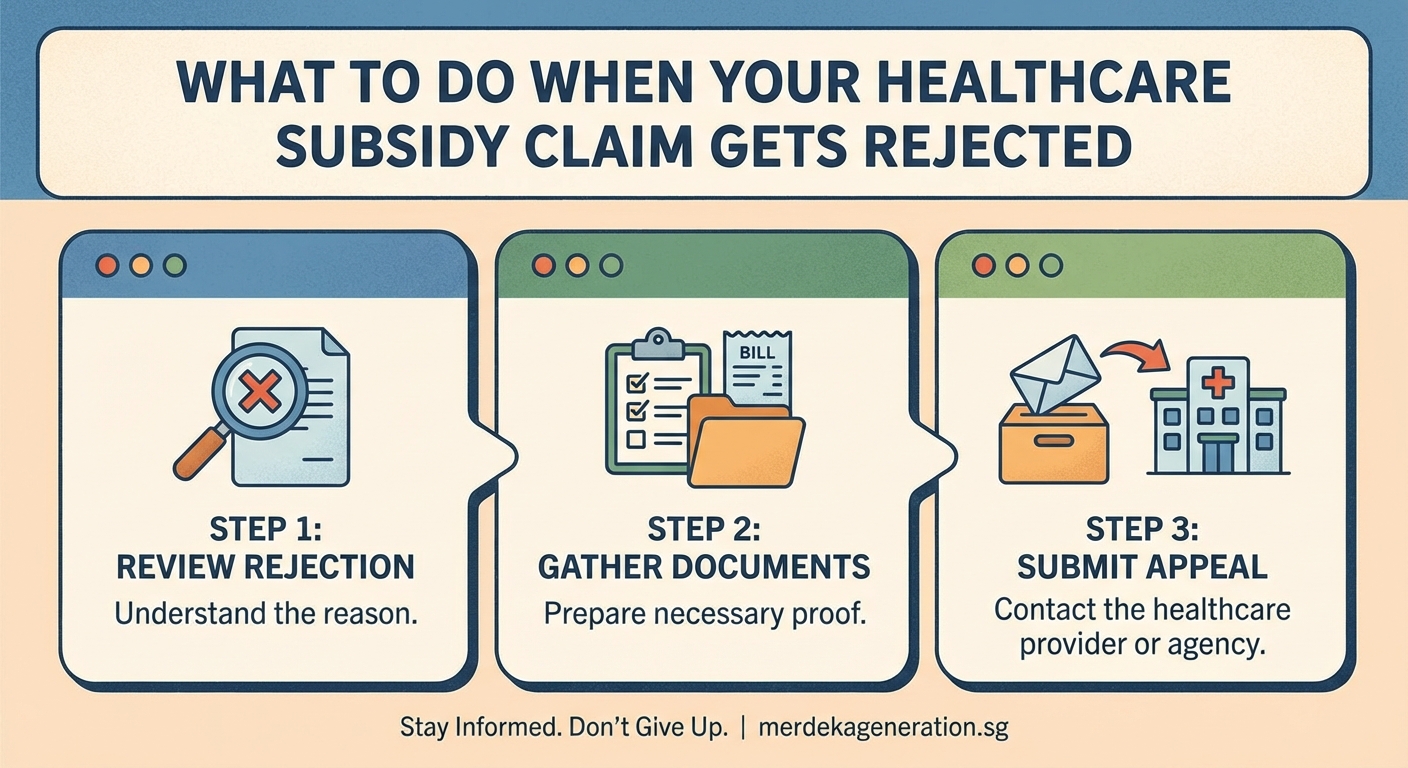
    Step 1: Read the rejection letter carefully

    Your denial notice contains crucial information. Look for the specific reason code or explanation. Check the date by which you must file an appeal. Note the contact person or department handling your case.

    Don’t skip the fine print. Sometimes the letter includes forms you need to complete or documents you must provide.

    Step 2: Contact your provider or insurer right away

    Call the number on your rejection letter. Ask for clarification on anything you don’t understand. Request a detailed explanation of why your claim was denied.

    Take notes during the call. Write down the name of the person you spoke with, the date, and what they told you. This documentation helps if you need to escalate later.

    Step 3: Gather all relevant documents

    Pull together every piece of paper related to your claim. This includes your original application, medical receipts, doctor’s letters, referral notes, and any correspondence with the insurer or government agency.

    If you’re claiming Merdeka Generation subsidies, make sure you have proof of eligibility. Your Merdeka Generation card, NRIC, and any verification letters should be in your file.

    Step 4: Check your policy or subsidy terms

    Go back to your insurance policy document or the official Merdeka Generation Package guidelines. Verify whether the treatment or service should actually be covered.

    Sometimes what seems like an error is actually a legitimate exclusion you missed. Other times, you’ll find clear evidence that the denial was wrong.

    Step 5: Submit your appeal within the deadline

    Most insurers give you 30 to 90 days to appeal. Government subsidy programs have their own timelines. Missing the deadline usually means losing your right to challenge the decision.

    Follow the exact appeal process outlined in your rejection letter. Use the correct forms, submit to the right address or email, and include all supporting documents.

    Step 6: Follow up regularly

    Don’t assume your appeal is being processed just because you sent it. Call or email every week to check the status. Keep records of every interaction.

    Persistence pays off. Many claims get resolved simply because someone kept asking.

    How to write an effective appeal letter

    Your appeal letter needs to be clear, factual, and persuasive.

    Start with your personal details: name, policy number or subsidy ID, claim number, and contact information. State clearly that you’re appealing the denial dated [specific date].

    Explain why you believe the denial was incorrect. Reference specific policy clauses or subsidy guidelines that support your position. Attach copies of all supporting documents.

    “Keep your appeal letter professional and focused on facts. Emotional language rarely helps. Stick to what the policy says, what documentation proves, and why the denial doesn’t align with the terms you agreed to.”

    Include a timeline of events if relevant. For example, if you were told verbally that a treatment was covered, mention that conversation and any follow-up you did.

    End with a clear request: “I am requesting that you reverse the denial and approve my claim for [specific amount] based on the evidence provided.”

    Common mistakes that lead to rejected appeals

    What to Do When Your Healthcare Subsidy Claim Gets Rejected - Illustration 2

    Even people with valid claims lose appeals because of avoidable errors.

    Mistake Why It Hurts Your Case How to Avoid It
    Submitting incomplete documentation Gives the reviewer an easy reason to deny again Create a checklist of required documents before sending
    Missing the appeal deadline Automatic rejection regardless of merit Mark the deadline on your calendar immediately
    Not addressing the specific denial reason Reviewer thinks you didn’t understand the issue Quote the exact denial reason in your appeal
    Using emotional or aggressive language Makes reviewers less sympathetic Stay professional and factual throughout
    Failing to provide medical necessity proof Insurer can claim treatment was optional Get a detailed letter from your doctor explaining why treatment was necessary
    Submitting duplicate or contradictory information Raises red flags about claim validity Review all documents for consistency before submission

    Understanding your rights as a healthcare consumer

    You have more protection than you might realize.

    In Singapore, insurance companies must follow guidelines set by the Monetary Authority of Singapore. They’re required to handle claims fairly and respond to appeals within reasonable timeframes.

    For government subsidies like the Merdeka Generation Package, you can escalate to the relevant ministry if you believe you’ve been treated unfairly. The process is transparent, and officials are required to review your case properly.

    If your insurer repeatedly denies valid claims or fails to follow their own procedures, you can file a complaint with the Financial Industry Disputes Resolution Centre. This independent body helps resolve disputes between consumers and financial institutions.

    For subsidy-related issues, the Ministry of Health has channels for feedback and appeals. Don’t hesitate to use them if you’re not getting answers through normal channels.

    Special considerations for Merdeka Generation subsidies

    Merdeka Generation members have specific benefits that sometimes get confused with general healthcare subsidies.

    Your Merdeka Generation Package includes subsidies for outpatient care, MediShield Life premiums, and long-term care. Each component has different eligibility rules and claim processes.

    If your subsidy claim gets rejected, check whether you’re actually eligible for that specific benefit. For instance, the outpatient care subsidies work differently from the MediShield Life premium subsidies.

    Sometimes rejection happens because the clinic or hospital didn’t properly verify your Merdeka Generation status at the point of service. If you showed your card but the subsidy wasn’t applied, contact the healthcare provider first. They may need to resubmit the claim with correct coding.

    Lost your Merdeka Generation card? That could be why your claim was rejected. Get a replacement before trying to claim subsidies.

    Common Merdeka Generation subsidy claim issues include:

    • Healthcare provider not registered under the scheme
    • Services provided outside the covered categories
    • Failure to present the Merdeka Generation card during visit
    • Database not updated with your eligibility status
    • Confusion between Pioneer Generation and Merdeka Generation benefits

    The differences between Pioneer and Merdeka Generation packages matter. Make sure you’re claiming the right benefits for your generation.

    When to escalate beyond the initial appeal

    Sometimes your first appeal doesn’t work. That doesn’t mean you’re out of options.

    If your appeal gets denied again, request a detailed written explanation. Ask specifically which policy clause or regulation supports their decision. This information helps you decide whether to escalate further.

    For private insurance, your next step is usually an internal review at a higher level within the company. Request this in writing and provide any additional documentation you’ve gathered.

    If internal reviews don’t resolve the issue, external dispute resolution becomes necessary. The Financial Industry Disputes Resolution Centre handles cases where insurers and policyholders can’t reach agreement. There’s a small fee, but it’s worth it for significant claims.

    For government subsidies, escalate to the supervising ministry. Write a formal letter explaining your situation, what you’ve tried so far, and why you believe the rejection is incorrect. Include copies of all correspondence and supporting documents.

    How to prevent future claim rejections

    Learning from a rejection helps you avoid the same problem next time.

    Always verify coverage before receiving treatment. Call your insurer or check the subsidy guidelines online. Get written confirmation if possible.

    Keep meticulous records. Save every receipt, every letter from your doctor, and every form you submit. Take photos of documents before mailing them.

    Submit claims promptly. Don’t wait until the last minute. Early submission gives you time to fix problems if something’s missing.

    Understand your policy inside and out. Read the fine print at least once. Know what’s covered, what’s excluded, and what requires pre-approval.

    For Merdeka Generation benefits, stay updated on any changes to the package. The government occasionally adjusts eligibility criteria or covered services. Checking your eligibility regularly prevents surprises.

    Many seniors make common mistakes when claiming benefits. Learning what these are helps you avoid them.

    Getting help with complex cases

    Some rejections are too complicated to handle alone.

    Patient advocacy services exist to help people navigate insurance and subsidy systems. Some hospitals have patient relations officers who can assist with claim issues.

    Community organizations serving seniors often provide free advice on healthcare subsidies. They understand the Merdeka Generation Package thoroughly and can spot errors in rejections.

    If your case involves significant money or ongoing treatment, consider consulting a lawyer who specializes in insurance disputes. The initial consultation fee might save you thousands in denied claims.

    Financial counsellors can also help, especially if the rejection affects your ability to pay for necessary care. They can suggest alternative funding sources or payment plans while you appeal.

    What to do while waiting for your appeal decision

    Don’t let the appeal process delay necessary treatment.

    If you need ongoing care, continue receiving it. Work out a payment plan with your healthcare provider if needed. Many clinics and hospitals are willing to defer payment while insurance issues get resolved.

    Keep all new receipts and documentation. If your appeal succeeds, you’ll need these to get reimbursed for treatments you paid for out of pocket.

    Stay on top of your appeal status. Set reminders to follow up every week. The squeaky wheel really does get the grease in these situations.

    If financial pressure is mounting, look into additional healthcare subsidies you might qualify for. These can provide relief while your main claim is being resolved.

    Consider whether maximizing your MediShield Life coverage could prevent similar issues in future.

    Making the system work for you

    Rejected claims feel personal, but they’re usually just administrative hiccups.

    The healthcare and insurance systems in Singapore have multiple safety nets built in. Appeals exist because mistakes happen. Reviewers understand that paperwork gets confusing, especially for complex government schemes.

    Your persistence matters more than anything else. People who follow up consistently and provide thorough documentation usually get their legitimate claims approved eventually.

    Don’t let one rejection discourage you from claiming benefits you’ve earned. The Merdeka Generation Package exists to support you. Government subsidies and insurance coverage are your rights as a policyholder and citizen.

    Take it one step at a time. Read the rejection letter, gather your documents, write your appeal, and follow up. Most claims that deserve approval eventually get it.

    Stay organized, stay patient, and don’t give up on money that rightfully belongs to you.

  • How Much Money Do Merdeka Generation Seniors Really Need for Retirement in Singapore?

    How Much Money Do Merdeka Generation Seniors Really Need for Retirement in Singapore?

    Retirement planning feels abstract until you start counting actual dollars. For Merdeka Generation seniors born between 1950 and 1959, the question isn’t whether you can retire but whether your savings will last 20, 25, or even 30 years. The numbers matter because healthcare costs climb, inflation erodes purchasing power, and government schemes only cover part of your needs.

    Key Takeaway

    Most Merdeka Generation seniors need between $300,000 and $600,000 to retire comfortably in Singapore, depending on lifestyle and health. This includes CPF LIFE payouts, government subsidies, and personal savings. A basic lifestyle costs around $1,500 monthly, moderate living needs $2,500, while comfortable retirement requires $3,500 or more. Healthcare inflation and longer life expectancy make early planning essential for financial security.

    Three realistic retirement budgets for Singapore seniors

    Let’s break down what different retirement lifestyles actually cost each month.

    Basic lifestyle: $1,500 to $2,000 monthly

    This covers essentials without frills. You eat most meals at home, use public transport, and rely heavily on subsidised healthcare. Entertainment means free community centre activities and neighbourhood coffee shop gatherings.

    Your monthly breakdown looks like this:

    • Food and groceries: $400 to $500
    • Utilities and phone: $150 to $200
    • Transport: $80 to $120
    • Healthcare and medication: $200 to $300
    • Personal care and household items: $150
    • Miscellaneous: $200

    Moderate lifestyle: $2,000 to $3,000 monthly

    You dine out occasionally, take taxis when needed, and enjoy regular activities with friends. Healthcare includes some private specialist visits beyond subsidised options.

    • Food and dining: $600 to $800
    • Utilities and phone: $200
    • Transport: $150 to $200
    • Healthcare: $300 to $500
    • Entertainment and hobbies: $250
    • Personal care: $200
    • Gifts and family support: $200
    • Miscellaneous: $300

    Comfortable lifestyle: $3,000 to $4,500 monthly

    Regular restaurant meals, weekend activities, occasional holidays to Malaysia or regional destinations, and comprehensive private healthcare coverage define this tier. You maintain social commitments and support family members financially.

    • Food and dining: $1,000 to $1,200
    • Utilities and phone: $250
    • Transport including occasional private hire: $300 to $400
    • Healthcare including private insurance: $500 to $800
    • Travel and leisure: $500
    • Entertainment: $300
    • Gifts and family: $400
    • Personal care: $250
    • Miscellaneous: $400

    Calculating your total retirement fund

    How Much Money Do Merdeka Generation Seniors Really Need for Retirement in Singapore? — image 1

    Three methods help you estimate how much you need saved before retirement.

    Method 1: Annual expenses multiplied by retirement years

    Take your expected monthly spending, multiply by 12, then multiply by your estimated retirement duration.

    If you plan to spend $2,500 monthly and expect to live 25 years after retirement:

    $2,500 × 12 months × 25 years = $750,000

    This simple calculation gives you a baseline figure. It assumes zero investment returns and doesn’t account for CPF payouts or government support.

    Method 2: The 25 times rule

    Multiply your annual expenses by 25. This follows the 4% safe withdrawal rate principle, meaning you withdraw 4% of your savings annually.

    Annual expenses of $30,000 × 25 = $750,000

    This method assumes your remaining capital continues earning returns that roughly match inflation.

    Method 3: Income replacement ratio

    Aim to replace 60% to 80% of your pre-retirement income. If you earned $3,500 monthly before retiring, target $2,100 to $2,800 monthly during retirement.

    Most retirees need less than their working income because CPF contributions stop, work-related expenses disappear, and housing loans are typically paid off.

    Government schemes that reduce your retirement burden

    Merdeka Generation seniors enjoy several benefits that lower actual out-of-pocket costs.

    Merdeka Generation Package benefits

    The package provides substantial healthcare subsidies that reduce your medical expenses significantly. You receive:

    • $200 annual PAssist top-up for outpatient costs
    • Additional subsidies at polyclinics and public hospitals
    • MediShield Life premium subsidies
    • CHAS card benefits for GP visits

    These benefits alone save you $1,000 to $2,000 yearly on healthcare. If you haven’t confirmed your eligibility yet, checking if you qualify for the Merdeka Generation Package takes just minutes online.

    CPF LIFE monthly payouts

    Your CPF LIFE provides guaranteed monthly income for life. Payout amounts depend on your retirement account balance at age 65.

    CPF Retirement Account Balance Estimated Monthly Payout
    $100,000 $870 to $960
    $200,000 $1,740 to $1,920
    $300,000 $2,610 to $2,880

    These figures use current payout estimates and vary based on the CPF LIFE plan you selected. The Standard Plan offers higher initial payouts, while the Escalating Plan starts lower but increases over time to combat inflation.

    Understanding whether you can withdraw your CPF savings at 65 helps you plan better because only amounts above the Full Retirement Sum become available for withdrawal.

    Silver Support Scheme

    If you earned low wages throughout your working life, the Silver Support Scheme provides quarterly cash payouts. Eligible seniors receive $300 to $750 every quarter based on their income history and property ownership.

    This adds $1,200 to $3,000 annually to your retirement income without any application required. The government automatically assesses eligibility.

    Healthcare costs deserve special attention

    How Much Money Do Merdeka Generation Seniors Really Need for Retirement in Singapore? — image 2

    Medical expenses typically increase as you age, and healthcare inflation runs higher than general inflation.

    Planning for rising medical costs

    Healthcare inflation in Singapore averages 4% to 6% annually, compared to general inflation of 2% to 3%. A medical procedure costing $5,000 today could cost $9,000 in 15 years at 4% annual inflation.

    Your MediShield Life covers major hospital bills, but you still pay deductibles and co-insurance. Maximising your MediShield Life coverage means understanding what’s covered and what requires out-of-pocket payment.

    Using your Medisave wisely

    Your Medisave account helps pay for approved medical treatments, hospitalisation, and certain outpatient procedures. The key is knowing how much Medisave you need and using it wisely rather than depleting it too quickly.

    Budget $3,000 to $5,000 annually for healthcare costs not covered by insurance or subsidies. This includes dental work, spectacles, traditional Chinese medicine, and medications not covered by standard schemes.

    “Many retirees underestimate healthcare spending in their later years. Budget conservatively and keep a healthcare emergency fund of at least $20,000 separate from your regular retirement savings. Medical surprises happen, and having dedicated funds prevents you from depleting your core retirement nest egg.” – Financial planning advisor

    Common retirement planning mistakes to avoid

    Mistake Why It Hurts Better Approach
    Ignoring inflation Your $2,000 monthly budget today needs $3,200 in 20 years at 2.5% inflation Increase budget estimates by 2.5% to 3% annually
    Counting on inheritance Property or family support may not materialise as expected Plan as if you receive nothing extra
    Underestimating lifespan Running out of money at 85 when you live to 92 creates hardship Plan for age 90 or 95, not 80
    Withdrawing CPF too early Spending lump sums quickly leaves nothing for later years Keep funds in CPF LIFE for guaranteed income
    Skipping regular reviews Your needs and costs change every few years Review spending and adjust plans every 3 years

    Many Merdeka Generation seniors also make common mistakes when claiming benefits that cost them money unnecessarily.

    Building your personal retirement number

    Follow these steps to calculate your specific retirement fund target.

    Step 1: Track current monthly spending

    Record everything you spend for three months. Use your bank statements, receipts, and cash withdrawals to build an accurate picture. Many retirees discover they spend 20% more than they thought.

    Step 2: Adjust for retirement lifestyle changes

    Some costs disappear after retirement. Work clothes, daily commute expenses, and lunch at the office all stop. But other costs might increase. Healthcare, hobbies, and leisure activities often take up more of your budget.

    Add 10% to 15% as a buffer for unexpected expenses.

    Step 3: Factor in government support

    Subtract your expected CPF LIFE monthly payout from your target monthly spending. Then subtract any Silver Support payments if eligible.

    If you need $2,500 monthly and receive $1,500 from CPF LIFE, you need to generate $1,000 monthly from other sources.

    Step 4: Calculate total savings needed

    Multiply your monthly shortfall by 12 months, then by 25 years. This gives you the lump sum needed to generate that monthly income.

    $1,000 × 12 × 25 = $300,000

    Step 5: Add healthcare reserve

    Add $50,000 to $100,000 as a dedicated healthcare fund for major medical events not covered by insurance. This sits separate from your regular retirement fund.

    Making up shortfalls before retirement

    If your calculations show a gap between what you have and what you need, several strategies help close it.

    Extending your working years

    Working even two to three extra years dramatically improves retirement readiness. You contribute more to CPF, give existing savings more time to grow, and reduce the number of retirement years you need to fund.

    Singapore’s re-employment age lets you work until 67, and many employers offer flexible arrangements for experienced workers.

    Topping up your CPF

    CPF top-ups earn guaranteed returns and increase your CPF LIFE payouts. You can top up using cash or transfer funds between CPF accounts. The question of whether you should top up your CPF LIFE after 65 depends on your liquidity needs and other income sources.

    Rightsizing your housing

    Selling a larger flat and moving to a smaller one releases housing equity. The proceeds boost your retirement savings while reducing maintenance costs and property tax.

    The Lease Buyback Scheme lets you sell part of your flat lease back to HDB while continuing to live there, providing both cash and monthly income.

    Reducing fixed expenses

    Review insurance policies, subscriptions, and recurring payments. Cancel what you don’t use. Negotiate better rates on utilities and phone plans. Small monthly savings compound over decades.

    Special considerations for Merdeka Generation couples

    If both spouses qualify for Merdeka Generation benefits, you enjoy double the healthcare subsidies and PAssist top-ups. This significantly reduces household medical expenses.

    However, planning gets trickier when only one spouse qualifies for the package. The non-qualifying spouse needs separate healthcare budget allocation.

    Budget for two people carefully. While some expenses like housing remain fixed regardless of household size, food, healthcare, and personal costs nearly double.

    Plan for the possibility that one spouse outlives the other by 5 to 10 years. The surviving spouse needs sufficient funds to maintain their lifestyle alone, often with higher healthcare costs.

    Understanding your annual top-ups and subsidies

    Your annual $200 PAssist top-up arrives automatically in your CHAS card. This covers GP visits, dental care, and other approved outpatient services.

    Track your subsidy usage throughout the year. If you consistently have unused balance, you’re leaving benefits on the table. If you regularly exceed it, budget more for healthcare.

    The CHAS card benefits extend beyond the Merdeka Generation top-up, providing subsidies at participating clinics even after you use up your annual allocation.

    What happens if you move overseas

    Some retirees consider relocating to lower-cost countries like Malaysia or Thailand where their Singapore dollars stretch further. But moving overseas affects your Merdeka Generation benefits in specific ways.

    Your CPF LIFE payouts continue regardless of where you live. However, healthcare subsidies only apply at Singapore facilities, making them useless if you permanently relocate.

    Weigh the cost savings of living abroad against losing access to subsidised Singapore healthcare. Medical tourism works for planned procedures, but emergency care and ongoing treatment become complicated when you live overseas.

    When healthcare claims get rejected

    Understanding what to do when your healthcare subsidy claim gets rejected prevents financial surprises. Common rejection reasons include visiting non-participating clinics, claiming for non-covered services, or administrative errors.

    Keep all medical receipts and documentation. Appeal rejected claims promptly with supporting evidence. Many rejections get overturned when you provide proper documentation.

    Protecting your benefits and identity

    Keep your Merdeka Generation card safe. If you misplace it, knowing what happens when you lose your card helps you get a replacement without losing access to benefits.

    Never share your card details, NRIC number, or bank information with anyone claiming to help you claim benefits. Government agencies never ask for bank passwords or request money transfers over the phone.

    Adjusting your plan as circumstances change

    Review your retirement budget every two to three years. Inflation, changing health needs, and lifestyle adjustments all affect your actual spending.

    If you consistently underspend your budget, you can afford small lifestyle upgrades or increase financial gifts to family. If you overspend, identify areas to cut back before depleting savings too quickly.

    Track your account balances quarterly. Seeing your nest egg shrink faster than expected signals the need for immediate adjustments.

    Your retirement timeline starts now

    The retirement savings you need depend entirely on the lifestyle you want and the years you need to fund. Basic living requires $300,000 to $400,000 beyond CPF payouts. Moderate comfort needs $500,000 to $700,000. Comfortable retirement with travel and flexibility demands $800,000 or more.

    Merdeka Generation benefits reduce your burden by thousands of dollars yearly, but they don’t eliminate the need for personal savings. Healthcare costs climb as you age, inflation erodes purchasing power, and unexpected expenses always appear.

    Start by calculating your specific number using your actual spending patterns. Factor in CPF LIFE payouts, government subsidies, and healthcare reserves. Then work backward to determine whether your current savings trajectory gets you there.

    The gap between where you are and where you need to be gets easier to close the earlier you start. Even small monthly adjustments compound significantly over years. Your retirement security depends on realistic planning today, not optimistic hoping for tomorrow.

  • CHAS Card Benefits Explained: What Merdeka Generation Seniors Need to Know

    If you were born between 1950 and 1959, you’re part of Singapore’s Merdeka Generation. That means you’re entitled to special healthcare subsidies that can save you hundreds of dollars every year. But many seniors still don’t know exactly what their CHAS card covers or how to use it properly.

    Key Takeaway

    Merdeka Generation seniors automatically receive CHAS cards that provide subsidies at participating GP clinics, dental clinics, and for chronic conditions. These subsidies stack with your Merdeka Generation Package benefits, giving you deeper discounts than standard CHAS cardholders. You don’t need to apply separately, and your card works immediately at over 2,000 clinics across Singapore.

    What the CHAS card actually does for you

    Your CHAS card isn’t just a piece of plastic. It’s your ticket to affordable healthcare at private GP clinics and dental practices near your home.

    Without CHAS, a typical GP visit can cost $30 to $50. With your card, you pay much less.

    The card covers three main areas: general medical care, dental treatment, and chronic disease management. Each category has its own subsidy rates.

    Most importantly, if you’re a Merdeka Generation senior, you get enhanced subsidies. This means you pay even less than younger CHAS cardholders.

    How much you actually save at the clinic

    Let’s talk real numbers. Here’s what you can expect to pay at a CHAS clinic.

    For a standard consultation, Merdeka Generation seniors typically pay between $10 and $18.50 after subsidies. The exact amount depends on the clinic’s fees and your card tier.

    Dental visits work similarly. A basic check-up and cleaning that normally costs $80 to $120 can drop to $30 to $50 with your subsidies.

    Chronic condition management gets even better. If you’re managing diabetes, high blood pressure, or high cholesterol, you can visit participating clinics for as little as $5 per session.

    Service Type Without CHAS With MG CHAS Your Savings
    GP consultation $30-$50 $10-$18.50 Up to $40
    Dental scaling $80-$120 $30-$50 Up to $90
    Chronic care visit $25-$40 $5-$10 Up to $35

    These savings add up fast. If you visit the doctor four times a year and the dentist twice, you could save over $300 annually.

    Understanding your card colour and tier

    CHAS cards come in three colours: blue, orange, and green. Your colour determines your subsidy level.

    Merdeka Generation seniors typically receive orange or blue cards. These provide the highest subsidies.

    The colour depends on your household income and property value. But here’s the good news: even if you have a green card, you still get Merdeka Generation top-ups that boost your subsidies beyond standard rates.

    You can check if you qualify for the Merdeka Generation package to understand your exact tier.

    Your card colour appears clearly on the physical card. If you’re using the digital version through the HealthHub app, the colour shows on your phone screen.

    Finding clinics that accept your card

    Over 2,000 clinics across Singapore participate in CHAS. That includes neighbourhood GPs, dental practices, and Traditional Chinese Medicine practitioners.

    Here’s how to find them:

    1. Visit the CHAS clinic locator on the official CHAS website
    2. Enter your postal code or neighbourhood name
    3. Filter by the type of service you need (GP, dental, chronic care, etc.)
    4. Check the clinic’s operating hours and contact details
    5. Call ahead to confirm they have appointments available

    Most heartland areas have at least five to ten participating clinics within a 2km radius. You’re not limited to one clinic either. You can visit any participating provider.

    Some clinics display the CHAS logo prominently at their entrance. Others might not advertise it as clearly, so always ask at the counter if you’re unsure.

    Expert tip: Build a relationship with one or two regular CHAS clinics near you. They’ll keep your medical history on file, which means better continuity of care and fewer repeated questions at every visit.

    The extra $200 top-up you receive annually

    Beyond the per-visit subsidies, Merdeka Generation seniors get an annual MedSave top-up of $200. This money sits in your MedSave account and can be used for approved medical expenses.

    The top-up arrives automatically. You don’t need to apply or claim it.

    This $200 works differently from your CHAS subsidies. While CHAS reduces what you pay at the clinic counter, the MedSave top-up helps cover hospitalisation, certain outpatient treatments, and approved chronic disease management programmes.

    You can track your annual MG card top-up through your CPF statement or the CPF mobile app.

    Using your card for chronic conditions

    If you’re managing long-term health conditions, your CHAS card becomes even more valuable.

    The Chronic Disease Management Programme (CDMP) covers these conditions:

    • Diabetes
    • High blood pressure (hypertension)
    • High cholesterol (lipid disorders)
    • Stroke
    • Asthma and chronic obstructive pulmonary disease (COPD)
    • Schizophrenia and other major psychiatric conditions

    Under CDMP, you can visit participating GP clinics for regular monitoring and medication at heavily subsidised rates. Some visits cost as little as $5.

    Your doctor will enrol you in the programme. Once enrolled, you can claim subsidies for consultations, basic tests like blood sugar or blood pressure checks, and certain medications.

    The programme encourages you to manage your condition proactively. Regular monitoring prevents complications and keeps you healthier longer.

    What your card doesn’t cover

    CHAS subsidies are generous, but they have limits.

    Your card doesn’t cover:

    • Specialist visits at private hospitals
    • Emergency department visits
    • Cosmetic procedures
    • Health screening packages
    • Vaccinations not on the approved list
    • Medical certificates for non-medical purposes

    Some medications also fall outside the subsidy scheme. If your doctor prescribes something not covered, you’ll pay the full cost.

    Dental coverage focuses on basic preventive and restorative care. Complex procedures like implants or orthodontics typically aren’t subsidised.

    Understanding these gaps helps you plan. For specialist care, you’ll usually need to visit polyclinics or public hospital specialist outpatient clinics, where different subsidy schemes apply.

    Common mistakes that cost you money

    Many seniors leave money on the table because they don’t use their cards correctly.

    Here are the biggest mistakes:

    Not showing your card before payment. Always present your CHAS card at registration, not after the consultation. Clinics can’t apply subsidies retroactively.

    Assuming all clinics participate. Not every GP or dentist accepts CHAS. Always check before booking.

    Forgetting to update your details. If you move house or your income changes, your card tier might change too. Update your information through HealthHub to ensure you’re getting the right subsidies.

    Not using the card because you think you don’t qualify. If you’re Merdeka Generation, you qualify automatically. There’s no income ceiling that disqualifies you from at least some level of subsidy.

    You can avoid common mistakes Merdeka Generation seniors make by staying informed about your entitlements.

    Digital vs physical card: which to use

    You can access your CHAS benefits through either a physical card or the digital version in the HealthHub app.

    The physical card is a tangible backup. Keep it in your wallet alongside your NRIC. Some older clinic systems still require staff to scan or manually enter the physical card number.

    The digital card lives in your smartphone. Open HealthHub, navigate to the CHAS section, and show the QR code or card details at the clinic counter.

    Both work equally well. The digital version updates automatically if your tier changes, while physical cards might need replacement.

    If you lost your Merdeka Generation card, you can still access benefits through the digital version while waiting for a replacement.

    Combining CHAS with other healthcare schemes

    Your CHAS benefits stack with other government healthcare subsidies. This is where things get really good.

    At polyclinics, you get additional Merdeka Generation subsidies on top of standard polyclinic rates. A consultation that costs $10.50 for regular residents might cost you just $5 or less.

    For public hospital specialist outpatient clinics, similar additional subsidies apply. You pay less than non-Merdeka Generation patients for the same services.

    You can also use MediSave for certain approved treatments. The CHAS subsidies reduce your out-of-pocket cost, and MediSave can cover part of what remains.

    This layering of benefits means your actual healthcare expenses can drop to very manageable levels, even if you need regular medical attention.

    If you’re thinking about maximising your MediShield Life coverage, understanding how these schemes work together becomes crucial.

    How to verify your subsidies were applied

    Sometimes you’ll want to double-check that you received the correct subsidy.

    Your clinic receipt should show:

    • The full consultation fee
    • The CHAS subsidy amount
    • Your final payment amount

    If the numbers don’t look right, ask the clinic staff immediately. Mistakes happen, especially if the system didn’t register your card properly.

    You can also check your subsidy history through the HealthHub app. It logs every CHAS transaction, showing which clinic you visited, what subsidy you received, and how much you paid.

    If you spot an error after leaving the clinic, call them within a few days. Most clinics can process corrections if you have your receipt and card details.

    Planning your healthcare budget with CHAS

    Knowing your subsidy rates helps you budget more accurately for healthcare costs.

    Here’s a simple planning approach:

    1. Count how many times you typically visit the doctor each year
    2. Add your dental visits (aim for at least two cleanings annually)
    3. If you have chronic conditions, factor in monthly or quarterly monitoring visits
    4. Multiply each visit type by your expected co-payment after CHAS subsidies
    5. Add a buffer of 20% for unexpected visits or treatments

    For most Merdeka Generation seniors using CHAS regularly, annual out-of-pocket healthcare costs for routine care stay under $500. That’s remarkably affordable compared to private healthcare without subsidies.

    This predictability makes retirement planning easier. You’re not gambling on unpredictable medical bills.

    If you’re wondering whether to top up your CPF LIFE after 65, factor in these lower healthcare costs when calculating your retirement needs.

    What happens if you’re overseas

    Your CHAS card only works in Singapore. If you’re travelling or living abroad temporarily, you can’t use the subsidies.

    However, your Merdeka Generation status doesn’t expire. When you return to Singapore, your card reactivates automatically.

    The annual $200 MedSave top-up continues regardless of where you are. It credits to your account each year, even if you’re overseas.

    If you’re considering moving overseas after retirement, understand that you’ll lose access to CHAS subsidies while abroad, but your other Merdeka Generation benefits remain intact.

    How CHAS differs from Pioneer Generation benefits

    If you have friends or relatives in the Pioneer Generation (born 1949 or earlier), you might notice they have different cards and subsidy rates.

    Pioneer Generation seniors receive even deeper subsidies than Merdeka Generation. Their card is distinctly marked and provides higher per-visit subsidies.

    The structure is similar, though. Both schemes use CHAS as the delivery mechanism for GP and dental subsidies.

    Understanding the key differences between Merdeka Generation and Pioneer Generation packages helps you appreciate what you’re entitled to and avoid confusion when comparing notes with older friends.

    Neither package is transferable. Your spouse doesn’t automatically qualify just because you do. Each person’s eligibility depends on their own birth year and citizenship history.

    You can learn more about whether your spouse can enjoy Merdeka Generation benefits if only one of you qualifies.

    Keeping your information current

    Your CHAS subsidies depend on accurate personal information. If your circumstances change, update your details promptly.

    Major changes that affect your subsidies include:

    • Moving to a new address
    • Changes in household income
    • Changes in property ownership
    • Changes in household composition

    Update your information through the HealthHub app or website. The system reassesses your card tier based on the new information.

    If your tier improves (for example, your income drops after retirement), you’ll get higher subsidies. If it drops, your subsidies decrease but don’t disappear entirely. Merdeka Generation seniors always receive some level of benefit.

    Updates typically process within a few weeks. Your new card tier appears in HealthHub, and physical card replacements arrive by mail if needed.

    Making the most of your healthcare benefits

    Your CHAS card represents a significant government investment in your health. The subsidies are designed to keep you healthy and active throughout your retirement years.

    Use them. Don’t skip doctor visits because of cost. Don’t postpone dental check-ups. Don’t let chronic conditions go unmanaged.

    The subsidies make preventive care affordable. Catching health issues early almost always costs less and leads to better outcomes than waiting until problems become serious.

    Build a routine. Schedule annual check-ups. See your dentist twice a year. If you have chronic conditions, stick to your monitoring schedule.

    Your CHAS card makes all of this financially manageable. That’s exactly what it’s designed to do.

    Take advantage of it, stay healthy, and enjoy your retirement with the peace of mind that comes from accessible, affordable healthcare.

  • Moving Overseas After Retirement: Will You Lose Your Merdeka Generation Benefits

    You’ve worked hard for decades in Singapore. Now retirement calls, and maybe that dream of living near your children in Australia or enjoying the cooler climate in Malaysia sounds perfect. But there’s one nagging question keeping you up at night: what happens to your Merdeka Generation benefits if you move overseas?

    Key Takeaway

    Most Merdeka Generation healthcare benefits require you to receive treatment in Singapore. Your MediSave stays accessible, but outpatient subsidies, CHAS benefits, and MediShield Life coverage only work at local clinics and hospitals. The annual $200 top-up remains yours, but you’ll need to return to Singapore to use it effectively. Citizenship and residency status also affect your eligibility long term.

    Understanding which benefits travel with you

    The Merdeka Generation Package wasn’t designed with overseas living in mind. The government structured these benefits around Singapore’s healthcare system.

    Here’s what that means for you.

    Your MediSave account follows you anywhere. The money stays in your account whether you’re in Perth or Penang. You can still use it for approved medical treatments when you return to Singapore. Your family members can also draw from it under the existing MediSave withdrawal rules.

    But here’s the catch: most other benefits are tied to physical treatment locations.

    The outpatient subsidies that give you extra help at polyclinics and specialist outpatient clinics? Those only work at Singapore facilities. Same goes for your CHAS card benefits. You can’t walk into a clinic in Johor Bahru and expect to use your Merdeka Generation subsidies.

    MediShield Life coverage continues as long as you remain a Singapore citizen or permanent resident. But it only pays for treatment at approved Singapore hospitals or selected overseas facilities in very specific emergency situations. Your regular doctor visits in your new country won’t be covered.

    The annual $200 MG card top-up still gets credited to your account. However, you can only spend it at participating clinics and pharmacies in Singapore. If you’re not planning regular trips back, that money just accumulates without being used.

    How citizenship and residency status affect your benefits

    Your legal status determines more than you might think.

    Singapore citizens who move overseas keep their Merdeka Generation eligibility. The package doesn’t disappear just because you live abroad. But remember, eligibility and usability are two different things.

    Permanent residents face stricter rules. If you give up your PR status to become a citizen of another country, you lose access to most government subsidies and schemes. This includes your Merdeka Generation benefits.

    Some people try to maintain dual residency. They keep a Singapore address, return periodically, and maintain their status. This works legally, but you need to understand the tax implications and residency requirements of both countries.

    “Many retirees assume they can keep all their benefits while living overseas permanently. The reality is that healthcare subsidies are designed to support Singaporeans using Singapore’s healthcare system. If you’re not here to use the system, the subsidies don’t help you much.” — Ministry of Health spokesperson

    Step by step planning before you move

    If you’re serious about relocating after retirement, proper planning protects your interests.

    1. Check your current benefit status and confirm you’re enrolled in all schemes you qualify for. Make sure your Merdeka Generation card is valid and your details are updated.

    2. Calculate how much you’ve been saving annually from outpatient subsidies and CHAS benefits. This shows you what you’ll lose by moving overseas.

    3. Research healthcare costs in your destination country. Get specific numbers for common age-related conditions and regular checkups.

    4. Speak with an immigration lawyer about maintaining your citizenship or PR status. Some countries require you to give up Singapore residency when you become their citizen or permanent resident.

    5. Set up a system for managing your Singapore finances remotely. You’ll need access to your MediSave, CPF statements, and government correspondence.

    6. Plan periodic return trips if you want to use your accumulated benefits. Some retirees schedule annual medical checkups in Singapore to maximise their subsidies.

    What you need to know about MediShield Life coverage abroad

    MediShield Life continues covering you overseas, but with significant limitations.

    The scheme primarily covers emergency inpatient care at approved overseas hospitals. Routine outpatient visits, regular medication refills, and non-emergency procedures don’t qualify.

    Claim limits for overseas treatment are often lower than for Singapore treatment. The payout might not cover your full bill, especially in countries with expensive healthcare like the United States or Australia.

    You’ll need to pay upfront and claim reimbursement later. This means having enough cash or credit available to cover potentially large medical bills before getting any money back.

    Pre-approval requirements are stricter for planned overseas procedures. If you’re considering elective surgery in your new country, check whether MediShield Life will contribute anything toward the cost.

    Comparing your options across different scenarios

    Different living arrangements create different benefit outcomes.

    Living Arrangement Benefits You Keep Benefits You Lose Best For
    Full-time overseas MediSave access, citizenship status Outpatient subsidies, CHAS benefits, practical use of MG card Those with children abroad or significantly lower cost of living
    Splitting time (6 months each) Most benefits usable during Singapore stays Some efficiency in benefit use People wanting both worlds
    Overseas with annual Singapore visits MediSave, scheduled use of subsidies Day-to-day outpatient benefits Those with strong ties to Singapore
    Relocating to Johor with regular Singapore visits Full benefit access during visits Daily convenience Cost-conscious retirees wanting proximity

    Common mistakes that cost retirees money

    Many people make avoidable errors when planning their overseas retirement.

    Some assume their MG card works everywhere because it’s a government benefit. They move abroad and only later realise they can’t use any of the subsidies.

    Others let their Singapore address lapse completely. This creates problems receiving official correspondence about benefit changes or updates. You might miss important deadlines or new schemes you qualify for.

    A few retirees give up their PR status without understanding the permanent consequences. Once you surrender your PR, getting it back is difficult. Your Merdeka Generation benefits disappear with it.

    Some people don’t factor in currency exchange rates. Even if healthcare is cheaper in your new country, unfavourable exchange rates can erode your savings.

    Many forget about the annual $200 top-up accumulating unused. After a few years, you might have over $1,000 sitting in your account that you never use.

    Healthcare strategies for overseas retirees

    Smart planning helps you maintain good healthcare coverage after moving.

    Purchase comprehensive international health insurance or local health coverage in your destination country. Don’t rely solely on MediShield Life for overseas protection.

    Build a medical travel fund if you plan to return to Singapore for major procedures. Factor in flights, accommodation, and recovery time when budgeting.

    Schedule preventive care and checkups during your Singapore visits. Make the most of your subsidised healthcare access by getting thorough examinations when you’re back.

    Keep detailed medical records that travel with you. Doctors in your new country need to understand your medical history. Having complete records prevents duplicate tests and ensures continuity of care.

    Maintain relationships with your Singapore doctors. Some are willing to provide remote consultations or prescription renewals for stable chronic conditions.

    Financial planning considerations

    Your money needs careful thought when you’re splitting your life between countries.

    • Keep enough funds in Singapore bank accounts to cover medical expenses during visits
    • Understand how your CPF payouts work if you’re overseas when payments are due
    • Factor in the cost of return flights for medical care when comparing healthcare costs
    • Consider the tax implications of receiving Singapore government benefits while living abroad
    • Plan for currency fluctuations affecting your retirement income
    • Budget for maintaining a Singapore address or mail forwarding service

    Special situations affecting benefit access

    Certain circumstances create additional complications.

    If you need to sponsor family members for long-term visit passes or dependant passes in your destination country, Singapore authorities might question your residency status.

    Medical emergencies overseas can be financially devastating. Even with MediShield Life, you might face large out-of-pocket costs before reimbursement.

    Some retirees develop serious health conditions after moving overseas. Returning to Singapore for treatment becomes difficult or impossible. Your Merdeka Generation benefits can’t help if you can’t physically access Singapore healthcare.

    Estate planning gets more complex with overseas residency. Your beneficiaries might face challenges accessing your MediSave or other Singapore-based assets.

    How to stay informed about policy changes

    Government policies evolve. What’s true today might change tomorrow.

    Register for email updates from the Ministry of Health and the Merdeka Generation website. They announce policy changes through these channels first.

    Join online communities of Singaporean retirees living overseas. They share practical experiences about maintaining benefits and navigating bureaucracy.

    Maintain contact with a trusted family member or friend in Singapore who can alert you to important announcements. Sometimes local news covers benefit changes before official notifications reach overseas residents.

    Schedule an annual review with a financial advisor familiar with cross-border retirement issues. They can help you adjust your strategy as policies change.

    Making the decision that’s right for you

    Numbers don’t tell the whole story.

    Calculate the monetary value of your Merdeka Generation benefits. Add up your annual outpatient subsidy usage, CHAS savings, and the $200 top-up. Compare this to the cost difference of living and healthcare in your destination country.

    But also consider the non-financial factors. Being near family might be worth more than subsidy savings. A better climate might improve your quality of life in ways money can’t measure.

    Some retirees find that common mistakes when claiming benefits become less relevant when they’re not using the healthcare system regularly anyway.

    Others discover they value the security of Singapore’s healthcare system more than they expected. They choose to stay or return after trying life overseas.

    There’s no universally right answer. Your health status, family situation, financial resources, and personal preferences all matter.

    Protecting your benefits while living your dream

    Moving overseas after retirement doesn’t mean automatically losing everything. But it does require realistic expectations and careful planning.

    Your Merdeka Generation benefits remain valuable if you maintain your citizenship and plan regular Singapore visits. They become largely theoretical if you move permanently and rarely return.

    The key is making an informed decision. Understand exactly what you’re keeping and what you’re giving up. Plan for healthcare costs in your new country. Maintain your legal status carefully. Keep your Singapore connections alive.

    Your retirement should be about living the life you’ve earned. Whether that’s in Singapore, overseas, or splitting time between both, make sure you’re not leaving money or benefits on the table through lack of planning. Take the time now to understand your options, and you’ll enjoy your retirement years with confidence and security.

  • Should You Top Up Your CPF LIFE After 65? A Practical Guide for Merdeka Generation

    Should You Top Up Your CPF LIFE After 65? A Practical Guide for Merdeka Generation

    You’ve turned 65, started receiving your CPF LIFE payouts, and now you’re wondering if it still makes sense to add more money into the system. It’s a fair question. After all, the rules around topping up your Retirement Account change once you hit this milestone, and not everyone explains what happens next.

    Key Takeaway

    You can still top up your CPF LIFE after 65, and it will increase your monthly payouts. However, you lose access to tax relief on these contributions, and the payout increase takes effect only from the following month. Merdeka Generation seniors should weigh this against other uses for their cash, especially if healthcare or family needs are pressing. Topping up makes most sense if you have spare funds and want guaranteed lifelong income.

    Can you still top up CPF LIFE once you’ve started receiving payouts?

    Yes, you can.

    Many people assume that once CPF LIFE payouts begin at 65, the door closes on voluntary contributions. That’s not true. You can continue making cash top-ups to your Retirement Account even after payouts have started.

    The CPF Board will recalculate your monthly payout based on the new balance. The adjustment happens from the month after your top-up is credited. So if you top up in March, your April payout will reflect the increase.

    But there’s a catch. You won’t enjoy tax relief anymore. The government allows tax relief only for top-ups made before you turn 65 or before your payouts start, whichever comes first. Once you’re past that line, every dollar you add is purely for boosting your monthly income, not for reducing your tax bill.

    For Merdeka Generation members who are already receiving healthcare subsidies and the annual $200 top-up, this might feel like a trade-off worth considering. If you qualify for the Merdeka Generation Package, you’re already getting some financial cushioning. The question is whether adding more to CPF LIFE is the best use of your spare cash.

    How much will your payout increase if you top up after 65?

    Should You Top Up Your CPF LIFE After 65? A Practical Guide for Merdeka Generation — image 1

    The increase depends on how much you add and which CPF LIFE plan you’re on.

    CPF uses an actuarial formula to convert your top-up into additional monthly income. The exact amount varies based on your age, gender, and the plan you selected when you turned 65. Generally, the older you are when you top up, the higher the monthly increase per dollar added, because the payout period is shorter.

    Here’s a simplified example. If you’re 66 and you top up $10,000, you might see your monthly payout rise by around $50 to $70. If you’re 70 and you top up the same amount, the increase could be closer to $80 to $100. These are rough estimates. The CPF website provides calculators, but they don’t always account for post-65 top-ups clearly. You may need to call the CPF hotline for a precise figure.

    One thing to note is that the payout increase is permanent. Once it’s recalculated, you’ll receive that higher amount every month for the rest of your life. If you live another 20 years, that $10,000 top-up could translate into tens of thousands of dollars in total payouts.

    But if you need that $10,000 for medical bills, home repairs, or helping your children, the calculation changes. CPF LIFE is not liquid. Once the money goes in, you can’t pull it out except through monthly payouts.

    What are the practical steps to top up your Retirement Account after 65?

    Topping up is straightforward. Here’s how you do it.

    1. Log in to the CPF website using your Singpass.
    2. Navigate to the “My Request” section and select “Apply for Top-Up”.
    3. Choose “Retirement Account” as the destination.
    4. Enter the amount you want to top up and confirm the transaction.
    5. Make payment via PayNow, eNETS, or GIRO.

    The money is usually credited within one to two working days. Your new payout amount will take effect from the following month.

    If you’re not comfortable with online banking, you can also visit a CPF Service Centre and make the top-up in person. Bring your NRIC and the cash or cheque you want to contribute.

    One common mistake is topping up too close to the end of the month. If your contribution is credited after the payout for that month has been processed, you’ll have to wait another month to see the increase. Plan ahead if you want the adjustment to kick in sooner.

    Also, remember that there’s no maximum limit for cash top-ups to your own Retirement Account after 65. However, if you’re topping up for someone else, like a spouse or parent, the annual limit is $8,000 per recipient.

    Should you top up if you’re also receiving Merdeka Generation benefits?

    Should You Top Up Your CPF LIFE After 65? A Practical Guide for Merdeka Generation — image 2

    This is where your personal situation matters most.

    Merdeka Generation members already enjoy subsidies on outpatient care, MediShield Life premiums, and the annual $200 PAssist top-up. If your healthcare costs are well covered and you have surplus income, topping up CPF LIFE can be a safe way to lock in more retirement income.

    But if you’re relying on those subsidies because money is tight, adding more to CPF LIFE might not be the best move. You can’t use CPF LIFE payouts to pay for immediate expenses like a hospital bill or a family emergency. Cash in hand is more flexible.

    Consider this scenario. You’re 67, and you have $15,000 in savings. You could top up $10,000 to CPF LIFE and boost your monthly payout by $80. Or you could keep that $10,000 accessible in case you need specialist treatment, dental work, or help with a grandchild’s education. If you’re in good health and your expenses are predictable, the top-up might make sense. If you’re managing chronic conditions or supporting family members, liquidity might be more valuable.

    Another angle is longevity. If your parents lived into their 90s and you expect to do the same, the guaranteed lifelong income from CPF LIFE becomes more attractive. If your family history suggests a shorter lifespan, you might prefer to keep your money outside the system.

    There’s no one-size-fits-all answer. The decision hinges on your health, your expenses, and your comfort with locking money away.

    What are the common mistakes people make when topping up after 65?

    Here are the pitfalls to watch out for.

    Mistake Why It Happens How to Avoid It
    Expecting tax relief People assume top-ups always qualify for relief Check your age and payout start date before topping up
    Topping up without checking payout increase Assume the increase will be significant Use the CPF calculator or call the hotline for estimates
    Draining emergency savings Focus on maximising CPF LIFE without keeping cash reserves Keep at least six months of expenses in accessible savings
    Topping up too late in the month Want the increase to start immediately Top up by the 15th of the month to ensure timely processing
    Ignoring spousal needs Top up own account but neglect spouse’s retirement income Consider splitting top-ups between both accounts if married

    One mistake that doesn’t get talked about enough is ignoring the impact on your family. If you pass away, your CPF LIFE balance doesn’t go to your estate in full. Your beneficiaries receive the remaining premium balance, minus payouts already received. If you’ve topped up heavily and pass away early, your family might get back less than you put in. That’s the trade-off for guaranteed lifelong income.

    Another misstep is topping up without comparing alternatives. If you have $20,000 to spare, you could top up CPF LIFE, or you could use that money to pay off high-interest debt, invest in a diversified portfolio, or even gift it to your children while you’re alive. CPF LIFE offers safety and certainty, but it’s not the only option.

    How does topping up after 65 compare to topping up before 65?

    The main difference is tax relief.

    Before 65, you can claim up to $8,000 in tax relief for top-ups to your own Retirement Account, and another $8,000 for top-ups to family members. That’s a significant incentive if you’re still earning taxable income.

    After 65, that benefit disappears. Every dollar you add is purely for income, not tax savings. For retirees who are no longer working and have no taxable income anyway, this doesn’t change much. But for those who are still employed part-time or receiving rental income, the loss of tax relief is a real cost.

    Another difference is flexibility. Before 65, you can still withdraw your CPF savings under certain conditions, such as for housing or approved investments. After 65, once money goes into the Retirement Account, it’s locked into the payout system. You can’t redirect it or withdraw it as a lump sum.

    The payout increase formula also changes slightly with age. The older you are, the higher the monthly increase per dollar topped up, because the payout period is shorter. This means topping up at 70 gives you a bigger monthly boost than topping up at 66, even if you add the same amount.

    But here’s the trade-off again. If you top up at 66, you’ll receive that increased payout for more years, assuming you live a long life. If you top up at 70, the monthly increase is higher, but you’ll collect it for fewer years. The break-even point depends on how long you live.

    What if you need the money later?

    This is the hardest part of the decision.

    CPF LIFE is designed to be irreversible. Once you top up, you can’t change your mind and withdraw the money. If you face a financial emergency, like a major medical expense or a family crisis, you’ll have to rely on other resources.

    That’s why financial planners often recommend keeping a separate emergency fund before topping up CPF LIFE. A good rule of thumb is to have at least six to twelve months of living expenses in cash or easily accessible savings. Only after that safety net is in place should you consider locking more money into CPF LIFE.

    For Merdeka Generation seniors, this is especially important. Healthcare costs can escalate unexpectedly, even with subsidies. If you’ve topped up all your spare cash and then need $20,000 for surgery, you’ll be stuck. Your CPF LIFE payout won’t suddenly increase to cover the shortfall. You’ll need to borrow, sell assets, or rely on family.

    On the other hand, if you’re confident that your Merdeka Generation benefits, MediShield Life, and personal savings are enough to cover emergencies, then topping up CPF LIFE can provide peace of mind. You’ll know that your monthly income is secure, no matter how long you live or what happens in the financial markets.

    “CPF LIFE is not for everyone, but for those who value certainty and don’t need liquidity, it’s one of the safest retirement income tools available. Just make sure you’re not sacrificing flexibility for security.” – Financial planner with 20 years of experience advising retirees.

    Are there alternatives to topping up CPF LIFE after 65?

    Yes, several.

    One option is to keep your money in a high-interest savings account. Some banks offer senior-friendly accounts with better rates. You won’t get the guaranteed lifelong income of CPF LIFE, but you’ll retain access to your funds.

    Another option is to invest in low-risk instruments like Singapore Savings Bonds or fixed deposits. These won’t match the longevity insurance of CPF LIFE, but they offer liquidity and modest returns.

    If you’re comfortable with some risk, you could also consider a diversified portfolio of bonds and dividend-paying stocks. This requires more active management, but it can provide both income and capital growth. Just be aware that market volatility can affect your returns, especially in the short term.

    For those who want to help their children or grandchildren, gifting money while you’re alive can be more rewarding than leaving it in CPF LIFE. You’ll see the impact of your generosity, and your family will benefit sooner.

    Finally, some people choose to spend the money on experiences. Travel, hobbies, or upgrading their living conditions. After all, retirement is meant to be enjoyed. If you’ve saved diligently all your life, it’s okay to use some of that money for yourself.

    The key is balance. You don’t have to put all your spare cash into CPF LIFE, but you also don’t have to avoid it entirely. A mix of guaranteed income, accessible savings, and discretionary spending is often the healthiest approach.

    How to decide if topping up is right for you

    Start by asking yourself these questions.

    • Do I have at least six months of expenses in accessible savings?
    • Am I in good health, or do I expect significant medical costs in the near future?
    • Do I have family members who depend on me financially?
    • How long do I expect to live, based on my health and family history?
    • Do I value guaranteed income more than liquidity?

    If you answered yes to the first question and no to the third, topping up might make sense. If you’re managing chronic conditions or supporting others, you might want to hold off.

    Another useful exercise is to calculate the break-even point. Divide the amount you plan to top up by the monthly payout increase. That gives you the number of months it will take to recover your contribution. If you expect to live longer than that, the top-up is financially sound.

    For example, if you top up $12,000 and your payout increases by $80 per month, your break-even point is 150 months, or 12.5 years. If you’re 66 and expect to live past 78, the top-up makes sense. If your health is poor and you’re unsure about reaching that age, you might prefer to keep the money accessible.

    Also, consider your other retirement income sources. If you’re receiving rental income, a pension, or support from your children, you might not need to maximise CPF LIFE. If CPF LIFE is your only guaranteed income, topping up becomes more attractive.

    Finally, talk to your family. If your spouse or children have strong opinions about how you use your money, it’s worth involving them in the decision. They might have insights you haven’t considered, or they might help you see priorities you’ve overlooked.

    Making the most of your retirement income as a Merdeka Generation senior

    Topping up CPF LIFE after 65 is not a magic solution, but it’s a solid tool if used wisely.

    For Merdeka Generation members, the combination of government subsidies, healthcare support, and CPF LIFE can create a stable foundation for retirement. Adding more to CPF LIFE strengthens that foundation, but only if it doesn’t come at the cost of flexibility or family support.

    Think of it this way. CPF LIFE is like buying insurance for longevity. You’re paying upfront for the guarantee that you’ll never run out of money, no matter how long you live. That’s valuable. But like any insurance, it comes with trade-offs. You lose access to the premium, and if you don’t live long enough, you might not get full value.

    The best approach is to treat CPF LIFE as one piece of a larger retirement plan. Keep some money accessible for emergencies. Allocate some for enjoyment. And if you have surplus funds that you don’t need in the short term, consider topping up CPF LIFE to secure a higher baseline income.

    If you’re still unsure, reach out to a financial adviser who understands the needs of Merdeka Generation seniors. They can help you model different scenarios and make a choice that fits your situation. And if you’re making mistakes with your benefits claims, fixing those first might free up more resources for retirement planning.

    Retirement is not just about numbers. It’s about peace of mind, dignity, and the ability to live comfortably without constant worry. Topping up CPF LIFE can contribute to that, but only if it’s part of a thoughtful, balanced plan that reflects your values and priorities.