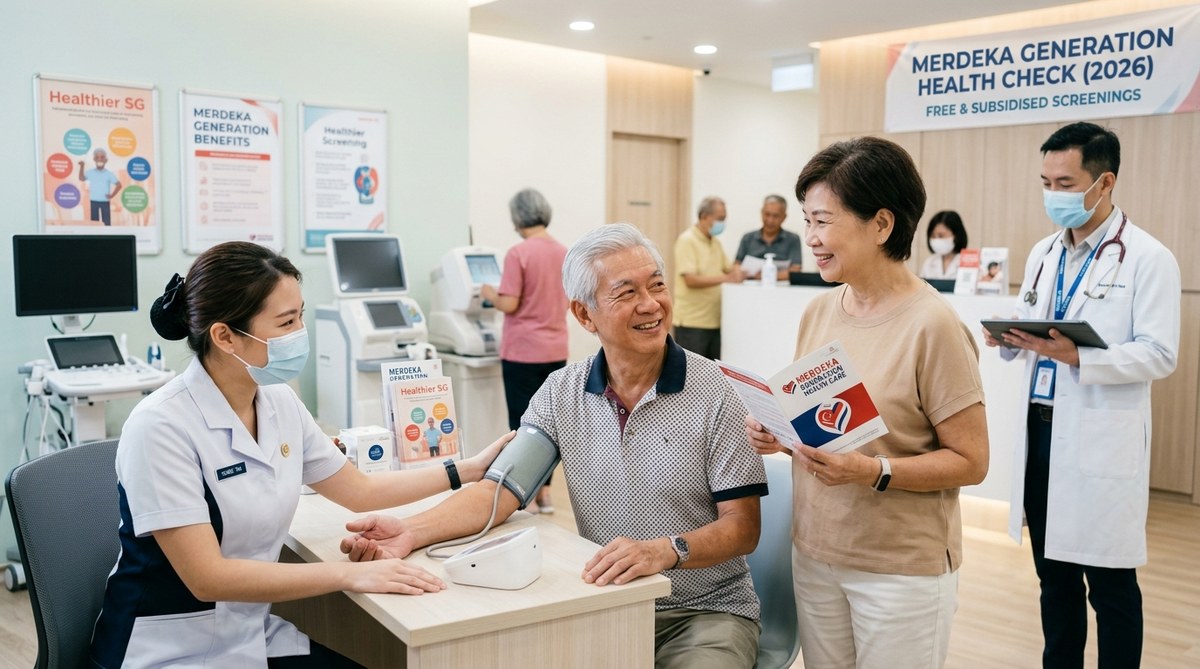
Catching a health issue early can save you a lot of worry and money. For Merdeka Generation seniors in Singapore, regular health screenings are not just a good habit. They are an affordable way to stay on top of your wellbeing. The government has designed several schemes to make these checks accessible, often at little to no cost. But many seniors are not sure what is covered, where to go, or how to use their benefits. This guide walks you through everything you need to know about Merdeka Generation health screenings in 2026.
Merdeka Generation seniors in Singapore can access free or heavily subsidised health screenings at CHAS GP clinics and polyclinics across the island. These important screenings check for common chronic conditions such as diabetes, high blood pressure, and high cholesterol. Early detection through regular screening helps you manage your health better and avoid costly complications later in life. The $200 annual Merdeka Generation card top-up helps cover follow-up consultation and medication costs after your screening appointment each year. This practical guide explains exactly what screenings are covered, how to book your appointment at a clinic near you, and simple ways to maximise your healthcare savings and stay on top of your health throughout 2026.
What Health Screenings Are Covered Under the Merdeka Generation Package
The Merdeka Generation Package works hand in hand with the Screen for Life programme. This national initiative encourages regular health checks for common chronic conditions. As a Merdeka Generation senior, you receive additional subsidies on top of the standard Screen for Life rates. That means your out-of-pocket cost is lower than what most other patients pay.
Here is a breakdown of the main screenings you can get, where to go, and what they typically cost after subsidies.
| Type of Screening | What It Checks | Where to Go | Typical Cost After MG Subsidy (at CHAS GP) |
|---|---|---|---|
| Diabetes screening (fasting blood glucose) | Blood sugar levels | CHAS GP clinic or polyclinic | $0 to $5 |
| Blood pressure check | Hypertension risk | Any CHAS GP clinic or polyclinic | $0 |
| Cholesterol screening (lipids panel) | LDL, HDL, triglycerides | CHAS GP clinic or polyclinic | $0 to $5 |
| Colorectal cancer screening (FIT kit) | Hidden blood in stool | CHAS GP clinic or polyclinic | $0 |
| Eye screening (for diabetic retinopathy) | Diabetes related eye damage | Polyclinic or selected CHAS clinics | $0 to $10 |
| Cervical cancer screening (for women) | Abnormal cells in cervix | CHAS GP clinic or polyclinic | $0 |
These prices assume you use your Merdeka Generation card and CHAS subsidies together. If you need a reminder on how these cards work, you can read more about CHAS card benefits explained for Merdeka Generation seniors. The key point is that your Merdeka Generation status gives you an extra layer of savings that is not available to the general public.
How to Book and Attend Your Health Screening
Getting screened is simpler than you think. You do not need a referral from a specialist. You can walk into any CHAS GP clinic or polyclinic and request a screening. Here is a step by step process to follow.
-
Find a clinic near you. Use the HealthHub website or call the CHAS hotline to locate a CHAS GP clinic that participates in Screen for Life. Polyclinics are also an option. Make sure the clinic accepts your Merdeka Generation card.
-
Book an appointment. Call the clinic or visit in person. Tell them you are a Merdeka Generation senior who wants a Screen for Life health screening. The staff will guide you on whether you need to fast before a blood test.
-
Prepare your documents. Bring your Merdeka Generation card (or your CHAS card if you have one), your NRIC, and any recent medication lists. This helps the doctor get a complete picture of your health.
-
Attend your appointment. The screening typically takes 30 to 60 minutes. You may have a blood draw, a blood pressure reading, and a short consultation with the doctor. For colorectal screening, the clinic will give you a FIT kit to use at home and return.
-
Review your results. The clinic will call you or schedule a follow up visit to discuss your results. If any levels are high, your doctor will recommend next steps such as lifestyle changes or medication.
-
Use your $200 MG card top-up for follow up care. If your screening shows you need ongoing management, your Merdeka Generation card top-up can help pay for repeat consultations and medications. This is where the annual $200 credit becomes very useful.
If you want to see exactly how much you can save on regular visits, check out this guide on how much you can save on polyclinic visits with Merdeka Generation subsidies. The numbers may surprise you.
Common Mistakes to Avoid When Using Your Screening Benefits
Many seniors leave money on the table simply because they do not realise what is available. Here are the most frequent errors and how to avoid them.
-
Skipping the screening because you feel fine. High blood pressure and high cholesterol often have no symptoms. By the time you feel something, the damage may already be done. Screenings catch problems early when they are easier and cheaper to treat.
-
Going to a non-CHAS clinic. If you visit a private GP that does not participate in CHAS or Screen for Life, you will pay full price. Always confirm that the clinic is a CHAS GP clinic before booking.
-
Forgetting to bring your Merdeka Generation card. Without it, the clinic cannot apply your special subsidies. Keep your card in your wallet next to your NRIC so you never leave home without it.
-
Assuming the $200 top-up is for screenings only. Many seniors think the $200 annual credit is just for check ups. In reality, you can use it for any outpatient service at a CHAS clinic, including medications, physiotherapy, and dental care. Use it wisely.
-
Not asking about the FIT kit for colorectal cancer. This screening is free and can be done at home. Yet many seniors do not know about it. Ask your doctor for the FIT kit if you are aged 50 and above.
For a deeper look at the pitfalls to watch out for, read about 5 common mistakes seniors make when claiming healthcare subsidies. Avoiding these errors can save you hundreds of dollars each year.
Expert Advice on Making Your Screenings Work for You
We spoke with a senior care advisor who works closely with Merdeka Generation patients in Singapore. Here is what she wants every reader to know.
“The biggest mistake I see is that seniors treat health screenings as a one time event. They go once, get a clean bill of health, and then do not go again for five years. Chronic conditions can develop within months. I recommend setting a recurring reminder every 12 months to book your next screening. Treat it like your yearly tax filing, but much more important. Also, bring a family member along if you are unsure about the process. Your children or grandchildren can help you ask the right questions and keep track of your results.”
This advice is especially relevant for seniors who manage multiple health issues. If you see a specialist regularly, you may wonder whether your visits are covered. Learn more about whether your specialist visit qualifies for Merdeka Generation subsidies. Knowing the rules can help you plan your appointments better.
Understanding the Costs and Real Savings
Some seniors hesitate to go for screenings because they worry about hidden costs. Let us be clear. For Merdeka Generation seniors, the Screen for Life programme is either free or very low cost. The government absorbs most of the expense.
Here is a real world example. Madam Lim, a 68 year old Merdeka Generation senior, went to a CHAS GP clinic for a diabetes and cholesterol screening. The total bill before subsidies was $68. After her Merdeka Generation subsidy and Screen for Life subsidy, she paid just $4. She used her $200 MG card top-up to cover that amount. Her net out of pocket cost was zero.
This is not an exception. It is the norm for most basic screenings. If you need follow up visits, the savings continue. Each GP consultation at a CHAS clinic costs between $5 and $12 after subsidies for Merdeka Generation seniors. Compare that to the $40 to $60 that private patients pay. The difference adds up over a year.
If you are also comparing benefits between generations, you may find this resource on comparing Pioneer vs Merdeka Generation healthcare benefits helpful. It clarifies which subsidies belong to you.
Your Health Screening Action Plan for 2026
You now have the information you need to take charge of your health. Start by identifying a CHAS GP clinic near your home. Call them to confirm they offer Screen for Life screenings. Book your appointment for the next available slot. Bring your Merdeka Generation card and NRIC. Go through the screening process and ask your doctor to explain every result. If your numbers are healthy, set a reminder for the same time next year. If something needs attention, use your $200 annual top-up to manage it without financial stress.
Taking this small step today can protect your health and your savings for years to come. Your Merdeka Generation benefits are there to support you. Make the most of them.
Leave a Reply